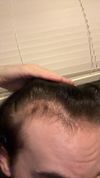
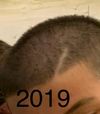
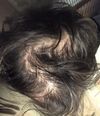
The conversation is about hair loss treatment using finasteride, ketoconazole, and sulfur soap, with consideration of starting dermastamp. The user prefers not to use minoxidil.
A user ordered a topical dutasteride gel with tretinoin for hair loss after unsatisfactory results with minoxidil and finasteride. Another user shared their experience with the same product, noting its pleasant smell and feel but difficulty in application and uncertainty about its absorption and frequency of use.
A user is starting a topical finasteride treatment for diffuse patterned alopecia, having previously used minoxidil without success. They are cautious about side effects and have chosen topical over oral finasteride, while also using Nizoral and biotin in their routine.
The conversation is about a user planning to undergo a hair transplant and seeking information on clinics that perform Verteporfin treatment. A user suggests Dr. Barghouthi might offer this service.
PP405 is progressing to Phase 2b trials, with results expected in late 2025 or early 2026, and potential Phase 3 trials in 2026. Some users experienced side effects from finasteride and are hopeful for PP405 as an alternative treatment.
The post discusses the high cost of a topical hair loss treatment from Happy Head, which contains finasteride, minoxidil, retinoic acid, and hydrocortisone. The user is seeking cheaper alternatives, specifically asking if there are compounding pharmacies that can recreate the same or similar formulation.
People discussed their intense hair loss treatments, including the use of dutasteride, RU58841, minoxidil, tretinoin, essential oils, microneedling, and various topical sprays. Some users reported success with these methods in preventing hair loss and stimulating hair growth.
The user mixes their own RU58841 solution and found that increasing the ethanol content improved absorption and reduced scalp itching. A study on minoxidil showed that penetration increased with higher ethanol concentrations, reaching maximum penetration at 90% ethanol.
The progress of Phase I of HMI-115, a potential hair loss treatment, which consists of Minoxidil, finasteride, and RU58841. The estimated completion date is June.
The user has been using RU58841 for 6 months without noticeable results and is considering dropping it while continuing oral minoxidil, daily dutasteride, and topical minoxidil. Another user suggests visiting a dermatologist to check for other conditions.
A 26-year-old male with high testosterone is experiencing diffuse hair thinning despite using a comprehensive treatment regimen including dutasteride, oral minoxidil, RU58841, ketoconazole shampoo, microneedling, and low-level laser therapy. Suggestions include adjusting dutasteride dosage, monitoring iron levels, and consulting a dermatologist for further evaluation.
The user experienced significant hair regrowth over eight months using 0.5mg dutasteride, 2.5mg oral minoxidil, and 5% topical minoxidil, with plans to continue treatment and update at the one-year mark. They reported no side effects and started derma stamping to enhance results.
Pelage is moving to Phase III clinical trials for PP405, a hair loss treatment, with results to be presented at a medical meeting. Users express skepticism and hope, comparing it to existing treatments like Minoxidil and finasteride, while discussing the potential for new hair growth in previously bald areas.
The user has been using Minoxidil for over 10 years, started Finasteride 8 months ago, and is happy with the hair recovery results; they also use a 1.5mm dermaroller weekly and a 0.5mm occasionally. Some believe starting with Minoxidil is less effective than addressing DHT directly, and there's curiosity about whether dermarolling aids absorption.
The conversation discusses progress with a hair loss treatment regimen that includes once daily topical Finasteride, Pyrilutamide, and WAY-316606. Specific treatments for hair loss are being shared and discussed.
User used sublingual minoxidil for 5 months and saw progress. Also used topical dutasteride, alfatradiol, tretinoin, and reduced oral finasteride dose.
User sshamu's progress pictures of 4 months using minoxidil foam and 1MM dermarolling for hair loss, which resulted in impressive results. There is also discussion about how often to use the treatments, as well as potential side effects of finasteride.
The user started using finasteride and topical minoxidil in September 2023, later adding a Theradome laser helmet, which helped reduce hair shedding significantly. The user reports improved hair coverage and stability, attributing most progress to the medications rather than the helmet.
The conversation discusses confusion over the dosage calculation of a topical solution containing 0.25% finasteride, 5% minoxidil, and 0.001% tretinoin. The user considers switching to a 0.025% finasteride solution to enhance the effects of tretinoin and minoxidil.
The conversation is about a user's progress in treating diffuse hair thinning using a topical regimen including finasteride, minoxidil, ketoconazole, microneedling, saw palmetto, collagen, and vitamins, along with lifestyle changes. The user plans to switch from topical to oral finasteride for potentially better results.
A 26-year-old is considering switching from a regimen of minoxidil, finasteride, and RU58841 to possibly include pyrilutamide due to insufficient results in slowing hair loss. They are seeking advice on whether to add pyrilutamide or replace RU58841 with it, considering cost and effectiveness.
The user is using Dutasteride, Nizoral, and RU58841 for hair loss and is considering mixing RU58841 with Stemoxydine for better scalp coverage but is concerned about the potential degradation of RU58841 when mixed with a water-based solution. They are seeking advice on the feasibility of this mixture.
A 21-year-old male experienced negative side effects from oral finasteride and is considering switching to topical finasteride or RU58841 after using oral minoxidil. He seeks advice on a standard hair loss routine, mentioning peptides, RU58841, and dermarolling.
The user experienced redness and itching from using 5% minoxidil and is considering trying a lower dose or alternative treatments like 2% minoxidil, mesotherapy, PRP, or rosemary oil. They are seeking advice on managing side effects and exploring other options for hair stimulation.
RU58841, a potential hair loss treatment, was not commercialized due to marketability issues and lack of long-term safety data. Concerns about its formulation and delivery methods further complicate its use.
After a hair transplant, it's advised to stop using RU58841 and minoxidil to avoid irritation, resuming them 25-30 days post-surgery if the scalp is healed. The user is currently using finasteride, minoxidil, and RU58841, but there are concerns about the safety and efficacy of RU58841 in humans.
The user plans to resume oral dutasteride, topical minoxidil, and add dermarolling and a laser cap to their hair loss treatment routine. They are seeking advice on optimizing these treatments and are concerned about increased shedding after starting the laser cap.
The user is using minoxidil, finasteride, dutasteride, and clobetasol, along with needling, to combat hair loss. They are considering stopping treatment if no improvement is seen.
The user improved diffuse thinning without finasteride by using minoxidil foam, cold showers, gentle hair drying, 2% ketoconazole, sulfate-free tea tree oil shampoo, dermastamping, and supplements like Omega-3, Vitamin-D, Biotin, Keratin, Collagen, B3, Zinc, and Magnesium. The regimen was followed for about six months under dermatologist guidance.