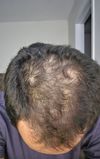
The conversation discusses the delay in the PP405 Phase 2 study results, now expected by the end of 2025, and skepticism about research practices. There is also mention of optimism for Amplifica's AMP303 and a topical treatment in early testing.
There is no new information on pp405, with data collection expected to finish by the end of 2025. Users are discussing the timeline for data analysis and completion of Pelage Pharmaceuticals' phase 2 study.
The conversation discusses whether M44 had a hair transplant or uses finasteride, minoxidil, and dutasteride. Opinions vary, with some suggesting a transplant and others noting no clear signs of hair loss.
PP405's phase 2a trial results were presented, focusing on safety and pharmacokinetics, with a future meeting planned to share the full dataset. The trial includes a randomized controlled portion and an open-label extension, with no indication of phase 2B completion.
PP405 is expected to be on the market between 2027 and 2030, with phase 3 trials starting in 2026. There is skepticism about its fast-tracking due to its cosmetic nature, and it may appear on the gray market sooner.
PP405 might take 3-4 years to be available, but some claim Everychem offers a similar product, though its effectiveness is debated. Users discuss the risks of using untested grey market products and the potential for adverse effects.
A 24-year-old male is experiencing increased hair loss after 45 days of using finasteride and is seeking advice. The discussion focuses on concerns and potential solutions for this issue.
A 39-year-old from Bangalore shared his successful hair transplant journey, which included 3537 scalp and 1521 beard grafts, boosting his confidence. He also started medication alongside the transplant.
Be cautious when sourcing PP405 or its analogs from third-party suppliers due to potential safety risks and lack of regulatory approval. The conversation highlights concerns about counterfeit products and the absence of reliable testing, making it risky to use such treatments.
PP405 may damage hair follicles if used long-term, suggesting cycling might be necessary. Combining it with finasteride could help maintain hair growth.
A 35-year-old man shared his hair transplant experience in Tijuana, Mexico, choosing Artline for 5,000 grafts at a lower cost than U.S. clinics. He plans to use topical minoxidil and possibly microneedling for better results.
A 35-year-old male has been using finasteride for 2.5 years but still finds his hair loss unsatisfactory and is considering a hair transplant. He is seeking advice on the number of grafts needed and affordable options in Canada.
The user has scheduled a hair transplant after stabilizing hair loss with finasteride and minoxidil, considering additional dermarolling. They are advised to use 2500-3000 grafts conservatively for temple filling without lowering the hairline too much.
PP405 is considered a potential new treatment for hair loss, compared to finasteride and minoxidil. There is skepticism about its effectiveness in humans, with anticipation for more information from an upcoming conference.
People are discussing the anticipated release of PP405 phase 2a results, expected by the end of March, with some skepticism about its effectiveness. There is cautious optimism due to past experiences with similar treatments like Breezula, despite concerns about the lack of presentation at the AAD 2026 conference.
OP has been using daily oral finasteride 1.25mg for 5 months with noticeable progress and no side effects. They chose this dosage by cutting 5mg pills into quarters due to cost.
PP405 is a new hair loss treatment advancing quickly in trials, generating excitement and skepticism about its effectiveness and marketing claims. Some see it as a potential alternative to minoxidil and finasteride, but concerns about long-term effects and the need for DHT blockers persist.
Low-Butterscotch-608's progress in treating their hair loss with finasteride and minoxidil over the course of two years, as well as opinions on whether they should consider a hair transplant to address further receding. Replies included advice about adding microneedling to the protocol.
A 45-year-old male experienced significant hair regrowth using 0.5 mg dutasteride and 1.5 mg minoxidil after initially starting with finasteride. He reports no major side effects, except increased hair growth in unwanted areas, and attributes his success to being a good responder to the medication.
Finasteride and Dutasteride will remain accessible in the EU despite objections from France and Belgium. Users discuss the ease of obtaining these medications in different countries and express relief and support for the EU's decision.
The conversation discusses buying RU58841 directly from a Chinese supplier for cost savings. It mentions that companies like Anageninc and Actifolic do the same.
A 45-year-old user shared progress pictures after 4 months of using a topical gel with 2.5% finasteride and 5% minoxidil once daily. The second picture shows significant improvement in hair growth.
PP405 shows initial promise for treating androgenetic alopecia, with safety confirmed in early trials, but skepticism remains due to limited data. Further trials are needed to determine its true efficacy and potential market impact.
Pelage secured $120 million for PP405, a non-hormonal topical hair loss treatment, sparking debate on its potential as a breakthrough. Concerns about finasteride's side effects persist, with some suggesting alternatives like topical finasteride or dutasteride.
PP405 is progressing rapidly through trials, with mixed opinions on its potential effectiveness. Current treatments like minoxidil and finasteride are still widely discussed, with some users reporting positive results from new formulations.
The conversation is about the availability of hair loss treatments Breezula, SM04554, Follica FOL-004, and Follicum FOL-005 in Canada after FDA approval, including potential delays, loopholes for obtaining them, and insurance coverage.
A user underwent a 2,550 FUE hair transplant and started taking dutasteride 0.5mg. They previously tried RU58841, minoxidil, and microneedling but avoided finasteride and dutasteride due to side effects.