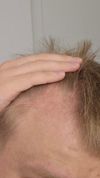
Hair loss treatments like finasteride, minoxidil, and dutasteride work but have side effects. A permanent cure is still not available due to the complexity of hair loss and limited investment.
Potential side effects of 5AR inhibitors like finasteride and dutasteride. Users debate risks, benefits, and personal experiences with these hair loss treatments.
Using a combination of Stemoxydine, minoxidil, dutasteride, and keto shampoo to achieve extreme hair and beard growth. The user has experienced positive results with terminal hairs at the hairline and an increase in density to their stubble after several weeks of use.
A user's journey with hair loss and their use of topical finasteride, minoxidil and pyri/minoxidil ratio treatments to attempt hair regrowth. Replies focused on offering support and advice while sharing personal experiences with different treatments.
Hair loss theory suggests imbalance between Vitamin D Receptor (VDR) and Androgen Receptor (AR) activation. Proposed treatment includes upregulating VDR, downregulating AR, and improving mitochondrial health.
A 22-year-old had a 3,500 graft hair transplant to restore his original hairline and improve density, while using dutasteride and oral minoxidil to manage hair loss. He believes being proactive with medication prevented further loss and allowed for a successful transplant.
Finasteride can impact neurosteroids, potentially causing depression and other side effects in some users. Despite these concerns, many continue using it for hair loss, with some switching to topical applications to mitigate side effects.
Most people using finasteride, minoxidil, or dutasteride for hair loss experience maintenance or regrowth, but they often don't discuss it publicly. Online forums may not accurately represent the typical success rates, as satisfied users rarely share their positive outcomes.
Asteride into your routine
In this conversation, the user Icy-Indication267 was asking when they should start finasteride to treat their hair loss, which had responded well to minoxidil after two months. Other users shared advice on incorporating micro-needling and topical finasteride into their routine for optimal results.
The user regrets stopping finasteride and minoxidil due to increased hair loss. They have resumed these treatments and are considering a hair transplant.
The user is considering taking 2.5 mg oral minoxidil and 1 mg oral finasteride sublingually to minimize side effects after a hair transplant. They seek advice on the pros and cons of this method, noting a lack of concrete information.
Green tea extract and soy isoflavones may help with hair loss by inhibiting DHT and providing additional health benefits. Combining these with finasteride and possibly using nizoral shampoo could enhance effectiveness in managing hair loss.
A 24-year-old with hair thinning is using a regimen including dutasteride, RU58841, HGH, GHK-cu, and other compounds to protect and regrow hair. They are also incorporating a mild cutting cycle with testosterone propionate, anavar, and tirzepatide.
Finasteride can cause oily skin and acne due to increased testosterone or sensitivity of androgen receptors. Some users find dutasteride results in less oily skin compared to finasteride.
The user reduced serum DHT by 60% using Advanced Trichology's natural DHT blocker but saw no improvement in hair loss. They are considering switching to finasteride due to its proven effectiveness in inhibiting scalp DHT.
The user is experiencing a receding hairline and is considering treatments. They are seeking advice on whether to use finasteride, minoxidil, or both for hair preservation and potential regrowth.
Finasteride reduced dandruff and scalp oiliness by lowering DHT, which decreases sebum production. Users also noted improvements with Nizoral and dutasteride.
The user has been taking 1mg finasteride daily for a year with no improvement in hair loss and reports low cortisol levels, sleep issues, and anxiety changes. The conversation includes discussions on the potential effects of finasteride on cortisol and neurosteroids, with suggestions to consult a doctor and consider other factors.
The conversation discusses hair loss treatments, specifically Rogaine and Finasteride, with concerns about Finasteride's potential sexual side effects. Users share personal experiences, with some switching to Dutasteride for better results, and others reporting hair regrowth without side effects.
A user is using oral finasteride, oral dutasteride, and drinking topical minoxidil for hair loss, despite health warnings. Switching from finasteride to dutasteride did not improve hair density.
Dutasteride reduces DHT more effectively than finasteride, but finasteride is more commonly used and approved for hair loss. Users have mixed opinions on dutasteride's effectiveness, with some experiencing better results and others facing side effects or no improvement.
The conversation is about a user experiencing hair shedding after switching from finasteride to dutasteride and increasing their oral minoxidil dose. The user is advised to continue with the current treatment, consider adding topical minoxidil, and consult a dermatologist for potential underlying issues.
A 29-year-old male experienced significant hair regrowth over 8 months using a protocol of oral Minoxidil, Dutasteride, Pyrithione Zinc Shampoo, and peptides GHK-CU, BPC-157, and TB-500. The treatment led to improved scalp coverage, reduced hair loss, and thicker hair, although results may vary for others.
A 19-year-old tried oral minoxidil and finasteride for hair loss but experienced side effects like fatigue, dry eyes, and lack of motivation, leading to discontinuation. Suggestions included trying topical treatments, dutasteride, or accepting hair loss.
Finasteride and dutasteride are discussed for hair loss, with concerns about their effects on neurosteroids and potential side effects like depression. Alternatives like topical estrogen and lifestyle changes are considered, with varying opinions on mental health and hair regrowth.
The conversation discusses how different factors can stimulate type 1 and type 2 isoforms of 5-alphareductase, which are enzymes linked to hair loss. Specific treatments mentioned include oral Dutasteride and topical Finasteride.
The conversation is about determining which type of Saw Palmetto, either Chamaerops humilis or Serenoa repens, is effective for inhibiting the 5alphareductaseenzyme related to hair loss. Specific treatments mentioned are Minoxidil, finasteride, and RU58841.
Beta-sitosterol may inhibit 5-alphareductasetype 2 enzyme, potentially reducing DHT levels and promoting hair growth, similar to finasteride but possibly with fewer side effects. Its effectiveness and side effects compared to other treatments like saw palmetto and finasteride remain uncertain due to limited research.
GHK-Cu is a potent inhibitor of the type 1 5-alphareductaseenzyme in hair follicles, which may reduce hair loss without the side effects associated with type 2 5-alphareductase inhibitors. The user previously experienced side effects with 5-alphareductase inhibitors and is considering GHK-Cu as an alternative.
Glycine supplementation may increase 5-alphareductase activity, potentially affecting hair loss. Users discuss its impact on hair fall and its role in the body.