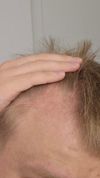
Topical dutasteride may have limited absorption due to its higher molecular mass compared to finasteride, potentially affecting its efficacy in suppressing DHT locally. Microneedling might enhance dutasteride absorption, possibly offering stronger local DHT suppression with fewer systemic effects.
The conversation humorously discusses using finasteride to combat hair loss, referencing "Dune" themes. Users agree that finasteride is essential for maintaining hair.
Dutasteride might be better for hairline due to varying levels of 5AR activity in scalps. Genetic tests can determine if finasteride is enough or if dutasteride is needed.
Finasteride may pose a risk during pregnancy, so using a condom is recommended if a partner is pregnant. It is advised to stop finasteride before trying to conceive due to potential effects on fetal development.
A 35-year-old has been using finasteride and minoxidil foam for 6 years with good results but is considering switching to dutasteride due to concerns about crown thinning. They are seeking advice on whether switching to dutasteride helped others and if it caused any side effects.
The conversation discusses concerns about potential cognitive and emotional effects of finasteride, with the original poster planning to monitor their cognitive performance while using the treatment. A user responds that most people do not experience cognitive shifts, though some report subtle changes.
Scalp biopsies are crucial for diagnosing hair loss conditions like Diffuse Unpatterned Alopecia (DUPA) and retrograde hair loss, as treatments like finasteride and dutasteride may not be effective if other conditions are present. Combining PPAR-GAMMA agonists with retinoids could improve treatments for conditions like Lichen Planopilaris.
The conversation discusses whether creatine causes hair loss for those using finasteride or dutasteride, with some suggesting creatine might increase DHT or upregulate androgen receptors, potentially leading to hair loss. Others argue the evidence is not conclusive, citing limited studies and personal anecdotes, with some avoiding creatine as a precaution.
The user switched from finasteride to 1mg dutasteride daily due to continued hair loss and is also using minoxidil and rosemary oil. They are seeking advice on whether to increase the dutasteride dosage for better regrowth.
Dutasteride is often preferred over finasteride for hair loss due to its stronger DHT blocking, leading to better hair regrowth for some users. However, it can cause side effects like brain fog, libido changes, and mood issues, prompting some to switch back to finasteride or adjust their dosage.
The user is using testosterone and finasteride to prevent hair loss and is considering adding Primobolan or Masteron, which are DHT-derivatives. They are seeking advice on their genetic risk for male pattern baldness and whether they can safely use these compounds without significant hair loss.
The conversation discusses a hair loss treatment regimen involving high doses of dutasteride, finasteride, and minoxidil, with concerns about safety and potential side effects. Users advise against the excessive use of these medications, suggesting more moderate approaches and consulting a doctor.
The user is experiencing a receding hairline and is considering treatments. They are seeking advice on whether to use finasteride, minoxidil, or both for hair preservation and potential regrowth.
Dutasteride is praised for improving skin and hair regrowth, with fewer side effects than finasteride. Users report mixed results on shedding and regrowth, with some experiencing enhanced libido and skin quality.
The conversation discusses hair regrowth progress using oral finasteride, topical minoxidil, and ketoconazole shampoo. Users note positive changes and suggest dutasteride for oily scalp issues.
The user is considering switching from finasteride and RU58841 to dutasteride due to ongoing hair loss concerns. They are unsure if the hair loss is due to shedding or worsening condition.
The user experienced side effects from finasteride and found improved mood and performance with DHT, but it worsened hair loss. They are considering options like TRT, HCG, and topical treatments like Saw Palmetto, but struggle with balancing hair preservation and functionality.
Green tea extract and soy isoflavones may help with hair loss by inhibiting DHT and providing additional health benefits. Combining these with finasteride and possibly using nizoral shampoo could enhance effectiveness in managing hair loss.
The conversation discusses the side effects of finasteride, including low libido and erectile dysfunction, and the possibility of these effects being permanent, known as post-finasteride syndrome (PFS). Some users report personal experiences with PFS and debate whether the condition is real, with varying opinions on the reversibility of side effects and the role of individual biology.
The conversation discusses a user's two-year experience using oral dutasteride and minoxidil for hair loss, noting initial gains and stabilization over time, with some concerns about shedding and a weak spot at the crown. The user also mentions using testosterone cypionate and reports no significant side effects, except possibly dry eyes.
Switching from finasteride to dutasteride may be more effective for hair regrowth due to dutasteride's stronger enzyme inhibition, but combining both drugs could enhance results. Some users report better outcomes with dutasteride, while others recommend a gradual transition to prevent potential hair loss.
Finasteride and dutasteride may not significantly impact meibomian gland function since these glands do not rely on DHT. Some users report dry eyes and other side effects from finasteride, but these may be influenced by other factors or medications.
Topical finasteride can be as effective as oral finasteride for hair regrowth with fewer systemic side effects, but precise dosing is essential. Combining oral dutasteride with topical finasteride is not recommended due to dutasteride's stronger inhibition.
CRISPR shows promise for treating hair loss by targeting specific genes. Current treatments include Minoxidil and finasteride, but CRISPR could offer a more precise solution, though it is still expensive and in early stages.
The conversation is about switching from finasteride to dutasteride for hair loss treatment. Users shared mixed experiences with side effects and effectiveness, with some preferring to stick with finasteride if it's working.
A user shared progress pictures after one month on oral dutasteride and minoxidil, noting some improvement despite initial shedding. They previously used finasteride for a year without noticeable change and emphasized the importance of photo comparisons.