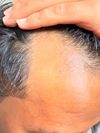
User "yungnickyyp" shares 5-month progress using Fin/Min/Niz/Derm for hair loss. Others express jealousy and amazement at the significant hair regrowth.
A 25-year-old male experiencing hair loss and thinning since age 20 is seeking advice on effective DHT inhibitors. He lists various oral and topical treatments, excluding Minoxidil due to adverse effects.
User reports visible hair growth after 1.5 months using dermarolling, Jamaican black castor oil, and onion juice, having stopped minoxidil due to initial hair loss. Replies suggest continuing minoxidil despite shedding, buzzing hair, and trying finasteride or scalp massages.
A 24-year-old experienced initial success with finasteride, Rogaine, and Nizoral for hair loss but noticed a decline after 1.5 years. Despite concerns about side effects, they decided to try dutasteride after consulting with a dermatologist.
A 21-year-old man shared his 2.5-year experience with hair loss treatments, including 1mg Propecia (finasteride) nightly, 12.5% Minoxidil once daily, 2% Nizoral shampoo 2-4 times a week, and later 5% Minoxidil once daily. He experienced minor side effects like watery semen and itchy scalp, and while he's seen fluctuations in hair growth, he's generally happy with the results and is considering experimental treatments like CB-03-01 and RU58841.
The user experienced significant hair regrowth after 5 months on 0.5mg of finasteride, with no side effects except mild, temporary testicular pain. Minoxidil was used for 5 years without noticeable results, and dermastamping and rosemary oil were also mentioned as part of other users' routines.
Elevated bile acids can inhibit the enzyme AKR1C2, leading to increased DHT levels, which may accelerate hair loss in those predisposed to androgenetic alopecia. Treatments mentioned include topical minoxidil and finasteride.
Dutasteride at 0.5 mg and 2.5 mg doses may eventually yield similar hair growth results over time, with 0.5 mg being sufficient for many users. Higher doses may not significantly increase benefits and could lead to diminished returns.
The user has been taking finasteride consistently for 3 months and noticed improved hair density without side effects. Some users suggest adding minoxidil for better results, but others advise against it due to the commitment required.
Oral dutasteride and oral minoxidil are recommended for hair regrowth, with topical treatments being less effective. Stopping treatment results in losing any regrowth achieved.
Clascoterone is suggested as an alternative for those who experience side effects from finasteride and dutasteride. It is not widely available yet, but some users are obtaining it from compounding pharmacies or suppliers like Echemi.
A 23-year-old male is experiencing aggressive hair loss despite using 1mg finasteride and 4.5mg minoxidil, with limited progress and side effects like fluid retention. Suggestions include trying dutasteride, microneedling with topical minoxidil, and considering hair systems or a transplant in the future.
The user shared their two-month progress using 5% topical minoxidil and microneedling, noting significant hair growth without finasteride. Other users discussed the effectiveness and side effects of finasteride, with some suggesting adding it for better long-term results.
Creatine does not increase testosterone or DHT, and there is no evidence it causes hair loss. Some users report improved gym performance and mood with creatine, while others are concerned about potential hair loss, but scientific research does not support these concerns.
Higher doses of Dutasteride, like 2.5 mg daily, may offer slightly more hair growth but come with increased risk of side effects, such as sexual dysfunction and sleep disturbances. Many users suggest starting with a lower dose, like 1 mg, to minimize side effects while still achieving effective results.
A 22-year-old experienced significant hair regrowth in three months using 0.5 mg dutasteride and 2.5 mg oral minoxidil, with no side effects. Users discussed the effectiveness of oral minoxidil, the necessity of dutasteride for maintaining hair, and concerns about potential side effects.
A 36-year-old switched from Finasteride to Dutasteride after 6 years due to thinning hair, adding oral Minoxidil for regrowth. Dutasteride improved hair thickness with fewer side effects, while Finasteride caused anxiety and back pain.
The user is experiencing hair loss despite using finasteride and dutasteride and is considering adding minoxidil. Suggestions include switching to daily dutasteride and adding a topical anti-androgen.
The user shared progress pictures after 7 months of using 3.5 mg of minoxidil and finasteride orally, reporting significant hair regrowth. They noted the need to continue the treatment indefinitely to maintain results, with no side effects experienced.
Hair loss involves more than just DHT, with genetic factors like TRPS affecting hair follicles. Treatments such as Amplifica's AMP-601 and AMP-303 target stem cells for potential hair growth solutions.
Combining anastrozole with finasteride/dutasteride may affect hair, as anastrozole prevents testosterone from converting to estrogen, potentially increasing DHT. Users suggest using the lowest effective dose of anastrozole.
Hair loss treatments that avoid significantly lowering systemic DHT levels, focusing on topical options like dutasteride mesotherapy, minoxidil, and ketoconazole. The user is exploring alternatives like KX-826 and RU58841 due to concerns about hormone levels.
A user is seeking hair loss treatments without using systemic DHT blockers like finasteride due to side effects. Suggestions include clascoterone (not FDA approved), pyrilutamide, RU58841, and low-dose topical finasteride, with a recommendation to consult a doctor.
The user shared their progress using finasteride and minoxidil for hair loss, noting initial side effects and improved hair density. They experienced shedding but saw better results after increasing the finasteride dose and undergoing a hair transplant.
The user has been taking 0.5 mg of dutasteride daily and using ketoconazole shampoo twice a week for four months, but sees no significant hair loss improvement. Others in the conversation believe the user is not experiencing hair loss and suggest the user might be overly concerned about their hairline.
Zinc picolinate and saw palmetto may lower DHT but are less effective than finasteride. Finasteride and minoxidil are preferred treatments, with ketoconazole shampoo as a suggested addition.
The user shared their positive experience with hair regrowth using dutasteride, initially combined with minoxidil, noting significant improvement in hair thickness and hairline over 1.5 years. They stopped minoxidil due to its greasiness but continued with dutasteride every other day, experiencing manageable shedding and no serious side effects.
The user is using a solution of 5% minoxidil and 0.1% finasteride with micro-needling and is considering adding 1mg oral finasteride. They notice small hairs on their forehead and are questioning if these indicate potential regrowth.
The user regrets their hair transplant after 5 months due to patchy and thin hair, despite starting finasteride at the same time. Many recommend waiting 12-18 months for results and using finasteride and minoxidil before and after the transplant.
A 27-year-old actor shared his positive experience with two hair transplant surgeries, highlighting the importance of customization and detail for a natural look. He is taking finasteride to prevent future hair loss.