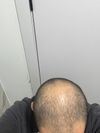
The user is experiencing hair regrowth and increased hair thickness after using supplements like biotin, zinc, selenium, and a complex with various natural ingredients, along with topical caffeine. They are considering using topical minoxidil and mesotherapy in the future.
Sulfur soap may help with hair thickening and reducing scalp inflammation, but it can cause dryness. Nizoral, containing ketoconazole, is noted for its potential to reduce seborrheic dermatitis but may also cause scalp dryness and hair loss.
Hair loss is influenced by genetics and sensitivity to hormones like DHT. Treatments like Minoxidil and finasteride are commonly used, and baldness persists as it doesn't affect reproductive success.
RU-58642 is a powerful anti-androgen that was not developed further, possibly due to safety concerns or financial reasons. RU58841 is a topical alternative, but it is less effective than finasteride and dutasteride, and its long-term effects are not well-studied.
Missing dutasteride for up to 50 days likely won't cause significant hair loss if used for over six months, as it provides long-lasting DHT suppression. Continuing other treatments like minoxidil and scalp care is recommended during any break.
The user discusses using finasteride and dutasteride for hair regrowth, avoiding minoxidil due to side effects and inconvenience. They find these treatments effective without needing minoxidil.
Long-term use of dutasteride may impair semen volume and sperm motility, but these effects are often reversible after stopping the drug. Individual reactions vary, and more research is needed to understand the long-term impact on fertility.
The user has been using minoxidil and finasteride for 3.5 months and has seen a 20% improvement in hair density. They are advised to continue treatment and consider switching agents or adjusting dosages if needed.
The conversation discusses using finasteride for hair loss and considers additional supplements like vitamin D3, melatonin, zinc, biotin, and minoxidil. There is debate over zinc's effectiveness, with some suggesting it may not be beneficial for hair loss.
The conversation humorously discusses hair loss treatments, focusing on the use of finasteride and dutasteride, with some users debating the effectiveness and cost of different dosages. Some users mention using topical minoxidil and express concerns about side effects and availability of higher doses.
A user shared their 3-month progress using 1mg oral finasteride daily and 5% topical minoxidil twice daily, along with Pura D’Or anti-thinning shampoo and a scalp massager. They noticed initial worsening but later saw hair follicle recovery.
The user is asking if caffeine topicals are effective for hair growth, noting they already use Minoxidil and finasteride. They are unsure if caffeine topicals are beneficial or a waste of money.
The conversation discusses the conflicting information about Zinc's effect on DHT and its role in hair loss. It mentions that Zinc can act as a 5AR inhibitor at high doses but may increase DHT if taken to correct a deficiency, and highlights the importance of nutritional balance for hair health.
The conversation discusses preferences for hair loss treatments, specifically finasteride over dutasteride. Users share personal experiences, cost considerations, FDA approval status, and potential side effects, with some switching between treatments to find what works best for them.
The conversation discusses the link between seborrheic dermatitis, acne, and male pattern baldness, suggesting that DHT may cause both skin conditions and hair loss. Treatments mentioned include RU58841, finasteride, dutasteride, minoxidil, Nizoral shampoo, and other topical anti-androgens.
User tried topical and oral finasteride and oral minoxidil for hair loss without success. ButterscotchSea3159 suggests using Dutasteride, oral minoxidil, ketoconazole shampoo, microneedling, and possibly RU for better results.
This conversation discusses the results of a model who claims he went from almost a Norwood 3 to a perfect hairline in 8 months using only Minoxidil and Rosemary oil. The replies suggest that this could be realistic but long-term results would require additional treatments like finasteride or other medications to prevent further hair loss.
A user experienced a significant drop in testosterone levels after taking finasteride, leading to side effects like low libido and muscle mass loss. Despite its effectiveness for hair, the user decided to stop finasteride due to its impact on hormones, preferring to be bald.
The user's progress with hair loss treatments of 0.5mg finasteride daily, minoxidil 5%, and nizoral 2%. They discuss if further growth is possible, their experience after two months, and encourage others to not lose hope.
A user's journey with hair loss and their use of topical finasteride, minoxidil and pyri/minoxidil ratio treatments to attempt hair regrowth. Replies focused on offering support and advice while sharing personal experiences with different treatments.
User shared 1-year progress using finasteride 1mg and minoxidil, regaining hair density. Others praised the improvement and asked about side effects and additional treatments.
A user has been taking finasteride for 7 months and is experiencing watery semen as the only side effect. They are considering taking zinc supplements to improve this condition.
Natural remedies to treat hair loss, such as polyphenols, apple peel extract, grape seed extract, green tea extract, peppermint oil, pumpkin seed oil, apigenin, Ginkgo biloba, red clover extract, olive leaf extract, Ecklonia Cava and Grateloupia elliptica. In addition, terpenes, carotenoids, and tocopherols were discussed as potential treatments.
The conversation discusses a hair loss regimen involving finasteride, dutasteride, minoxidil, RU58841, and various supplements like biotin, omega-3, vitamin D3, zinc, and magnesium. The user also uses dermastamping and topicals like ketoconazole and diclofenac, with mixed opinions on zinc's effect on hair loss.
The user claims NoFap (abstaining from pornography, masturbation, and orgasm) helped stop their hair loss. Others argue that hair loss is primarily due to genetics and DHT, which can be managed with finasteride.
A user shared their five-year experience with finasteride for hair loss, noting positive results and no side effects. The discussion included debates on potential side effects like erectile dysfunction and the treatment's effectiveness.
Using dutasteride or finasteride can increase free testosterone, which may convert to estradiol, potentially causing side effects like increased estrogen levels. Individual responses vary, and some users report changes in cholesterol, hair texture, and side effects like gyno or increased sex drive.
AH-001 is a new topical treatment designed to degrade androgen receptors, targeting the root cause of androgenetic alopecia without the side effects of oral treatments like finasteride. It has shown a strong safety profile and good local tolerability in early trials.