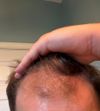
Using a topical formula with 5% minoxidil and 0.01% retinoic acid is considered effective, as tretinoin can enhance minoxidil results and improve scalp health.
The conversation discusses a user's progress after 4 months of using 1.25mg finasteride daily, minoxidil, and dermarolling to treat hair thinning, particularly on the sides and crown. The user believes finasteride made the most difference, and they share tips on managing hair loss and tracking progress.
A user shared their 4.5-month hair transformation using a homemade topical solution with 5% minoxidil and crushed finasteride pills, applied twice daily with weekly microneedling. They plan to switch to once-daily application with tretinoin gel to enhance absorption.
A 24-year-old male has been using oral Minoxidil (2.5mg daily) and daily Dutasteride for hair loss, noticing slight thickening but no major regrowth. Users suggest increasing Minoxidil dosage to 5mg and maintaining consistency, with some recommending additional treatments like topical Minoxidil or considering a hair transplant in the future.
The user experienced significant hair regrowth using dutasteride 0.5 mg daily, 5% topical minoxidil twice a day, and microneedling over several months. They also used ketoconazole shampoo and rosemary oil, reporting some side effects but overall positive results.
The user has been taking oral minoxidil and finasteride for 10 months with no hair growth but no further hair loss. They are considering adding rosemary oil and possibly returning to a topical solution.
The user experienced improved hair growth using Minoxidil twice daily, finasteride 1.25mg once daily, weekly dermarolling, supplements, and occasional ketoconazole shampoo for 5.5 months, but noticed hair shedding again after switching types of Minoxidil. Despite returning to the original Minoxidil, the user's hair condition worsened and shedding continued.
The user has been using topical minoxidil for 5 months and oral finasteride for 3 months, reporting positive results without side effects. They apply minoxidil twice daily and take 1 mg of finasteride daily.
User shared progress on crown regrowth using Minoxidil Foam, oral Minoxidil 2.5mg daily, and Finasteride 1mg daily. They experienced initial headaches with oral Minoxidil, had a hair transplant, and are seeing regrowth but with thin hairs.
The user was prescribed 5mg Finasteride and later switched to 1mg for hair loss, also using topical Minoxidil. They are concerned about potential lasting side effects from the initial 5mg dosage.
A user is treating their advanced hair loss with a regimen including topical finasteride, minoxidil, hydrocortisone, stem cell serum, peptide serum, multivitamins, he shou wu tea, derma pen, argan oil, and a derma roller. Replies suggest it's too early to judge progress and recommend staying consistent, with one suggesting oral minoxidil as an additional option.
A 28-year-old has been using oral dutasteride 0.5 mg, topical minoxidil 5%, and Cafune shampoo for 104 days with positive results and is considering adding microneedling. No side effects from dutasteride have been reported.
SCUBE3 is a promising new molecule that can restart hair growth by reawakening dormant hair follicles. Users express skepticism about its availability timeline, with some hoping for release by 2026.
A 34-year-old male shares his 4-month progress using Minoxidil 5%, Finasteride 0.2% liquid, Tretinoin 0.01% liquid, and a dermaroller once a week for hair regrowth, reporting no side effects and noticing baby hairs on the crown. He prefers topical treatments over oral Finasteride and is optimistic about further progress.
A user shared progress pictures showing improved hair fullness after 75 days using 2.5mg oral minoxidil daily, 1mg oral finasteride every other day, a 1.5mm dermastamp weekly, and daily scalp massages. They report seeing early positive results.
A 23-year-old male experienced good hair growth and increased self-confidence after 10 months of using oral finasteride (1.25mg) and topical minoxidil (5% twice a day), despite no decrease in hair shedding. He also used 1mm microneedling monthly and reported minor side effects like forgetfulness.
The user experienced improved hair health and density after three months using 1mg finasteride and topical minoxidil twice daily, with no side effects. They also use ketoconazole 2% twice weekly and purchase their medications from Amazon.
A 30-year-old is considering switching from a topical Minoxidil/Finasteride treatment to oral Minoxidil due to cost and insurance coverage. They seek advice on potential effects and experiences from others who have made a similar switch.
A 25-year-old man has been on 0.5mg Finasteride daily for a year, maintaining his hair with some regrowth and plans to increase the dose to 1mg. Some suggest adding Minoxidil for better results, while he considers it if his condition worsens.
A 31-year-old male shared his 4.5-month progress using finasteride, topical minoxidil, and dutasteride mesotherapy for hair loss, showing significant improvement in crown density and overall hair texture. He reported no side effects and plans to continue the treatment to assess further results.
The user has been using Finasteride and Minoxidil for 5.5 months but continues to experience significant hair shedding. They are concerned about the ongoing shedding despite a brief period of reduced hair loss after switching Finasteride brands.
An 18-year-old started taking 1.5 mg oral minoxidil daily for diffuse thinning but is hesitant to use finasteride due to potential side effects. They are questioning if minoxidil alone will be effective.
A user started taking finasteride 1mg/day for hair loss but hasn't seen results yet. They also take vitamins and asked about adding minoxidil and the effectiveness of LLLT.
FCE 28260 (PNU 156765), an under-explored 5α-reductase inhibitor, showcases promising results in research by Giudici et al., outperforming well-known treatments like Finasteride in reducing the conversion of testosterone to DHT. Its superior efficacy, demonstrated through lower IC50 values in both natural and human recombinant enzyme studies, suggests it could offer more effective management of DHT-related conditions. Additionally, its lower molecular weight hints at better potential for topical application, potentially offering advantages in treating conditions such as androgenic alopecia. Despite its potential, it has not advanced in development, possibly due to financial limitations, leaving its therapeutic prospects and side effect profile largely unexplored.
The user plans to use 1% Koshine826, 0.1% Alfatradiol, Minoxidil with Tretinoin, microneedling, and Stemoxydine for hair loss treatment. They expect significant recovery with this regimen.
A 27-year-old Asian male is treating hair loss with 1mg oral finasteride, topical minoxidil twice daily, and 1.5mm microneedling weekly. The discussion is about his progress with these treatments.
The post discusses using RU58841 and 5% minoxidil for hair loss treatment, with RU applied to the temples and crown, and minoxidil used twice daily. Users debate the effectiveness of RU58841 compared to minoxidil alone.
A 36-year-old male using dutasteride and minoxidil has seen significant hair regrowth, confirmed by a dermatologist and supported by before-and-after photos. He plans to increase his oral minoxidil dosage and add dermapen to his routine.