The conversation is about using GHK-CU peptide for hair regrowth. Minoxidil, finasteride, and RU58841 are also mentioned as potential treatments for hair loss.
The user is asking if they are seeing hair regrowth after using 0.05% tretinoin, minoxidil, 1.25mg finasteride, weekly dermarolling, and ketoconazole three times a week. They are seeking feedback on their routine.
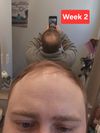
The user is documenting their hair regrowth journey using oral finasteride, topical minoxidil, ketoconazole, dermarolling, biotin shampoo, and rosemary oil. They are committed to maintaining this regimen to track progress.
The user shared their seven-month hair loss progress using minoxidil, finasteride, biotin, ketoconazole shampoo, and a dermaroller, reporting no side effects and recommending the routine before considering a hair transplant. They use topical treatments daily and wash their hair every two to three days, with plans to continue the routine for another five months.
SCUBE3, a protein linked to hair growth in moles, was discovered over 25 years ago and is being developed by Amplifica for potential hair loss treatment. Concerns exist about SCUBE3's association with cancer, as it is a protein that promotes cell growth, which could potentially trigger cancer development if used for hair growth therapy.
The user has been using finasteride, dutasteride, pyrithione zinc, and oral minoxidil to treat hair loss and has seen an increase in fine hairs on the hairline but overall thinning on the top. They are considering adding zinc and Vitamin K to their regimen and are already taking hair multivitamins with collagen.
Vitamin E is suggested as beneficial for hair follicles. Some users question the dosage and effectiveness, while others share positive experiences with vitamins.
KX-826 shows promise for hair maintenance at higher doses with minimal side effects, despite failing Phase III trials. The user believes it is more effective than Minoxidil, Finasteride, and RU58841.
Verteporfin is being discussed for its potential to regrow hair and heal scars, possibly aiding hair transplants or replacing them. Some users are skeptical about its effectiveness, while others suggest combining it with microneedling for better results.
Stem cell-related treatments and drugs like RCGD423 and WAY are being tested for hair growth. Clinics are conducting tests on patients who haven't had previous treatments.
A user shared their 1.5-month progress using a routine of topical finasteride and minoxidil gel, minoxidil foam, microneedling, keto shampoo, and a multivitamin. They reported noticeable hair regrowth for the first time in a decade.
The conversation discusses using a TCA 35% chemical peel on the scalp to potentially improve hair growth by addressing fibrosis and enhancing the effectiveness of topical treatments. The user also mentions trying microneedling and other methods like topical metformin and dutasteride for hair regrowth.
A group buy for testing a compound targeting Twist1 protein as a potential hair loss treatment. Inhibiting Twist1, which keeps hair follicles in growth phase, may prevent hair loss with minimal side effects.
Nizoral is commonly used for hair loss and dandruff, but it can cause dryness; users often pair it with conditioners or alternative shampoos. Some also use finasteride, minoxidil, and red light therapy for hair care.
Inflammation plays a significant role in hair follicle miniaturization and androgenetic alopecia, with treatments like ketoconazole shampoo, minoxidil, and finasteride being used to address it. Users discuss the benefits of anti-inflammatory treatments and peptides like KPV, alongside traditional hair loss treatments, to improve scalp health and hair quality.
OP shared 9-month hair regrowth progress using 1mg finasteride, 5% minoxidil, 2% ketoconazole, and a dermapen. Users discussed side effects, application methods, and additional treatment suggestions.
A user shared progress pictures showing hair improvement after using Minoxidil Foam, Nizoral Shampoo, and microneedling. They plan to add finasteride in a few months.
OrganTech is working on regenerating hair and teeth, with positive results in mice, but skepticism remains about progress for humans. Users express frustration over the lack of advancements in human hair loss treatments, despite ongoing research and trials.
The user has been using dutasteride, lymecycline, betamethasone, and minoxidil for hair loss but struggles with eczema and dry skin. They feel hopeless as no treatments or moisturizers have helped, and they are concerned about their appearance due to their soft facial features.
Kevin's YouTube channel was terminated due to a trademark claim, causing frustration among users who found his hair loss content helpful. Many users expressed support for Kevin, mentioning treatments like finasteride and dutasteride, and hoped for his channel's reinstatement.
The user experienced hair regrowth using Koshine KX-826 after two months, noticing new baby hairs and reduced shedding, while continuing to use Hims spray. They reported no side effects from Koshine and plan to keep monitoring progress.
Finasteride and Nizoral shampoo with Ketoconazole are used for hair loss treatment. Liquid Chromatography–Mass Spectrometry (LC-MS) is recommended over Enzyme-Linked Immunosorbent Assay (ELISA) for more accurate DHT testing.
The post discusses allergens in everyday shampoos and skincare products, listing yearly allergens from 2000 to 2023. It suggests that these chemicals might contribute to acne and hair loss.
The user shared their one-year progress using finasteride, minoxidil, a dermastamp, and ketoconazole shampoo, noting stabilization but challenging regrowth in the temples. Another user discussed using a 1.5mm dermastamp daily with minoxidil for better results, but concerns about scarring were raised.
PP405 shows promise in activating dormant hair follicles and increasing hair counts but lacks detailed efficacy data compared to minoxidil and finasteride. Opinions are mixed, with some optimism and skepticism about its effectiveness.
The conversation discusses an all-in-one hair loss treatment combining minoxidil, azelaic acid, finasteride, and ketoconazole, aimed at addressing hair loss and scalp dandruff without drying out the hair. The user is considering this product to incorporate ketoconazole into their routine and start using minoxidil.
The conversation discusses skepticism about the effectiveness of new hair loss treatments, mentioning that despite 40 years of research, only accidental discoveries like Minoxidil and Finasteride have been made. It also notes that drug development is a slow process, often taking a decade or more to bring a new drug to market.