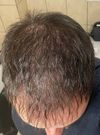
Hair is growing faster after 2 weeks of using topical vitamin D3 in alcohol/oil. The user plans to continue the experiment for 3 months before giving a full review.
The conversation discusses hair loss treatments like topical finasteride with minoxidil, oral dutasteride, and essential oils. Oral treatments like dutasteride and finasteride are seen as more effective, though some prefer topicals to avoid side effects.
The conversation discusses a botanically derived treatment for androgenetic alopecia using ingredients like saw palmetto, green tea, and evening primrose, showing impressive results over 270 days. Concerns include the study's uncontrolled nature and potential product motivation, with suggestions to enhance absorption through derma rolling.
The user is experiencing diffuse androgenic alopecia and is trying various treatments, including 5mg finasteride, loniten, and Formula 82D, which contains dutasteride, a steroid, and tretinoin. They report potential regrowth with Formula 82D, despite previous treatments being ineffective.
The user reports progress in hair regrowth using a daily routine of 0.5mg Dutasteride, 5% Minoxidil foam, and Olly hair gummies, while discontinuing rosemary water. They are hopeful for continued improvement and have received positive feedback on their progress.
A user asked if olive oil can replace propylene glycol or glycerin in topical finasteride preparation. Another user advised against it, suggesting MCT oil instead due to olive oil's potential to worsen dandruff and seborrheic dermatitis.
A custom-made serum based on double-blind studies for AGA, which includes natural ingredients such as rosemary oil, procyanidin B-2, saw palmetto extract, curcuma aeruginosa, pumpkin seed oil and castor oil. The user has updated their recipe to include apple poly procyanidin B-2 4% concentration and other ingredients before topping it off with Pura d'or serum.
The conversation discusses using 1% cetirizine, an antihistamine, as a potential treatment for androgenetic alopecia (hair loss). One user plans to try cetirizine instead of finasteride, while others are curious or skeptical about its effectiveness, discussing the role of inflammation in hair loss.
A user experienced new hair growth and reduced scalp itchiness using a scalp treatment with Neem, Amla, and Rosemary oil. They recommend this natural remedy for those interested in alternative medicine.
The conversation discusses using Shatavari, an Ayurvedic treatment, for hair loss. Other treatments mentioned include Minoxidil, finasteride, and RU58841.
The conversation is about creating a natural hair loss topical using ingredients like cetirizine, Zinc Sulphate Heptahydrate, Safflower Extract, Ricinoleic Acid, and others. The user is seeking input and collaboration on this topical formula.
The conversation discusses using oral castor oil as a hair growth stimulant for beard and scalp hair. One user questions its use, noting castor oil is typically a laxative in the Philippines.
A user is seeking advice on making a topical bicalutamide solution as an alternative to RU58841 for hair loss, while already using dutasteride and minoxidil. They are considering crushing bicalutamide pills and adding them to their minoxidil.
The potential hair regrowth benefits of ASC-J9, a synthetic modified version of curcumin that is said to be more effective than Minoxidil and Finasteride. Reports from users suggest good thickening and temple regrowth with topical use at 0.025% concentration.
Teak leaf extract shows potential as a mild hair growth promoter for androgenic alopecia, with similar positive trends to minoxidil but without significant side effects. It can be made at home using dried teak leaves and ethanol, though its effectiveness compared to other treatments like finasteride is debated.
Dutasteride tablets from India are significantly cheaper than those from pharmacies, but there are concerns about authenticity and customs issues. The user is also using oral minoxidil, finasteride, and RU58841 for hair loss treatment.
The conversation humorously discusses hair loss treatments, mentioning "oral miraclegro," "topical roundup," "spectracide," "Cow Dung mesotherapy," and "weekly Foot stepping sessions." The user jokingly considers switching to "weed and feed" as a treatment.
Hair therapy advertisements claim to use a mix of fallopia multiflora, ginseng, angelica sinensis, and vitex rotundifolia for hair growth. A user dismisses it as fake.
User sees subtle regrowth after two months using topical dutasteride, oral minoxidil, dermastamp, and oral castor oil. Others suggest waiting a few more months to properly evaluate results.
The conversation discusses using RU58841 with octopirox or essential oils for hair loss treatment. The user is seeking advice on which variation to try.
The user has been using minoxidil for years without success, but after adding DUT (dutasteride) to their routine, they have seen progress in their hair growth.
A 35-year-old man is considering adjusting his hair loss treatment, currently using 0.5 mg dutasteride and 5% topical minoxidil, with inconsistent application. He is advised to add oral minoxidil for consistency and possibly increase the dutasteride dosage while continuing Ayurvedic treatments for hair texture.
The conversation discusses the effectiveness and systemic absorption of Topilutamide/Fluridil/Eucapil and topical Dutasteride for hair loss. Users are sharing their experiences and seeking success stories with these treatments.
The conversation discusses hair loss treatments, specifically using rosemary oil and biotin hair oil. Users suggest that medication might be more effective than these oils.
The user has been using oral Dutasteride, RU58841, and Minoxidil for three years without success and is considering adding topical Finasteride or Dutasteride to target DHT both locally and systemically. Other users suggest sticking to a consistent treatment plan, exploring different combinations, and considering other factors like potential misdiagnosis or inconsistent medication use.
The user experienced significant hair regrowth and increased density after six months of using 0.5mg Dutasteride, 5% Minoxidil foam, and Olly hair gummies daily. The user plans to discontinue the gummies, believing the medications are primarily responsible for the improvement.
Moringa extract and oil are suggested to help with hair loss, with some users combining it with treatments like minoxidil, finasteride, and dutasteride. Moringa is claimed to improve hair growth and health, but evidence is mostly anecdotal.
The DHT itch is linked to hair loss and persists despite finasteride use; switching to dutasteride helped alleviate the itch and promoted regrowth. Some users suggest seborrheic dermatitis as a cause and recommend treatments like medicated shampoos, vitamin D, and minoxidil.
The user is considering starting Minoxidil and is looking for a topical solution to combine with it. They are confused about which product to prioritize among options like RU58841, Pyrilutamide, FinaTopic, and DutaTopic.