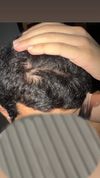
Hair loss affects confidence, with discussions on treatments like finasteride, minoxidil, and RU58841. Emphasis is placed on self-acceptance and building confidence beyond appearance.
A user's experience with Pyrilutamide, which they have been taking for 3 months to treat their aggressive male pattern baldness. The user reported that the medication decreased shedding and was hopeful it would work as advertised.
Clinical studies by Dr. Barghouthi and Dr. Bloxham indicate that Verteporfin, when used with FUE and FUT hair transplantation methods, shows promise in hair follicle regeneration and minimal scarring due to its ability to inhibit Yes-associated protein (YAP). Microneedling at depths of 3-3.5mm, combined with Verteporfin, could potentially reactivate dormant follicles, although the optimal dosage and application method are still under investigation. Concerns remain about the DHT sensitivity of regenerated follicles, highlighting the need for further research to optimize trauma levels and Verteporfin concentrations to achieve effective and scar-free hair regeneration.
A woman with hair loss discovered she has thyroid cancer, which was found during an MRI and confirmed with an ultrasound. She advises others with symptoms to see a doctor and shares that her cancer was detected after her dog sniffed her neck and she experienced neck pain.
A 26-year-old male is still experiencing hair loss after a year of using Dutasteride and is considering using CB0301 (Breezula) to block all androgens on his follicles. He is looking for a reliable source to purchase CB0301 and inquires about the availability of a premade solution.
The conversation is about a user experiencing hair shedding after switching from finasteride to dutasteride and increasing their oral minoxidil dose. The user is advised to continue with the current treatment, consider adding topical minoxidil, and consult a dermatologist for potential underlying issues.
Treatments for hair loss, such as minoxidil, finasteride, and RU58841; humorous posts about hair loss; and the choice to stop using treatments in exchange for a different look.
A user is concerned about low hair density 12 months after a hair transplant and is not using finasteride or minoxidil, only taking biotin. They are seeking advice on whether this is normal, if starting medication now would help, and when to consider a second procedure.
The conversation discusses severe hair loss, possibly due to telogen effluvium or male pattern baldness, lasting over three years. Suggested treatments include minoxidil, finasteride, and dermarolling, with a recommendation to consult a dermatologist.
The conversation discusses the potential of verteporfin in treating hair loss, with some users reporting positive results and speculating that it could lead to a cure for baldness. Others are skeptical, and there's a debate on the effectiveness of verteporfin for regrowing hair and reducing transplant scars.
The user has been experiencing aggressive hair loss despite using finasteride, minoxidil, dutasteride, ketoconazole, and derma rolling. Suggestions include continuing current treatments, considering RU58841, checking for deficiencies, and possibly trying collagen supplements or oral minoxidil.
A user had a disappointing dermatologist appointment where they were denied prescriptions for Dutasteride and oral Minoxidil for hair loss and were only offered a hair transplant referral. Other users sympathized, discussed self-medication, and suggested consulting a transplant doctor for up-to-date treatments.
The user experienced side effects from using finasteride, both topically and orally, alongside minoxidil for hair loss. They reported increased hair shedding and are feeling distressed about their receding hairline.
Woman uses antiandrogens for hair thinning prevention, experiences severe dry eye with finasteride. Asks if dutasteride could be better despite potential for worse dry eye.
Exploring potential treatments for hair loss, such as Minoxidil, Finasteride, RU58841 and Pyrilutamide. The user is looking for feedback on whether KX-826 can be used successfully as a single therapy to stop the miniaturization process.
The user stopped finasteride for three months to try for a baby but continued using minoxidil and micro-needling. They are concerned about hair shedding and plan to resume finasteride after the baby is born.
The user has been experiencing sudden and aggressive hair shedding despite using oral dutasteride and topical minoxidil for six years, and recently added topical finasteride without improvement. Possible causes discussed include stress-related hair loss, dietary changes, or high DHT sensitivity, with suggestions to consult a doctor and consider adjusting treatments.
A user experienced significant hair shedding and thinning 10 months post-hair transplant despite using minoxidil and topical finasteride. They are considering switching to oral finasteride or dutasteride and are also dealing with scalp conditions like seborrheic dermatitis.
Treating Seborrheic Dermatitis, a fungal scalp condition which can cause hair loss. Treatments discussed include antifungal shampoos, cold showers, exfoliating the scalp, taking Vitamin D, and stimulating the prostate through the anus.
A user has been using dutasteride, RU58841, minoxidil, and ketoconazole for 2 years with no progress and worsening hair recession. They seek advice on how to proceed.
The user switched to dutasteride and saw palmetto, along with a topical mix of minoxidil and finasteride, due to continued hair shedding. They hope for improvement despite concerns about saw palmetto's effectiveness.
A 25-year-old woman using minoxidil 2% for hair loss is experiencing faster hair growth and new baby hairs but continues to lose hair and see miniaturization. Suggestions include switching to minoxidil 5%, checking vitamin levels, using Nizoral, and considering a DHT blocker.
Trans women discuss using finasteride and dutasteride for hair loss and whether to continue after testosterone suppression. One user reduced dutasteride dosage after achieving undetectable testosterone levels.
The user is considering adding an anti-androgen, RU58841, to their current hair loss treatment routine due to receding hair. They are also contemplating waiting for Breezula or Pyrilutamide to become more affordable.
The user switched from topical to oral finasteride and minoxidil for hair loss and experienced swelling and sensitivity in the left chest area. They are concerned about these symptoms but noticed improvement after skipping a dose.
The user has been using oral minoxidil and dutasteride for hair loss without success and is considering adding topical 17α-estradiol, Pyrilutamide, Clascoterone, or cetirizine. They have confirmed low serum DHT levels and are exploring additional treatments due to genetic sensitivity to DHT and prostaglandin D2.
Users discussed hair loss treatments, specifically 0.1% latanoprost with melatonin, caffeine, and biotin. Other treatments mentioned include minoxidil, finasteride, RU58841, and microneedling.
The user is treating androgenetic alopecia with finasteride and discovered a folic acid deficiency. They are asking if curing the deficiency can worsen or improve their hair condition.