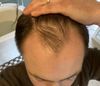
User shared 6-month hair loss treatment update with Dut 3x/week, oral min, and dut+prp mesotherapy. Experienced positive results, no side effects, and recommends the regimen.
The conversation discusses using Tretinoin for treating androgenic alopecia. Specific treatments mentioned include Minoxidil, Finasteride, and RU58841.
The conversation is about choosing an anti-androgen for hair loss treatment, with options being alfatradiol and pyrilutamide. Alfatradiol is considered a better choice due to its established use, while pyrilutamide is more experimental.
The post and conversation are about the user's high testosterone levels and their worsening hair loss despite trying various treatments. They are considering using low doses of anti-androgens to lower their testosterone levels as a potential solution.
A 22-year-old male experienced significant hair regrowth and stopped shedding after using dutasteride and spironolactone for 3-4 months. Spironolactone is discussed as an antiandrogen, typically used for women or transitioning individuals, and not commonly recommended for men due to potential side effects.
Mixing RU58841 with minoxidil compounded with tretinoin is discussed, with concerns about systemic absorption. Topical dutasteride and finasteride are also mentioned as treatments, with varying personal experiences and concerns about side effects.
OP used oral minoxidil (2.5 mg) and dutasteride (0.5 mg) for 12 months with successful hair regrowth. Consistency in treatment is emphasized, and switching from finasteride to dutasteride is suggested for better results.
A woman experiencing hormonal hair loss is on dutasteride and bicalutamide, which initially improved her hair, but she is now experiencing a second shedding phase with significant short hair loss. Despite normal hormone levels and no deficiencies, she is unsure if this shedding is normal and seeks advice.
People switching from Finasteride to Dutasteride after long-term use of finasteride and their results, including hair maintenance and increased thickness.
The user is experiencing intense hair shedding all over the scalp after applying pyrilutamide to the hairline and taking oral castor oil. They are also using topical finasteride and latanoprost, but are unsure which treatment is causing the shedding.
A 42-year-old shares progress using finasteride and dutasteride for 9 months, with occasional minoxidil use, noticing results after a month. The user applied minoxidil consistently for 3 months, then sporadically once a week.
A 39-year-old user experienced hair regrowth using oral dutasteride, oral minoxidil, dermastamping, and Nizoral shampoo after switching from finasteride and topical minoxidil. They are hopeful for significant improvement in their receding hairline.
User shows temple area progress after hair transplant, using DUT every other day and oral Min 2.5 daily. Another user asks about number of grafts and cost.
Dutasteride 0.5 mg significantly reduces both scalp and hair follicle DHT, with a greater reduction in hair follicle DHT. The discussion questions which reduction is more important for androgenetic alopecia and diffuse thinning.
Hair loss treatments like minoxidil, finasteride, and dutasteride, with mixed results and suggestions for combining treatments or considering hair transplants. Some users experience no improvement or side effects.
CB-03-01, also known as Breezula, is being considered as an alternative to DHT blockers for hair loss. Users are discussing its effectiveness, potential regrowth, side effects like scalp irritation, and hormonal impacts.
The conversation discusses hair loss treatments, specifically mentioning Minoxidil, finasteride, RU58841, and TB-500 Thymosin Beta-4. It critiques the credibility of biohacking claims.
A 16 year old's experience with using pyrilutamide to treat hair loss, and the potential side effects of adding tretinoin to minoxidil and finasteride treatments.
The user switched from finasteride to dutasteride and experienced heavy hair shedding around six months in, affecting even transplanted hair. They are seeking others' experiences with similar shedding after switching medications.
Chris's hair transplant looks better, but the hairline is criticized for being too straight and unnatural. Some recommend using finasteride and minoxidil for maintenance.
A 22-year-old switched from finasteride to dutasteride for hair loss treatment, also using RU58841, and is managing hypothyroidism. Despite ongoing shedding, they report some improvement and plan to continue dutasteride for a year before considering minoxidil.
The user is experiencing hair loss and is considering increasing their dutasteride dosage or trying RU58841, but is concerned about the effectiveness and side effects. Other users suggest sticking with dutasteride 0.5 mg daily and adding oral minoxidil for better results.
A 19-year-old concerned about long-term effects of 5AR inhibitors on physical appearance. They have used finasteride and plan to try dutasteride or RU58841; responses suggest improved skin, hair, and confidence.
The conversation is about a user planning a blood test to monitor health while on hair loss treatments: Finasteride, Minoxidil, and Dutasteride. Recommendations include testing for androgens, thyroid function, micronutrients, and basic health markers, with additional suggestions for PSA, prolactin, and estradiol.
Breezula shows promise in stabilizing hair loss and potentially promoting regrowth at the one-year mark, offering hope for those who can't tolerate 5AR inhibitors. Its local targeting of androgen receptors could be a significant advancement if it avoids systemic side effects.
A 38-year-old man from Poland, balding for 15 years, shared his hair regrowth progress after 4 months of using finasteride (fin), minoxidil (min), micro-needling, and infrared light treatments. He recently switched from finasteride to dutasteride.
The user shared their 7.5-month post-hair transplant results, mentioning they have been using finasteride and oral minoxidil. The conversation includes mixed reactions, with some users complimenting the results and others critiquing the hairstyle and presentation.
The user experienced significant hair regrowth and no side effects after 14 months of using oral dutasteride and topical minoxidil. They initially had side effects with finasteride but found success with dutasteride, noticing hair stopped falling out within a few months.
Progesterone, hydrocortisone butyrate, and estrone base are discussed as treatments for hair loss. Topical progesterone and dutasteride are suggested to potentially reverse androgenic alopecia.