PP405, a topical LDH inhibitor, has shown to stimulate hair follicle stem cell proliferation in humans with moderate hair loss. They are advancing to more detailed trials this year.
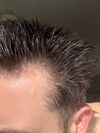
A 33-year-old male is experiencing thinning at the temples and hairline, with increased shedding over the past year. The user suspects androgenetic alopecia (AGA) despite AI suggesting a maturing hairline.
A user experienced significant hair loss after using Rogaine foam purchased from Amazon, which failed a bleach test for Minoxidil. They discovered that even legitimate Rogaine products might be faulty and advised buying from reputable sources.
Abyssinian oil, argan oil, and Batana oil are being discussed for their potential effectiveness in hair growth. The conversation questions whether these oils are beneficial or a scam.
The user experiencing diffuse hair loss is using various treatments including RU58841, finasteride, minoxidil with tretinoin, anti-hair loss shampoo, and microneedling, and is considering adding peptides TB500, BPC157, and GHK-Cu. They have low growth hormone levels and are questioning its impact on hair loss, while another user suggests androgenic alopecia and androgens are likely the main cause of hair loss.
The user is experiencing hair regrowth after 4.5 months of using oral minoxidil, oral dutasteride, latanoprost, ketoconazole shampoo, and dermarolling. They report shedding initially but have seen improvement without significant side effects.
The conversation is about managing scalp irritation caused by minoxidil use. Suggestions include switching to foam, using fluocinonide topical solution, trying lipogaine for sensitive skin, and considering low-dose oral minoxidil.
A user is seeking a Minoxidil solution without coconut derivatives due to a coconut allergy and is considering DIY options from pure Minoxidil tablets. They mention that Rogaine contains glycerin and cetyl alcohol, which are derived from coconut.
Latanoprost is discussed as a potential hair loss treatment, noted for its synergy with minoxidil and 5-AR inhibitors, but concerns include its effectiveness on scalp hair, cost, and potential skin darkening. Some users express interest in trying latanoprost or bimatoprost despite limited real-world evidence.
Lichen Planopilaris (LPP), a form of permanent hair loss, which can be mistaken for seborrheic dermatitis and is characterized by scalp itching, burning, redness, and dandruff. Treatment options discussed include steroidal creams, finasteride, minoxidil, and RU58841.
User noticed black dots along the hairline and temples, questioning if it's regrowth. They are using a regimen including Dutasteride, oral and topical Minoxidil, and a compounded topical treatment.
The user is considering starting finasteride for hair loss but is concerned about potential side effects due to their estradiol levels being near the upper limit. They have consulted a doctor who confirmed their levels are okay to start the treatment.
The user has high DHT levels despite using dutasteride, which may not be effective due to potential damage or spoilage. They are considering a hair transplant if DHT levels don't decrease after two years.
The method combines finasteride, minoxidil, intense leg exercises, and cold exposure to treat androgenetic alopecia. It aims to boost metabolism and reduce androgenic effects, enhancing hair growth.
A user was prescribed Alpicort E, which contains Estradiol Benzoate, Prednisone, and Salicylic Acid, for hair loss and is seeking others' experiences due to concerns about potential side effects.
The conversation is about gathering serum DHT data from individuals taking dutasteride to investigate its efficacy, especially in cases with unexpectedly low DHT reduction. The aim is to explore potential genetic factors affecting drug metabolism.
A user's 10 month progress report of using finasteride, minoxidil foam and keto shampoo to treat their hair loss, with some discussion on the best frequency of application of minoxidil.
Creatine might speed up hair loss in those prone to male pattern baldness, possibly due to increased DHT levels. Some users experience no issues when using creatine with treatments like finasteride, minoxidil, or dutasteride.
Topical Dutasteride is more effective than topical Finasteride for treating AGA in men, with fewer side effects. Mesotherapy with Dutasteride, administered every 3 months, shows promising results for hair regrowth and maintenance without daily routines or significant side effects.
The user is concerned about hair loss despite taking finasteride and has a hair transplant scheduled. They experience scalp itching and burning, which hasn't been relieved by various treatments, and another user suggests using ghk-cu & ahk-cu serum and Koshine kx-826/pyrilutamide for relief.
Cutting sugar may not significantly impact hair loss, as DHT and androgen receptors are the main issues. Effective treatments include finasteride, dutasteride, RU58841, and minoxidil, often combined with microneedling.
User discusses hair loss treatments, including fluridil, minoxidil, tretinoin, melatonin, stemoxydine, ketoconazole, and piroctone olamine. They suggest that shedding healthy terminal hairs may be bad, while shedding weaker hairs could indicate a beneficial treatment effect.
The user experienced negative side effects from oral minoxidil, including cardiac issues and excessive sweating, and decided to switch to topical minoxidil while using other treatments like RU58841, Setipiprant, Azelaic acid, and latanoprost. Another user suggested splitting the oral minoxidil dose to reduce side effects.
A user experienced severe side effects, including heart issues, after taking oral minoxidil without consulting a doctor. They are now considering alternatives like dutasteride, PRP, or laser treatments for hair loss.
A female user is experiencing heavy hair shedding and receding temples, possibly due to low ferritin levels. She is using oral minoxidil, iron supplements, and ketoconazole shampoo, and is hesitant to start spironolactone.
Ketoconazole shampoo is primarily used to reduce scalp fungus and inflammation, not to block DHT or androgen receptors. It may help with seborrheic dermatitis and improve scalp health, but its effects on hair loss are minimal compared to treatments like finasteride.
The conversation is about finding a suitable conditioner to use with Nizoral, a ketoconazole shampoo. One person is trying a caffeinated/coconut conditioner to strengthen hair but hasn't seen results yet.
The user switched from finasteride to DIY dutasteride mesotherapy and topical minoxidil due to side effects. They report improved well-being and no hair loss worsening after stopping finasteride.
A user is seeking topical versions of minoxidil and finasteride in Australia that do not contain propylene glycol. They are looking for alternatives due to potential irritation from propylene glycol.
Finasteride and Nizoral shampoo with Ketoconazole are used for hair loss treatment. Liquid Chromatography–Mass Spectrometry (LC-MS) is recommended over Enzyme-Linked Immunosorbent Assay (ELISA) for more accurate DHT testing.