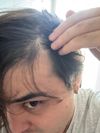
The user feels treated better with a comb-over than when bald due to cancer. They are considering a hair transplant and using finasteride and minoxidil for hair loss.
The user is using a hair loss regimen involving 2ddr applied twice daily, tretinoin weekly, and occasionally micro-needling. They report feeling increased scalp thickness and seeing some hair growth progress.
A user's hair loss progress after 4 months of using a topical fin and min mix, with responses from other users about their experience with the same treatments.
A user reported no improvement in hair loss after nearly a year of using 1mg oral finasteride, topical minoxidil twice daily, and weekly microneedling. Other users suggested the possibility of DUPA or retrograde alopecia and mentioned that treatments might only slow down hair loss rather than regrow hair.
A 29-year-old male shares progress pictures after 4 months using finasteride and 2% ketoconazole shampoo, noting initial shedding but overall improvement. He avoids minoxidil and microneedling, and reports thicker hair in balding areas while maintaining high water intake.
Finasteride, minoxidil, and sometimes dutasteride were used for hair loss with varying success. Some experienced side effects, while others maintained or regrew hair, considering hair transplants as a future option.
A 25-year-old is struggling with hair loss despite using treatments like oral Minoxidil, oral and topical Finasteride, Dutasteride, and PRP sessions. They feel frustrated with inconsistent treatment strategies and are seeking advice on managing thin hair and regaining confidence.
Hair transplant recipients are concerned about whether dormant follicles are permanently damaged by incisions, but some believe undamaged follicles could still regrow if a treatment like PP405 is effective. Opinions vary on the impact of transplants on original follicles, with some suggesting treatments like finasteride can help regrow hair.
The user reported progress in hair regrowth after three months of using oral finasteride and minoxidil foam, despite initial doubts. They noted no side effects, a clean diet, regular weightlifting, and additional supplements.
A 21-year-old is experiencing severe hair loss despite using finasteride and minoxidil, and plans to try dutasteride. Others share similar struggles and suggest various treatments like RU58841, spironolactone, and hair systems, while emphasizing the emotional impact of hair loss.
Hair fibers impressively cover bald spots, boosting confidence. User started big 3 treatment (0.5mg fin, 1 time minoxidil 5% topical, ketoconazole 2%) for regrowth.
The user reports positive progress in hair regrowth using 1mg oral finasteride, 3mg oral minoxidil, biotin, vitamin D, red light therapy, and microneedling. They note thickening at the hairline and some regrowth at the temples.
An 18/19-year-old male started balding at 16 and initially saw hair growth with minoxidil, but results diminished over time. He switched dermatologists and is now using a regimen of topical finasteride, minoxidil, vitamin D, and supplements, hoping for better results.
Balding is challenging, and relying on medications like finasteride is often seen as a better option than constantly shaving or trying to compensate in other areas. Many feel that societal expectations to "own it" or drastically change oneself to cope with baldness are unrealistic and burdensome.
A 22-year-old male experiencing hair thinning has been using topical finasteride and minoxidil since September 2024, with improvement except in the frontal/middle scalp area. He seeks advice on additional treatments and has started scalp massages.
A 25-year-old noticed thinning hair at the temples and started using finasteride (1mg/day) for two months, along with keto shampoo twice a week and vitamins like vitamin D, biotin, and zinc. They are seeing some results and are hopeful about regaining lost hair.
A 25-year-old male using Dutasteride, oral Minoxidil, and Ketoconazole shampoo is experiencing increased hair shedding and vellus hair growth along the hairline. Concerns are raised about whether this is a seasonal shed or a potential setback.
A 21-year-old male experiencing hair thinning and shedding was diagnosed with androgenetic alopecia and prescribed a topical solution containing 5% minoxidil and 0.1% finasteride, multivitamins, and 0.5mg dutasteride daily. He seeks confirmation on whether this prescription is typical for his condition.
Temporal peaks are crucial for a natural-looking hair transplant, but they are challenging to achieve due to the need for precise angles and appropriate hair thickness. Many users emphasize the importance of finding a skilled surgeon and using finasteride to maintain hairline stability.
A 28-year-old male is experiencing hair loss, itching, soreness, and numbness on the scalp, with symptoms including dry, brittle hair and scalp irritation. Treatments tried include Nizoral, salt water, various oils, and antihistamines, with limited success; a chemist suggested a possible fungal infection, while a doctor suspected male pattern baldness.
A 21-year-old shares their one-year progress using finasteride for hair loss, experiencing initial shedding but eventual regrowth, especially on the crown. They consider switching to dutasteride due to continued hair loss at the front temple and mid-scalp areas.
The user is pleased with their hair transplant results but is concerned about the vertex area. They use Minoxidil and finasteride daily and had the procedure at a clinic in Athens.
The user has seen significant hair regrowth using topical minoxidil and dutasteride, with better results than finasteride alone. Despite concerns about hairline and temporal peaks, others believe a hair transplant is unnecessary due to the current hair condition.
The user is experiencing severe hair loss despite using finasteride for 10 months and suspects scalp buildup might be contributing. Suggestions include using ketoconazole shampoo, consulting a dermatologist, and trying terbinafine cream.
The user experienced significant hair regrowth using minoxidil, finasteride, and Nizoral shampoo, with initial shedding but eventual improvement. They plan to continue the treatment after regaining lost progress from stopping minoxidil.
A 51-year-old shared progress on hair regrowth using topical Minoxidil and Finasteride over four months, noting significant improvement and plans for future hair transplants. The user emphasized the benefits of modern treatments and societal changes in attitudes towards hair loss.
The user has been using oral minoxidil, dutasteride, RU58841, and other treatments for hair loss over nine months, seeing some improvement in hair thickness and crown volume but continued thinning at the hairline. They plan to continue treatment for another nine months despite being sensitive to DHT fluctuations and are considering increasing dosages or other options like a hair transplant.
A 34-year-old woman is experiencing diffuse hair loss and irregular periods, possibly due to long-term spironolactone use. She is considering minoxidil and finasteride for treatment and seeking medical advice for androgenic alopecia and hormonal imbalances.