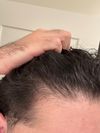
Scalp irritation from homemade topical finasteride may be caused by isopropyl alcohol. Alternatives suggested include using ethanol or everclear with distilled water.
OP saw significant hair growth after starting scalp exfoliation and using 5% topical minoxidil for 4.5 months, along with microneedling initially. Users discussed the benefits of exfoliation and inquired about experiences with finasteride and dutasteride.
A user shared their 6-month progress using oral dutasteride (0.5mg daily), topical minoxidil (5% once daily), and ketoconazole shampoo (2% weekly) for hair loss, reporting increased libido and no side effects. They chose dutasteride over finasteride due to availability and convenience.
A 35-year-old male experiences rapid hair loss on his head and body despite normal test results for testosterone, thyroid, and vitamins. He previously used topical minoxidil and retinol, and doctors have been consulted without finding a clear cause.
The user has been using topical minoxidil for over a year and added kx826/pyrilutamide to improve hair growth, avoiding finasteride due to side effects like lowered libido and panic attacks. They report positive results with reduced shedding and healthier hair, particularly in areas previously unresponsive to minoxidil.
The user is seeking advice on improving their hair loss treatment regimen, considering changes to their topical solution, and is curious about others' daily routines and recommendations for medications and supplements. They are contemplating switching Tretinoin for Tazarotene, Latanoprost for Bimatoprost, and possibly adding Alfatradiol, Topical Melatonin, or a topical androgen receptor antagonist.
The conclusion of the conversation is that the user, djamezz, has experienced significant regrowth and improved density in their hairline by using treatments such as RU (RU58841), dut (dutasteride), and Inkey's Caffeine Scalp treatment. They are satisfied with their progress and do not plan to cut off their hair.
The FDA warned that topical finasteride can cause serious side effects like sexual dysfunction and brain fog, similar to oral finasteride. Compounded topical formulations pose additional risks due to lack of regulation.
Topical finasteride concentrations and application amounts are debated, with concerns that mainstream solutions may use arbitrary concentrations. A 0.25% solution with a specific application method is suggested as more appropriate than higher concentrations.
A 21-year-old male shares his 3-month progress using 0.5mg dutasteride daily, 5% topical minoxidil twice daily, and weekly microneedling, showing some temple recovery and seeking further improvement. Feedback suggests continued use and monitoring, with optimism for more regrowth over time.
GT20029 showed significant hair growth and safety in phase II trials, with no adverse sexual events. Users are hopeful but concerned about future costs and systemic effects.
Alfatradiol is discussed as a weak 5ARI and estrogen, not as effective as minoxidil, RU58841, or CB-03-01, but a safe alternative for those who can't use finasteride. Users express frustration over the lack of strong FDA-approved topical antiandrogens for hair loss.
The conversation discusses hair loss treatments, specifically using Minoxidil, finasteride, and RU58841. The focus is on progress observed at the temples after one month of treatment.
The conversation discusses topical androgen receptor blockers for hair loss, mentioning Clascoterone, Pyrilutamide, GT20029, and RU58841. Ketoconazole's effectiveness and application methods are also debated.
User tried oral dut 0.5mg, oral min 5mg, topical RU 80mg, and weekly microneedling at 1.5mm for hair loss. Others commented on the significant improvement and potential for future hair transplant.
A user shared their success in getting a prescription for 0.1% Alfatradiol, a topical treatment for hair loss similar to finasteride but with fewer side effects. They found a pharmacy to compound it and will update on the results.
The user is using 0.1% dutasteride, 1% minoxidil with 2% procapil and 0.005% caffeine in the morning, and 1% minoxidil with 2% procapil and 0.01% tretinoin at night. They are concerned about the solution vehicle's effectiveness in preventing systemic absorption and ensuring the products stay around the hair follicles.
Maintaining scalp hair and minimizing shedding, treatments used such as Procapil, supplements, topical caffeine, topical estrogen, and scalp massage; suggestions for anagen extenders or pharmaceuticals to help with a short anagen phase.
The conversation is about managing allopregnanolone deficiency caused by 5-alpha-reductase inhibitors like finasteride or dutasteride. Specific treatments discussed for hair loss include Minoxidil, finasteride, and RU58841.
A 22-year-old is frustrated with ongoing hair loss despite using treatments like topical minoxidil, finasteride, microneedling, oral dutasteride, and oral minoxidil. Their dermatologist suggests treating scalp inflammation with oral tretinoin and using exosomes for alopecia.
A 28-year-old man with hair loss is seeing regrowth in his temple area after 2 months of treatment with Dutasteride, a 1.5mm Dermaroller, topical Minoxidil, and Biotin supplements. He also notes an unexpected positive side effect of Dutasteride clearing up his light facial acne.
Stemoxydine's effects on hair growth are uncertain and not well-studied, with users reporting mixed results and concerns about maintaining gains. Some users combine it with 5AR inhibitors like Dutasteride, but results vary, and conditions like lichen planopilaris complicate treatment.
The user noticed increased hair loss over the past three years and is seeking advice. A suggestion was made to consult a dermatologist or trichologist and consider blood tests, particularly for vitamin D levels, to address potential androgenetic alopecia (AGA).
A user has been taking finasteride, using a derma-roller, LLLT, and argan oil, but experienced significant hair loss at the one-year mark. They are concerned if this is a normal shedding phase or something to worry about.
The user is considering changing their hair loss treatment from topical minoxidil and oral finasteride to oral minoxidil and oral dutasteride, with suggestions to add microneedling and possibly red light therapy. They are also exploring the addition of a caffeine and adenosine mix to their regimen.
The conversation is about using Xeljanz for hair regrowth in individuals with LPP. The user is seeking experiences and expectations from others who have tried this treatment.