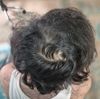
Hair loss progress after 12 months using minoxidil, finasteride, and microneedling. Goal is to maintain and improve hair until old enough for hair transplant.
The user has been using finasteride and minoxidil for almost 2 years with maintenance but no significant regrowth. After adding tretinoin 2 weeks ago, they experienced increased shedding and are seeking advice on whether this is a positive sign.
An 18-year-old shares their successful hair regrowth journey using finasteride 1mg daily, topical minoxidil twice a day (mixed with tretinoin 0.025% at night), ketoconazole shampoo 2-3 times a week, and occasional dermarolling. They report no side effects and emphasize the importance of consistency and early intervention.
An 18-year-old is experiencing thinning hair at the crown and is concerned about early balding due to family history. They are using 5% minoxidil and considering adding finasteride to potentially regrow hair and block DHT.
Hair regrowth after telogen effluvium, with the user experiencing hair loss at the temples and regrowth after taking omega-3/fish oil tablets. Suggestions include consulting a dermatologist and considering supplements like Biotin, Zinc, and Vitamin D.
The user has been experiencing diffuse hair thinning despite using finasteride, minoxidil, dermarolling, clobetasol cream, and PRP sessions. They seek advice on additional treatments and are advised to check vitamin D, iron, and thyroid levels.
Pelage plans to release phase 2 results and start phase 3 trials for PP405 in 2050, but skepticism remains due to past delays and unfulfilled promises. Users express frustration over the lack of progress in hair loss treatments, mentioning Minoxidil, finasteride, RU58841, CB-03-01, and Fluridil.
Kintor Pharma successfully dosed the first patient in a Phase II trial for KX-826 for acne vulgaris. Users are more interested in results for male pattern baldness (MPB).
User questions credibility of a hair loss "cure" found by a non-expert and warns against wasting money on unproven supplements. Others discuss trying natural extracts and the importance of researching the enzyme 3ADH for potential hair growth benefits.
The user experienced hair improvement over a year using finasteride, topical minoxidil, tretinoin, ketoconazole, and microneedling. The hair density and hairline have strengthened with this routine.
A user experienced significant hair regrowth using Lipogaine, alongside supplements, coffee, green tea, onion oil, rosemary, and Nizoral shampoo, after Propecia caused side effects. Another user reported no progress with Lipogaine after two months, noting inconsistent application.
The conversation discusses the delay in bringing FAK inhibitors and Stanford's hydrogel to market for hair transplants, with a preference for FAK inhibitors over Verteporfin due to their superior potential in preventing scarring. The user expresses frustration over the slow progress and hopes for faster development by companies like FAKnostics.
The conclusion of the conversation is that the user has made significant progress in their hair loss treatment using a combination of oral minoxidil, topical minoxidil, RU58841, dutasteride, dermarolling, and scalp massage. Other users have praised their progress and recommended different treatments.
Treating androgenic alopecia with minoxidil, finasteride, and antiandrogens, alongside exercise, cryotherapy, and natural substances to stimulate cold receptors for better hair growth. The method focuses on enhancing treatment effectiveness by considering environmental and behavioral factors and the role of cold receptors and muscle stress.
The user experienced subtle hair growth improvements using finasteride, dutasteride, and minoxidil over nearly three years, with notable progress at the temples. The front hairline shows quicker regrowth cycles, but the vertex and crown remain unchanged.
A user is experiencing hair thinning and is using a peptide with oleanic acid as a DHT blocker, along with minoxidil, while waiting for topical finasteride. They plan to use a combination of minoxidil, finasteride, dermastamp, ketoconazole, and scalp massages, but are advised to stick to proven treatments like finasteride and minoxidil.
A South Korean company, Therazyne, has developed a promising hair loss treatment using a WNT chain surrogate that binds to Frizzled 7, with human follicle testing expected soon. Current treatments like minoxidil and finasteride are not seen as cures, and while optimism exists for future solutions like PP405, approval processes are lengthy.
Three months into using Minoxidil, finasteride, dermarolling, tretinoin, and saw palmetto shampoo, the user is seeing baby hairs on their hairline and is hopeful they will thicken. Another user reports that their own baby hairs have been getting thicker and longer over time.
A 17-year-old is experiencing diffuse thinning, dandruff, body hair shedding, and other symptoms, possibly linked to seborrheic dermatitis or telogen effluvium. They are using ketoconazole shampoo and considering blood tests to check for thyroid issues or deficiencies.
The conversation is about using micro needling and PTD-DBM for hair loss treatment. The user applies PTD-DBM drops on weekdays and performs micro needling weekly.
The user is experiencing significant hair regrowth using 1mg oral finasteride, 1.25mg oral minoxidil, 5% topical minoxidil, biotin, vitamin D3, fish oil, and weekly microneedling with a 1mm needle roller. They report no major side effects, except for slight hair growth near the eyebrows, and are pleased with the progress.
A year-long journey of treating hair loss with finasteride, minoxidil, ketogenic diet, and microneedling, featuring before-and-after progress pictures.
Age-linked hair loss is linked to disappearing collagen. Treatments discussed include minoxidil, finasteride, RU58841, tretinoin, microneedling, and collagen supplements.
A user shared their 3.5-month progress using oral finasteride, topical minoxidil, biotin, and weekly 1.5mm derma rolling. Another user commented that the original poster's hairline has improved significantly.
ET-02, a new hair loss treatment, shows promising results with a 6-fold increase in hair count, potentially outperforming minoxidil by activating stem cells in hair follicles. Further trials are ongoing to confirm its efficacy and safety, with potential market release in the future.
The user is experiencing good hair regrowth using topical minoxidil, oral finasteride, biotin, and ketoconazole shampoo. They are curious about when the regrowth will plateau.
The user has been using oral Minoxidil for a year and switched from dutasteride to finasteride four months ago, noticing some growth but still experiencing hair loss. They seek advice on managing hair loss, mentioning their hair feels strong when dry and they apply oil weekly.
A female with PCOS and androgenetic alopecia is starting treatment with oral Minoxidil, topical Minoxidil 5% with finasteride, and plans to add mesotherapy. She previously tried anti-androgenic contraceptive pills but couldn't tolerate them and is using Myo Inositol for weight management.