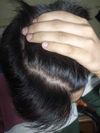
User doing PRP with exosomes for hair loss, sees possible regrowth after two treatments. Another user suggests providing before and after pictures for better assessment.
A 25-year-old male experienced hair regrowth after 4.5 months using a chewable treatment with 1mg finasteride, 6% minoxidil, and 2.5mg biotin, despite initial shedding and acne from accutane. Opinions on progress vary, with some noticing thicker hair and others seeing no difference or thinning.
The conversation is about using Bimatoprost for hair growth, with concerns about potential side effects like eye color change and fat atrophy. Users discuss combining it with other treatments like Minoxidil and Finasteride, and sourcing Bimatoprost in bulk.
GT20029 is a new hair loss treatment in Phase 3 trials in China, using PROTAC technology to target androgen receptors, potentially with fewer side effects than finasteride and minoxidil. VDPHL01, a second-generation minoxidil, is also mentioned as potentially more effective.
The user has been using finasteride for two years without results and recently started a new routine involving derma stamping, retinol, and minoxidil, which seems to show progress. The user microneedles about half the week and uses L’Oréal night serum for retinol.
The conversation discusses GT20029, a drug in Phase II trials that targets androgen receptors with minimal systemic effects, and TDM-105795, a growth stimulant with a different mechanism than minoxidil that may revive papilla stem cells. Both are potential new treatments for hair loss.
PP405 is a potential hair loss treatment that may work by blocking signals that cause hair cells to stop growing, requiring daily application for effectiveness. It could serve as an alternative to minoxidil and finasteride, but it is not yet available on the market and may take several years to be released.
A 17-year-old is concerned about hair loss and shares photos for opinions. A user responds that the hair looks normal but is hard to assess from the images.
The conversation discusses hair loss treatments, mentioning minoxidil, finasteride, RU58841, VDPHL, GT20029, and follicle cloning as potential solutions. It also reveals that the discussion about PP405 was an April Fool's joke.
Korea launched its first OTC oral hair loss drug, dexpanthenol B5. Users discuss its anti-oxidative and anti-inflammatory effects but note a lack of efficacy studies.
The user noticed new baby hairs after using sulforaphane but is still experiencing shedding. They are seeking a supplement to stop shedding, possibly grape seed extract.
The conversation discusses using a lipodermal solution for hair loss, with concerns about side effects from multiple active ingredients. Users mention experiences with minoxidil, finasteride, and dutasteride, noting side effects like brain fog and sexual issues.
A 19-year-old concerned about long-term effects of 5AR inhibitors on physical appearance. They have used finasteride and plan to try dutasteride or RU58841; responses suggest improved skin, hair, and confidence.
A 17-year-old is using Finasteride and Minoxidil for hair loss, experiencing hair shedding and cystic acne. They are considering Dutasteride for acne but are concerned about potential side effects on genital development.
Hair loss treatments discussed include microneedling, minoxidil, tretinoin, finasteride, dutasteride, pumpkin seeds, saw palmetto, and scalp massage. The consensus is that finasteride or dutasteride is necessary for significant regrowth, while other methods may only slow hair loss.
A user shared their 5-month progress using a topical treatment with finasteride, minoxidil, and retinoic acid, noting some hair growth but also shedding. Another user encouraged them, sharing their own experience of gradual improvement over 12 months and advising patience.
A user is creating a custom topical hair regrowth serum using minoxidil, bimatoprost, tretinoin, castor oil, and hyaluronic acid. They are also using dutasteride, oral minoxidil, and castor oil in their current regimen.
DUPA and retrograde alopecia may not be solely DHT-based, and a biopsy is crucial for accurate diagnosis and treatment. Treatments mentioned include dutasteride, oral minoxidil, pioglitazone, clobetasol, calcipotriol, ketoconazole, and doxycycline, depending on the specific condition.
Stem cell hair transplants use stem cells from fat tissue to reactivate inactive hair follicles, but results are inconsistent and not widely shared. Traditional treatments like finasteride and minoxidil often show better results.
DHT causes hair loss by driving cells into senescence, and a polyphenol in black chokeberry may reverse this. A product using this theory is being considered for use alongside finasteride, minoxidil, and microneedling.
The user has been using finasteride, ketoconazole shampoo, oral minoxidil, and minoxidil foam for hair loss but feels their hair is not as thick as desired. They have stopped using RU58841 due to lack of results and are concerned about hair miniaturization despite these treatments.
The conversation discusses hair regrowth progress from Norwood scale 4 to 2.5 over a year using daily 8.5-9% RU58841, topical Dutasteride 0.1%, RU58841 5% 1.5 times a week, and daily caffeine redensyl scalp treatment.
A user is concerned about a growing thin spot on their boyfriend's head despite using Rogaine, Vitamin K, Vitamin E, Biotin, and Ubiquinol. Another user suggests starting finasteride, minoxidil, and dermarolling for better results.
The user has seen significant hair regrowth using a routine of minoxidil, finasteride, microneedling, scalp massage, and Nizoral. They are considering adding red light therapy and PRP to their regimen.
The user is observing potential hair regrowth at day 46 using 1mg oral finasteride, 2.5mg oral minoxidil, 5% topical minoxidil, biotin, vitamin D, fish oil, and weekly dermal rolling. They are optimistic about the results despite skepticism from others.
The potential hair regrowth benefits of ASC-J9, a synthetic modified version of curcumin that is said to be more effective than Minoxidil and Finasteride. Reports from users suggest good thickening and temple regrowth with topical use at 0.025% concentration.
Hair cloning is being developed by companies like Kangstem Biotech and Stemson, with potential availability in a few years. Initial costs are expected to be high, but prices may decrease over time.
Lichen Planopilaris (LPP), a form of permanent hair loss, which can be mistaken for seborrheic dermatitis and is characterized by scalp itching, burning, redness, and dandruff. Treatment options discussed include steroidal creams, finasteride, minoxidil, and RU58841.
The conversation discusses changes in scalp texture and appearance in areas of hair loss, with concerns about the suitability of these areas for hair transplants. Users mention issues like fibrosis, inflammation, and thinner skin, advising caution and consultation with clinics before proceeding with transplants.
A 23-year-old is experiencing hair that is thick at the ends but thin at the roots despite using minoxidil and finasteride for 10 months. They are concerned about whether this is normal or a sign of miniaturization and seek advice on reversing or improving the condition.