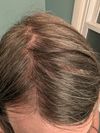
User discusses scalp micropigmentation for denser hair appearance and its benefits compared to lifelong treatments. Special ink is used, which can fade and blur over time but can be topped up.
A user is documenting their natural approach to treating a receding hairline using a dermastamp, essential oils (rosemary oil at 3% dilution with pumpkin seed oil), a multivitamin with vitamin D, and daily collagen shakes. They acknowledge the common recommendations of minoxidil and finasteride but prefer to test natural methods and share their results.
The user is using minoxidil, finasteride, dermarolling, and other treatments for hair regrowth, showing promising results in the temple area. Despite some skepticism, there is optimism about potential improvement.
Hair loss discussion with a focus on a single resilient hair, jokingly called "chad hair," that remains despite hairline receding. Some users suggest microneedling and hair follicle cloning as potential treatments.
Mallia Aesthetics has developed MAL-838, a hormone-free product derived from sCD83, which stimulates hair growth without disrupting the skin microbiome. sCD83 promotes hair growth by activating hair follicles and preventing cell death, offering a localized treatment without systemic side effects.
Norwood 7 hair loss is often excluded from trials to ensure treatments appear more effective and to reduce costs. Some believe treatments effective for Norwood 5 could work on Norwood 7, but companies prioritize market readiness.
A 36-year-old experienced significant hair regrowth using dutasteride, oral and topical minoxidil, and keto shampoo, and plans a hair transplant for further improvement. Despite progress, they seek hairline restoration and have scheduled a transplant of 3,000 grafts.
PP405 is a promising new treatment for hair loss that activates dormant stem cells in hair follicles, potentially bypassing the effects of DHT. It is currently in phase 2 trials and could be available between 2027 and 2030, but it is not considered a definitive cure.
The conversation discusses hair loss treatments, specifically Setipiprant, finasteride, and bimatoprost. Setipiprant is suggested for maintenance, while bimatoprost is for regrowth, and combining them with dermarolling is recommended for better results.
Treating androgenic alopecia with minoxidil, finasteride, and antiandrogens, alongside exercise, cryotherapy, and natural substances to stimulate cold receptors for better hair growth. The method focuses on enhancing treatment effectiveness by considering environmental and behavioral factors and the role of cold receptors and muscle stress.
A user is seeking non-transplant hair treatments in Seoul, such as scalp detox, PRP, and exosomes, before considering a future transplant with Dr. Zarev. They want to explore options that improve hair health without undergoing a transplant immediately.
The user diagnosed with DUPA tried treatments like dutasteride, finasteride, RU58841, and minoxidil without success and is considering a hair system. They hope for a future cure, possibly with PP405, and others suggest options like scalp biopsy and SMP.
Oral PTD-DBM was discussed as a potential hair loss treatment, but it was deemed ineffective in humans despite promising results in mice. The conversation concluded that trying it without VPA might be unwise.
The user experienced side effects like dull skin and eye bags from minoxidil after a hair transplant and is considering alternatives like redensyl. They stopped using finasteride due to side effects and are concerned about maintaining hair without minoxidil.
A 17-year-old is addressing hair loss with finasteride, topical minoxidil, and microneedling. They are considering adding GHK-Cu to their regimen, but others advise caution with finasteride due to age.
The conversation discusses hair loss treatments, mentioning minoxidil, finasteride, RU58841, VDPHL, GT20029, and follicle cloning as potential solutions. It also reveals that the discussion about PP405 was an April Fool's joke.
Hair loss can be treated by correcting glucose metabolism in hair follicles and using equol as a safer DHT blocker. Production of these treatments is starting soon, and a Discord channel is available for more information.
The conversation is about someone considering a hair transplant due to ineffective hair loss treatments, with suggestions ranging from trying a hairpiece to continuing with medications like finasteride and minoxidil, and waiting for new treatments. Some advise against a transplant due to the extent of hair loss and the cost, while others share different views on the effectiveness of transplants and non-surgical options.
TDM-105795 showed promising hair growth results, with higher efficacy than placebo and minimal side effects. It activates dormant hair follicle stem cells and may maintain gains without immediate loss, unlike minoxidil.
A 40-year-old considering a hair transplant after using finasteride and oral minoxidil for hair maintenance. They have maintained hair well with these treatments and seek opinions on whether a transplant would improve their appearance.
A user shared their positive experience with a hair transplant at Eugenix in India, noting the professionalism and natural results. They mentioned using 2815 grafts and discussed the clinic's controversial name, but did not mention using specific treatments like Minoxidil or finasteride.
The user, SnooDonuts9235, shares their positive experience with a hair transplant and using topical finasteride and minoxidil. They express concern about increased shedding and ask if it is normal. Other users compliment their results and ask about the clinic and procedure details. SnooDonuts9235 encourages others to consider a hair transplant even without taking oral finasteride and shares that the procedure was not as scary as they initially thought.
A user shared their positive experience with a hair transplant at Smile Hair Clinic, using treatments like oral finasteride, minoxidil, and dutasteride. They reported no side effects, significant improvement in hair density, and satisfaction with the results.
Pelage is moving to Phase III clinical trials for PP405, a hair loss treatment, with results to be presented at a medical meeting. Users express skepticism and hope, comparing it to existing treatments like Minoxidil and finasteride, while discussing the potential for new hair growth in previously bald areas.
The user is experiencing significant hair regrowth using 1mg finasteride, 5mg minoxidil, and biotin since April, and may not need a hair transplant. Another user suggests that if a transplant is desired, around 4,000 grafts could provide good coverage.
A user shared their 1.5-year progress after a FUE crown transplant, using dutasteride and oral minoxidil, which improved their hairline and stabilized hair loss. They experienced dizziness from topical minoxidil but had no side effects from finasteride, dutasteride, or oral minoxidil.
OP is using 0.5 mg Dutasteride and 2.5 mg oral Minoxidil for hair loss and considering a hair transplant. Most users suggest waiting 1-2 years to maximize results from the medication before opting for a transplant.
Finasteride and Minoxidil effectively regrow hair but cause sexual side effects. The user is considering a Korean FUE hair transplant and is researching clinics and costs.
PP405 is a new hair loss treatment in phase 2 trials that may promote hair growth by increasing lactate production and activating hair follicle stem cells. It could potentially replace hormone-disrupting treatments like Minoxidil and finasteride.
A user shared their positive experience with a hair transplant in Bangkok, Thailand, performed by Dr. Kongkiat Laorwong, costing ~$4,500 for 2,100 grafts. The user had been using finasteride, minoxidil, dutasteride, and oral minoxidil for hair loss treatment before the transplant and reported no side effects.