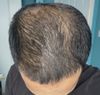
The user's progress after using dutasteride for hair loss treatment, and how minoxidil is also a helpful part of this process which can take up to one year to see full effects.
Verteporfin and FAK inhibitors being looked at as potential treatments for hair regeneration, with updates on the unofficial off-label human trial being discussed.
A 26-year-old male started minoxidil treatment for male-pattern baldness and saw significant regrowth in three months. He is considering finasteride but is hesitant due to potential side effects.
Microneedling's effectiveness for hair growth is debated, with some suggesting it enhances minoxidil absorption, but evidence is inconclusive. Concerns exist about its impact on hair transplants, and opinions vary on its use with other treatments like RU58841 and stemoxydine.
The user was rejected from participating in a clinical trial for an extended-release oral Minoxidil due to having rheumatoid arthritis, despite initially being accepted. They had stopped using Dutasteride and Minoxidil to qualify but continued using other treatments like RU58841 and red light therapy.
The user is unsatisfied with their hair transplant and is considering another transplant, PRP, exosomes, or stem cells. They currently use topical minoxidil, dutasteride, and tretinoin.
A 32-year-old is seeing new hair growth after two months of using minoxidil foam twice daily, finasteride every other day, and weekly microneedling. They previously had a hair transplant but did not use medication afterward, which they now regret.
A user shared their hair transplant update, having received 4,300 grafts and choosing not to use medications like finasteride or minoxidil due to potential side effects and personal reasons. Many commenters expressed concern that without these medications, the user might experience further hair loss, suggesting that preventative treatments are important for maintaining transplant results.
The user experienced hair regrowth and stronger dreadlocks after six months on finasteride, despite initial shedding and reduced libido. They plan to continue the treatment, possibly adjusting the dosage or adding topical treatments.
A 25-year-old male with DUPA (diffuse thinning including the donor area) has not seen improvement after 14 months on finasteride. He's considering switching to dutasteride (DUT) after advice from a hair loss YouTuber and is also contemplating trying RU58841.
A user shared their 11-year journey with alopecia, using finasteride, dutasteride, and a hair transplant. They encouraged others not to panic, noting that hair miniaturization can take over 15 years to complete.
The user had a hair transplant 5 years ago and is currently using 1 mg finasteride and topical minoxidil but is not seeing an increase in hair volume. They are considering another transplant to improve hair volume.
Alfatradiol (0.025%) is an effective and safe treatment for androgenetic alopecia in both men and women, increasing anagen hair rates with minimal side effects. Users discuss its cost-effectiveness and ease of use compared to other treatments like finasteride and RU58841, with some combining it with stemoxydine and Minoxidil.
A user started finasteride for hair loss and saw improvement, but is now experiencing shedding and thinning in new areas. They added Nizoral due to dandruff caused by finasteride. Replies suggest that shedding is normal around 6 months and advise to stick with the treatment.
A person transitioning is using 2mg sublingual estradiol and 2.5mg oral minoxidil daily for hair regrowth, noting significant progress in three months. They plan to increase estrogen dosage and consider adding dutasteride, discussing the effects and challenges of transitioning.
The user shared progress after two months of using finasteride, serioxyl, and NOOANCE casque Pro for alopecia. They are documenting their hair loss treatment journey.
A user underwent a second hair transplant for increased density and to address hair loss in the crown area, with 3,800 grafts at a cost of 2,200 euros at Estepalace, including additional services. Some commenters discussed the appearance of the hairline and the importance of using DHT blockers like finasteride or dutasteride post-transplant.
The user experienced continuous hair shedding for 16 months while on finasteride, with periods of improvement. They also used T Gel shampoo and noticed a reduction in hair loss symptoms after 18 months, including the return of their sex drive and normal hair texture.
The conversation discusses hair loss treatments, mentioning minoxidil, finasteride, RU58841, VDPHL, GT20029, and follicle cloning as potential solutions. It also reveals that the discussion about PP405 was an April Fool's joke.
User experienced hair loss after starting dutasteride, but saw regrowth with finasteride. They wonder if dutasteride can cause initial shedding but eventually lead to hair regrowth.
The user started taking dutasteride a month ago and is seeking advice on whether to wait for a year before getting a hair transplant, as it could potentially strengthen the donor-zone and require fewer grafts, or to get a transplant immediately, extracting only the "strong hairs" not affected by dutasteride. The user is unsure which approach is correct.
A user is using a Finoxidil topical spray and is curious if oral Finasteride would be more effective, considering they are already on a DHT blocker called Cyproterone. They are concerned about the potential impact of oral Finasteride on their transition.
The user has been using finasteride for 4 years and minoxidil for 1 year, with a recent break from minoxidil due to shedding concerns. They resumed minoxidil and started dutasteride 3 times a week, but are experiencing increased hair shedding.
Switching from dutasteride to finasteride and back led to significant hair shedding, despite continued use of oral minoxidil. The user is hopeful for hair regrowth after resuming dutasteride.
The post discusses a 21-year-old male's significant hair regrowth after experiencing shedding periods during an 11-month treatment with finasteride, minoxidil, ketoconazole, biotin, and dermaroller. The conversation encourages persistence with the treatment despite shedding phases, as hair tends to grow back thicker and longer.
The conversation is about personal experiences with Anagenic Pyrilutamid for hair loss and what carriers people use with it. No specific treatments or outcomes are mentioned.
Body hair transplants can be a last resort for hair loss, using body hair to fill scalp gaps, though it may not match scalp hair in texture or length. Minoxidil and finasteride are discussed as treatments, with varying effectiveness and side effects.
A user decided to stop using finasteride due to side effects and chose to shave their head instead. They plan to use the money saved for a hair transplant towards a house downpayment, hoping for future advancements in hair cloning.
The conversation discusses the challenges and experiences of using minoxidil, finasteride, and dutasteride for hair loss, focusing on the shedding phase and its impact on hair appearance. Users share their personal experiences, side effects, and hopes for improvement, with some considering or having undergone hair transplants.
The user "AcanthocephalaNo7632" shared their progress with hair loss, mentioning the use of minoxidil and finasteride. Some users questioned the authenticity of the progress pictures.