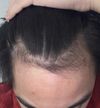
The user healthydudenextdoor starting a new topical anti-androgen hair loss treatment, Pyrilutamide, and discussing their current regimen of finasteride and minoxidil.
A 19-year-old male switched from finasteride and minoxidil to dutasteride due to continued hair thinning and is experiencing increased nipple sensitivity and a small lump, raising concerns about gynecomastia. Suggestions include slowing the transition, checking hormone levels, and considering an aromatase inhibitor.
The conversation is about someone who initially had positive results with Minoxidil for hair loss, lost those gains due to a hospital stay, and is now not seeing the same results upon resuming treatment. They plan to add microneedling and/or tretinoin to their regimen and are seeking success stories from others who did not respond to Minoxidil alone.
Chime Biologics and Hope Medicine are speeding up the launch of a first-in-class antibody drug, HMI-115, for endometriosis and androgenic alopecia. The treatment involves a series of subcutaneous injections, has shown promising results in phase 1, and continues to promote hair regrowth even after the treatment is stopped.
The user is considering switching from finasteride and minoxidil to dutasteride for better hair regrowth results, as they are experiencing thinning and shedding despite current treatments. They have also tried microneedling, Clobetasol, and salicylic acid to manage scalp issues and inflammation.
Pyrilutamide, a new drug being tested to combat hair loss that has been found to perform comparably or better than finasteride and dutasteride in the initial 6 months of treatment with minimal reported side effects.
Microneedling's long-term effects on hair loss are uncertain, with concerns about scarring and the need for continued use of minoxidil and finasteride to maintain gains. Finasteride does not sustain minoxidil-regrown hair without ongoing minoxidil use, and microneedling alone shows limited evidence of effectiveness.
The user experienced significant hair regrowth after starting oral minoxidil (2.5mg) and dutasteride (0.5mg) daily, and is considering resuming microneedling at home with a dermapen. They are concerned about potential risks of microneedling, such as scarring, and are seeking advice on needle length and frequency.
The conversation is about the long-term safety trial results for pyrilutamide, which are expected soon. Treatments mentioned include Minoxidil, finasteride, and RU58841.
A 33-year-old male has been using minoxidil, finasteride, and microneedling for hair loss since February 2024. Opinions vary, with some seeing no improvement and others noting stabilization.
Exploring potential treatments for hair loss, such as Minoxidil, Finasteride, RU58841 and Pyrilutamide. The user is looking for feedback on whether KX-826 can be used successfully as a single therapy to stop the miniaturization process.
User tried microneedling with min and fin for hair loss, experienced inflamed scalp and dandruff. Recommends proper disinfection of microneedler to avoid issues.
25-year-old male with Norwood 2 hair loss tried PRP injections without success. Dermatologists didn't recommend finasteride or minoxidil, but suggested PRP + Mesotherapy for 50% improvement.
Dutasteride is more effective than finasteride, has neuroprotective benefits, and may prevent acne. Despite initial concerns about metabolic effects, further research suggests it is safe for most users, especially if not hypogonadal.
A 22-year-old male experienced hair regrowth and improved hair health after using Minoxidil, Finasteride, and microneedling for nine months, with initial shedding but no significant side effects. Users discussed similar experiences with hair styling difficulties and shared tips for managing hair texture and side effects.
Minoxidil alone gave one user only short fuzzy hair after a year. They're now trying a 0.5 microneedling roller and seeking opinions on its effectiveness after using minoxidil.
A new hair loss treatment, PP405, showed promising Phase 2a results with 31% of patients experiencing over 20% hair density increase without systemic absorption, avoiding hormonal side effects. The treatment is expected to be expensive, with Phase 3 trials starting mid-2026, and there is skepticism about the data's strength.
User experienced hair loss from Norwood 3.5 to Norwood 5 with diffuse thinning after using a hair system for 2 years. Tried Redensyl, Capixyl, Bicapil, Biotin, multivitamins, Fin, and Min without significant improvement, seeking advice for hair recovery.
Microneedling and Platelet-Rich Plasma (PRP) are equally effective for treating androgenetic alopecia, with no additional benefits from PRP over microneedling. Both treatments are safe and well-tolerated.
The method combines finasteride, minoxidil, intense leg exercises, and cold exposure to treat androgenetic alopecia. It aims to boost metabolism and reduce androgenic effects, enhancing hair growth.
The conversation is about people with advanced hair loss (Norwood 6 or 7) who have seen significant hair regrowth using treatments like finasteride, minoxidil, microneedling, and RU58841. Nine cases were collected to motivate others to try these treatments despite advanced hair loss.
The conversation humorously discusses hair loss treatments, specifically mentioning microneedling, Minoxidil, finasteride, and RU58841. Users joke about using a new microneedling tool to combat hair loss.
OP experienced hair improvement using NMN and quercetin after stopping finasteride, but later resumed finasteride due to shedding. They believe NMN and quercetin still help with hair loss.
A 17-year-old is experiencing rapid hair loss from NW1.5 to NW3 in six months and feels dermatologists are unhelpful. They are using Minoxidil (Rogaine) and seeking advice on application.
The user tried pyrilutamide for hair loss and noticed reduced scalp itch and improved skin but stopped due to mild heart sensations. They plan to update after consistent use, noting improved sleep when applied at night.
Treatments for hair loss, including Minoxidil, finasteride, and RU58841. The post discusses the potential benefits of Pyrilutamide compared to RU58841 in terms of strength and longevity.
A user recently started using nanoxidil 5% for hair loss, particularly on the hairline, and is seeking feedback or experiences from others. The conversation focuses on the effectiveness of nanoxidil.
The user experienced side effects like watery semen, erection problems, and decreased libido from finasteride, which resolved after stopping it. They are considering dutasteride mesotherapy as an alternative, as advised by their dermatologist, and are concerned about potential side effects.
RU58841 was the only treatment that slowed hair loss and reduced irritation for a DUPA sufferer after trying finasteride, minoxidil, and dutasteride with no success. The user continues using 6mg oral minoxidil, 0.5mg dutasteride, and an 8% RU58841 solution.