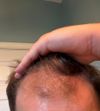
User asks about using eucapil/fluridil with Minoxidil and how to space out application to avoid ineffectiveness. Also inquires about microneedling timing.
Hair loss after telogen effluvium (TE) with thinning and possible scarring, treated with 5 mg oral minoxidil. Concerns about scarring alopecia and lack of regrowth, with suggestions to consider finasteride for better results.
User found Annurmets, an Italian supplement with apple extract for hair loss treatment. Many reported incredible results using Procyanidin B2 from apple extract.
Aminexil/Kopexil may help reduce hair loss by addressing perifollicular fibrosis in androgenetic alopecia, but it lacks the extensive clinical backing of finasteride and minoxidil. Some users find it effective, but availability and cost are issues, especially in the US where it's not FDA-approved.
The conversation is about the safety of using a dermastamp at 0.25mm depth twice a day when applying Minoxidil. The user seeks confirmation on whether this practice is safe despite mixed opinions.
Mixing retinol, rosemary oil, and minoxidil on the scalp may cause burning but no significant damage is mentioned. Another user plans to use peppermint oil instead of minoxidil due to its side effects.
The user shared progress pictures after using minoxidil twice daily, rosemary, pumpkin seed, and castor oil three times a week, and a derma roller once a week for two months. The conversation discusses the effectiveness of these treatments for hair loss.
Using retinol with minoxidil may not be as effective as tretinoin, but retinaldehyde or adapalene could be alternatives. A micro-roller with minoxidil is suggested for better results.
A 25-year-old male shared progress pictures after 50 days of treating hair loss with minoxidil and dermarolling. He previously tried finasteride but stopped due to side effects.
Minoxidil, finasteride, and RU58841 are discussed as treatments for androgenetic alopecia (AGA). The conversation questions their effectiveness and whether they are scams.
Rosemary and peppermint oils are suggested as natural alternatives to minoxidil for hair growth, with added benefits for skin health. Some users report positive results, though there is debate about their effectiveness compared to minoxidil.
The user is experiencing an allergic reaction to propylene glycol in Kirkland minoxidil and is considering switching to a foam version or a low-PG minoxidil solution. They are also contemplating oral minoxidil but are concerned about its long-term safety.
A user experienced severe scalp itching with MPB and found Nizoral ineffective. A doctor diagnosed seborrheic eczema and prescribed Betacap, which relieved the itching.
User shared progress pictures after 2.5 months of using minoxidil twice daily on eyebrows and temples, along with dermarolling 1-2 times weekly with a 1.5 mm roller. They discussed noticeable improvements in hair growth.
A user in Poland created a homemade "oral topical minoxidil" using 2% topical minoxidil, propylene glycol, and vodka due to difficulty obtaining oral minoxidil. They shared a recipe and sought feedback, emphasizing caution and safety in dosing.
A deoxyribose sugar gel may work as well as minoxidil for hair regrowth by boosting blood supply to hair follicles. Some users discuss combining it with minoxidil and cetrizine, but caution is advised due to potential risks and lack of consistent results.
A 19-year-old male experienced significant hair loss, initially thought to be male pattern baldness (MPB), and used minoxidil and briefly finasteride. After realizing the issue was telogen effluvium (TE), he improved his diet and supplemented with vitamins, which led to substantial hair regrowth.
A user is considering using melatonin for hair recovery on the side and neck area but is unsure about the best options in Europe and whether a dietary supplement form can be applied to the scalp. They found a product but are hesitant and seeking opinions on its use for alopecia.
Oral minoxidil may cause heart palpitations, especially in those sensitive to caffeine. It's advised to consult a doctor and consider starting at a low dose or using topical minoxidil.
A 25-year-old is using a nightly routine of topical finasteride 0.3% and minoxidil 6%, along with a derma roller and Nizoral shampoo, to address crown hair loss. The user reports no side effects and noticeable improvement over 2.5 months.
The user switched from minoxidil to a homemade 2-deoxy-d-ribose gel and noticed no hair fall after two weeks, despite stopping minoxidil. The gel includes water, 2-deoxy-d-ribose, vegetable glycerine, 2-phenoxyethanol, sodium alginate, and rosemary oil, and the user reports healthier-feeling hair.
The user started using minoxidil foam daily after two years on finasteride and is managing seborrheic dermatitis with antifungal shampoo. They seek advice on moisturizing products that won't worsen their condition, with suggestions including gentle shampoos and light ceramide serums.
Adding melatonin to minoxidil can improve hair growth and thickness, and it's easy to use with minimal side effects. The recommended concentration for melatonin in the solution is between 0.05% and 0.2%.
Exosomes, cetirizine, melatonin, latanoprost, and caffeine are discussed as potential hair loss treatments. There is skepticism about the effectiveness of exosomes, especially in topical form, but some users report positive results.
Microneedling alone may not be effective for hair regrowth, though it can improve skin and reduce scars. Minoxidil caused heart palpitations for one user, leading them to stop its use.
Minoxidil can cause heart palpitations, and users experiencing this should consider reducing the dosage or switching to alternatives like rosemary oil. It's advised to consult a doctor if side effects occur.
The user has been using minoxidil for over a year with little success, added tretinoin cream, and is considering adding red light therapy. They are advised to use moisturizer to counteract skin sensitivity from tretinoin.
The user has been taking oral minoxidil and finasteride for 10 months with no hair growth but no further hair loss. They are considering adding rosemary oil and possibly returning to a topical solution.