PP405 is a potential hair loss treatment, but its safety and effectiveness are uncertain. Users advise caution and suggest waiting for more data before purchasing unverified versions.
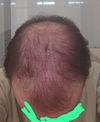
The user shared progress photos of hair regrowth using copper peptides and NAD+ over five months. Another user commented on the lighting, and another praised the progress.
The conversation discusses the potential use of verteporfin for hair loss treatment, with one user mentioning their surgeon's interest in trying it and another noting its research status and clinical use as a YAP inhibitor. Some users debate the market size, availability of generics, and the optimism in the hair loss community regarding new treatments.
PP405 and hair cloning are discussed as potential treatments for reversing hair loss from Norwood 7 to Norwood 1. Hair cloning is seen as a more permanent solution, while PP405's effectiveness and long-term effects remain uncertain.
PP405 is seen as promising but uncertain, with users advised to continue using existing treatments like minoxidil and finasteride. Concerns include its cost, availability, and interaction with hair transplants, while some hope it could complement current treatments.
A dermatologist recommended a new supplement containing annurca apple, which reportedly doubles hair density and increases keratin after 60 days, to be used with finasteride. Some users are skeptical, considering it potentially ineffective or a marketing ploy, while others are open to trying it if it proves effective and affordable.
PP405 is humorously suggested as a new hair loss cure with "shocking results." The conversation includes references to Minoxidil, finasteride, and RU58841.
The conversation introduces a specialized chatbot for ChatGPT Plus users that provides advice on hair loss treatments, drawing from research and community insights. It mentions treatments like RU58841, the "big 4" (likely minoxidil, finasteride, ketoconazole, and tretinoin), dutasteride mesotherapy, topical melatonin, microneedling, and rapamycin.
A user's eight-month progress in treating his hair loss using finasteride (1mg daily) and nizoral shampoo (2x a week), as well as microneedling every 10 days; other users have also reported success with finasteride, minoxidil, and microneedling.
NAD⁺ precursors and EGCG may increase hair density, but users report mixed results with no significant hair gains. Some users suggest combining these with finasteride or dutasteride for better results.
The conversation discusses Procapil, a treatment for hair loss containing Apigenin and Oleanolic acid. Users are sharing their experiences and asking if anyone has tried it.
PP405 is a promising new hair loss treatment that may reactivate dormant hair follicles without side effects. It could surpass traditional treatments like minoxidil and finasteride if successful in further trials.
How diffuse unpatterned alopecia (DUPA) is not an invitation to self-diagnose oneself with aggressive AGA and that seeking a specialized dermatologist may help people experiencing hair loss. Treatment options discussed include topical clobetasol propionate, oral minoxidil, and discontinuing finasteride.
A user discusses their rapidly receding hairline and a prescribed topical solution containing 7% Minoxidil, 0.1% Finasteride, and 3% biotinoyl tripeptide. The solution is a custom compound from their dermatologist, costing $50 for a one-month supply.
The conversation discusses using GFM Gel, a topical gel with polypeptides that mimic growth factors to promote hair regrowth and strengthen hair. It also mentions treatments like Minoxidil, finasteride, and RU58841 for hair loss.
The conversation humorously discusses hair loss treatments, mentioning Minoxidil, finasteride, and RU58841. It jokingly suggests the creation of a new chemical called RU99999.
The user is using finasteride, HGH, GHK-CU, BPC-157, KPV, biotin/collagen/keratin vitamins, ketoconazole shampoo, and low-dose naltrexone to address hair loss, avoiding minoxidil due to past shedding experiences. Adenosine is discussed as a potential alternative to minoxidil, though it is noted to be expensive and hard to find.
A user from China is participating in a clinical trial for Pyrilutamid, a potential hair loss treatment originally developed for prostate cancer. They've experienced no side effects except initial scalp itchiness, and will share results after the year-long trial.
Kintor plans to release pyrilutamide foam and a plant-based Koshine by year-end, with GT20029 progressing in their pipeline. Users are pleased about the absence of propylene glycol (PG) in the new products.
The conversation discusses the differences between KB solution and PG + Ethanol solution for RU58841 in treating hair loss. It compares the effectiveness and properties of these two solutions.
A female with male-pattern hair loss (AGA) is seeking help after unsuccessful treatments with spironolactone and supplements, and is considering oral minoxidil and finasteride despite concerns about medication side effects. She has ruled out hormonal birth control and PRP/PRFM, and is looking into further medical advice due to abnormal lab results.
The conversation is about a person using dutasteride and minoxidil for hair loss, considering adding RU58841 and PP405 for more density. They are seeking advice on using these treatments and exploring other options like GT20029.
AMP-303, a new injectable treatment for androgenetic alopecia, showed promising results in increasing hair count and density with minimal side effects. The treatment demonstrated significant hair regrowth and durability, offering new hope for those with hair loss.
A 31-year-old male shared his 3-year progress using finasteride 1 mg daily, with additional treatments including nutrafol, multivitamins, vitamin D, marine collagen, PRP scalp injections, micro-needling, and Nizoral. He experienced temporary libido issues but currently has no side effects.
The user is using a hair regrowth treatment plan that includes finasteride, microneedling, minoxidil foam, ketoconazole shampoo, and piroctone olamine shampoo. They are seeking advice on the effectiveness of their regimen and dosage of finasteride, and are curious about others' experiences with piroctone olamine.
Lichen Planopilaris (LPP) is an autoimmune condition causing permanent hair loss and fibrosis, often misdiagnosed. Treatments include pioglitazone, topical corticosteroids, anti-inflammatory medication, and Jak inhibitors.
The conversation is about when GT20029, a hair loss treatment, might be available on the grey market, with users discussing the challenges of compounding it and speculating it might be available after phase 2 results, similar to pyri. Specific treatments mentioned are pyri, RU58841, and GT20029.
The conversation discusses using microneedling with growth factor serum, PRF injections, dutasteride, oral and topical minoxidil, and topical exosomes to treat hair loss, particularly on the crown. OP plans to microneedle twice a month and seeks feedback on Korean growth factor serums.