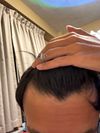
A user is frustrated about early balding despite older male relatives retaining hair into old age. Another user plans to start finasteride soon to address their hair thinning.
The user's hair appears to have improved, looking thicker and healthier, especially around the temples, after using topical minoxidil, finasteride, dutasteride, and tretinoin. Most participants agree the last picture shows significant improvement, though one disagrees.
A 25-year-old has been using finasteride since around age 22 and is considering starting oral minoxidil due to scalp issues. They are concerned about the effectiveness of starting minoxidil at their current age and the impact of scalp redness on hair growth. Another person suggests that starting minoxidil at any time is fine but warns about the commitment required, as stopping it will result in losing regrown hair, unlike finasteride which slows hair loss progression.
A 23-year-old has been using finasteride for 5 years to stabilize hair loss and is now adding minoxidil, tazarotene, and dermarolling to improve hairline density. They hope this new regimen will thicken existing hair and restore the hairline.
The user restored their hair using 5% minoxidil liquid, a 5 mg minoxidil pill, and dutasteride, experiencing no side effects. Others shared mixed experiences with dutasteride and finasteride, noting side effects like reduced libido and erection issues.
Male pattern baldness (MPB) may be an early warning sign for type 2 diabetes due to its association with insulin resistance. Treatments discussed include testosterone therapy and finasteride, which affects hormone levels related to hair loss and insulin sensitivity.
A 23-year-old male is experiencing a receding hairline and overall thinning hair, affecting his confidence. He is considering using finasteride and minoxidil pills to address the issue.
A 25-year-old man discusses his struggles with his mother's opposition to his use of Finasteride for hair loss treatment, despite it improving his condition and self-control after a hair transplant. He expresses frustration over her blaming the medication for various issues and the stress caused by her insistence to stop taking it.
A 50-year-old male has been using 0.5mg oral finasteride, 5% topical minoxidil, and weekly microneedling to combat hair loss, seeing progress with new hair growth. He plans to continue this regimen and evaluate results after 12 months.
A 57-year-old man shared his 6-month hair regrowth progress using RU58841, Minoxidil, microneedling, and Nizoral. He experienced significant improvement, with a smaller bald spot, thicker hair, and hairline regrowth.
The user's experience with hair loss in their twenties and thirties, how to fix a receding hairline, treatments such as DHT, stress, bad sleep, Minoxidil, finasteride, and RU58841, and diet.
The conversation discusses a new model for understanding androgenetic alopecia (AGA), linking it to dietary and lifestyle factors similar to PCOS, and highlighting the role of DHT, vascular damage, and inflammation. Treatments mentioned include Minoxidil, finasteride, and RU58841.
A 17-year-old is stressed about mild male pattern baldness and is considering treatments like minoxidil and finasteride but is concerned about starting finasteride too young. Users suggest starting with minoxidil and considering finasteride at 18, while emphasizing the importance of consulting a doctor and not obsessing over hair loss.
A 46-year-old shared 1.6 years of hair regrowth progress using a regimen that includes Minoxidil, Finasteride, and possibly other treatments. Suggestions included considering a hair transplant, using dutasteride, and adding tretinoin for further improvement.
The user reported worsening hair loss after 1.5 years on finasteride, questioning if chronic iron deficiency could be a cause. They noted no side effects from finasteride.
A 19-year-old shares progress in hair loss treatment from April to August 2025, using oral minoxidil, finasteride, dutasteride, and topical flutamide, minoxidil, dutasteride, and caffeine. The user seeks feedback and suggestions, with encouragement to continue the treatment.
An 18-year-old began using Finasteride and Topical Minoxidil for hair loss, later switching to Oral Minoxidil and Dutasteride by age 25. The conversation emphasizes early treatment, potential side effects, and differing opinions on medication effectiveness.
N-Acetyl-Cysteine (NAC) was found to improve hair parameters in men with early-onset androgenetic alopecia, showing increased terminal hair count and decreased vellus hair count, with good tolerability. NAC, used alone or with minoxidil, may help due to its antioxidant properties, though its effectiveness can vary among individuals.
A user in their mid-40s shared a 12-month update on using finasteride for hair loss, showing significant improvement. They started seeing thicker hair and regrowth after 3 months, with no side effects noticed.
A 20-year-old is experiencing hair loss and has tried Minoxidil, ketoconazole shampoo, dermarolling, Biotin, Selenium, Zinc, and a shampoo with various ingredients but is still losing hair. They had side effects from topical finasteride and are considering RU58841 but are concerned about past heart issues.
The user is considering stopping finasteride after 1.8 years due to concerns about side effects and is exploring alternatives like minoxidil and topical finasteride. They are also considering microneedling and are advised to wait for new treatments like breezula/clascoterone.
A person is worried about balding affecting their relationship and is using minoxidil, finasteride, and dutasteride. They are advised to be honest with their partner and focus on self-acceptance, as many people don't care about hair loss.
Hair loss is influenced by scalp tension, stress, and environmental factors, not just hormones. Treatments like tretinoin, microneedling, scalp massage, and Botox can reduce tension and improve hair health.
A 15-year-old experiencing hair loss and anxiety is using minoxidil and microneedling but is advised against starting finasteride or dutasteride due to age. The discussion emphasizes consulting a doctor, considering hormonal evaluations, and exploring non-medication coping strategies.
A 46-year-old shared their successful hair regrowth journey using topical minoxidil, oral finasteride, ketoconazole shampoo, oral minoxidil, and head massages with lavender and peppermint oil, with noticeable improvement and no significant side effects except for darker eyelashes. They encourage others to try these treatments.
The user started taking 1 mg finasteride daily in September 2024 and began derma stamping twice a week, noticing progress initially but now experiencing increased scalp visibility. They are considering adding oral or topical minoxidil to their routine for further improvement.
A 23-year-old Asian male shared progress pictures after 3 months of using minoxidil, microneedling for 1.5 years, and taking vitamin supplements. Replies suggest adding finasteride or dutasteride for long-term hair maintenance.
A 23-year-old male is experiencing rapid hair thinning and receding hairline, feeling emotionally drained. He has tried GFC, PRP, ketoconazole shampoo, and supplements without improvement and is considering minoxidil, finasteride, and possibly a hair transplant.
Female (37) experiencing hair loss for 5 years, tried max dose of spiro and oral + topical minox without success. Discovered low cortisol and low DHEA levels, seeking functional medicine practitioner for help.