The conversation discusses a patent for using topical resveratrol and melatonin to treat androgenetic alopecia (AGA) and also mentions interest in topical sulforaphane as a treatment.
Topical melatonin may help reduce hair loss and increase hair thickness in people with androgenetic alopecia (AGA), with some studies showing positive results. It can be mixed with minoxidil for application, and its effectiveness might be enhanced when used with micro-needling, but results may vary among individuals.
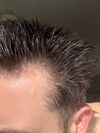
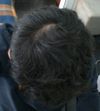
A 33-year-old male is experiencing thinning at the temples and hairline, with increased shedding over the past year. The user suspects androgenetic alopecia (AGA) despite AI suggesting a maturing hairline.
Bimatoprost, latanoprost, and travoprost can aid hair regrowth but are costly and less effective than minoxidil. They work best when combined with minoxidil and finasteride.
The user is experiencing hair loss, initially diagnosed as Telogen Effluvium due to stress, but is concerned it might be Androgenetic Alopecia (AGA). A suggestion was made to consider using Minoxidil or Finasteride if the condition worsens.
The efficacy of degrading the androgen receptor through dermal application in DP cells, a delivery system for topical drugs that involves dissolving microneedles, and rosemary oil as an alternative anti-androgen.
A custom-made serum based on double-blind studies for AGA, which includes natural ingredients such as rosemary oil, procyanidin B-2, saw palmetto extract, curcuma aeruginosa, pumpkin seed oil and castor oil. The user has updated their recipe to include apple poly procyanidin B-2 4% concentration and other ingredients before topping it off with Pura d'or serum.
Kintor Pharma finished enrolling and dosing participants in a Phase I trial for a hair loss treatment called AR-PROTAC (GT20029). The effectiveness of another drug, pyrilutamide (KX-826), for hair loss will be clearer after a Phase 2 trial expected to complete in January 2023.
A Spanish dermatologist suggests sulforaphane for androgenetic alopecia (AGA) due to its potential to remove DHT metabolites, though high dosages are needed. A topical formulation might be possible.
The conversation discusses androgenetic alopecia (AGA) and questions why treatments focus on lowering DHT levels instead of building resistance to it. It also touches on hair transplantation techniques using body hair.
Androgenic alopecia (AGA) might have evolved to reduce prostate cancer risk by increasing UV exposure to the scalp, but this theory is debated. Treatments like minoxidil and finasteride are used for AGA, though the exact causes and evolutionary reasons for hair loss are unclear.
GT20029 is a new hair loss treatment in Phase 3 trials in China, using PROTAC technology to target androgen receptors, potentially with fewer side effects than finasteride and minoxidil. VDPHL01, a second-generation minoxidil, is also mentioned as potentially more effective.
User starts Nuclear Stack treatment for hair loss, including Dutasteride, Minoxidil, RU58841, Derminator 2, and supplements. Seeks advice on storing and dosing RU58841.
The conversation introduces a specialized chatbot for ChatGPT Plus users that provides advice on hair loss treatments, drawing from research and community insights. It mentions treatments like RU58841, the "big 4" (likely minoxidil, finasteride, ketoconazole, and tretinoin), dutasteride mesotherapy, topical melatonin, microneedling, and rapamycin.
Hair loss treatments discussed include microneedling, minoxidil, tretinoin, finasteride, dutasteride, pumpkin seeds, saw palmetto, and scalp massage. The consensus is that finasteride or dutasteride is necessary for significant regrowth, while other methods may only slow hair loss.
Tressless GPT is now free and accessible for hair loss advice. Treatments discussed include Minoxidil, finasteride, RU58841, dutasteride mesotherapy, topical melatonin, microneedling, and rapamycin.
The conversation discusses GT20029, a compound by Kintor Pharma that degrades androgen receptors and is in trials, with potential as a hair loss cure. Another promising treatment mentioned is an antibody that blocks prolactin and has shown positive results in macaques.
The conversation is about the effectiveness and production of GT20029, a drug being developed as a topical androgen receptor degrader for hair loss, and whether it can fully degrade androgen receptors or only partially. It also discusses the drug's potential unique working mechanism and synthesis by a company called Anagen.
A 25-year-old is experiencing chronic telogen effluvium (TE) and androgenetic alopecia (AGA) after surgery, using finasteride, red light therapy, and supplements, and considering oral minoxidil despite heart concerns. They are unsure whether to start minoxidil before or after an upcoming surgery, which may trigger another hair shed.
The conversation is about analyzing receded temple closeups for signs of fibrosis, scarring, or androgenetic alopecia (AGA). Specific treatments like Minoxidil, finasteride, or RU58841 are not mentioned in the conversation.
A user is treating hair loss with Dutasteride, Minoxidil, RU58841, Derminator 2, Vitamin D, Biotin, and Zinc. After 6 months, there's no significant visual improvement, but the user feels less insecure about Retrograde Alopecia.
Amino acids like lysine, methionine, and cysteine may help with androgenetic alopecia when taken in high doses along with a DHT blocker. Users discuss combining these with treatments like Minoxidil, finasteride, and RU58841.
Minoxidil, finasteride, and RU58841 are discussed as treatments for androgenetic alopecia (AGA). The conversation questions their effectiveness and whether they are scams.
A user applied the 8T3 product for hair loss, targeting LPP and AGA, and plans to update on its effectiveness. The product uses a saline buffered phosphate vehicle, suitable for those intolerant to ethanolic vehicles.
TGF-B affects hair growth, both causing stem cell division and death depending on amounts. Amplifica's treatment injects Scube3 to increase TGF-B for hair growth.
GT20029 showed significant hair growth and safety in phase II trials, with no adverse sexual events. Users are hopeful but concerned about future costs and systemic effects.
A user created a tracker for hair loss treatments in clinical development, including compounds like Dermaliq, RU58841, and Pyrilutamide. The tracker updates with new information and allows filtering by conditions like androgenetic alopecia (AGA) and alopecia areata (AA).
The conversation is about frustration over the delay in phase 2 results for a hair loss treatment called GT20029. One user suspects the treatment may have failed.
KX-826 (Pyrilutamide) being tested in the US for hair loss treatment and that they have found enough people to participate in phase II clinical trials. Other treatments discussed are Minoxidil, finasteride, and RU58841.