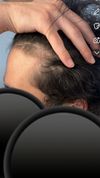
PP405 is a potential hair loss treatment, but its safety and effectiveness are uncertain. Users advise caution and suggest waiting for more data before purchasing unverified versions.
Creatine supplementation may increase DHT levels, potentially affecting hair loss. A study is examining this effect, with participants taking 5 grams of creatine daily for six months.
The conversation discusses hair loss treatment progress using dutasteride 0.5 mg and oral minoxidil 5 mg. Users comment on the progress and inquire about side effects and additional photos.
AnagenInc is ready to produce a hair loss treatment called GT20029 if there is enough demand. People are discussing combining it with other treatments like finasteride and minoxidil, and some are concerned about the legitimacy and safety of gray market products.
The conversation is about comparing the effectiveness of fluridil and clascoterone in preventing hair loss and inquiring about their use as standalone treatments. There is a question about the concentration of the fluridil brand for efficacy.
Dutasteride and finasteride have similar risks of sexual dysfunction for treating androgenetic alopecia. Users experience varying side effects, indicating individual differences in drug reactions.
Amplifica is testing a compound called AMP-303 for hair loss, but it's not Scube3 or osteopontin. The timing for the results from the clinical trial is unknown.
Concerns about the potential high cost of new hair loss treatments, pp405 and gt20029, were discussed, with some users willing to pay a premium if they are effective. Alternatives like finasteride and minoxidil are mentioned as current, more affordable options, and there is speculation about future generic versions and black market availability.
Japanese scientists discovered ABM cells, enabling successful human hair follicle cloning, potentially curing hair loss. The treatment may be available in Japan by 2028, but it will be expensive and require travel.
User considers adding Alfatradiol to their topical finasteride treatment for hair loss. Others discuss Alfatradiol as a weak estrogen and 5α-reductase inhibitor used for pattern hair loss in men and women.
The conversation is about using GHK-Cu, a copper peptide, for hair loss treatment. Users discuss their experiences, dosages, and additional benefits like improved skin and energy.
The user experienced hair loss while using finasteride for over 2 years, but saw slight improvement after switching to dutasteride. They also started using a scalp moisturizer for seborrheic dermatitis, which may have contributed to the hair regrowth.
Treatments for hair loss, specifically the use of minoxidil, finasteride and RU58841. Replies to this post suggest that users should share relevant information publicly rather than through direct messages.
A new hair loss treatment theory beyond minoxidil and finasteride is proposed, causing mixed reactions in the community, with some members eager to explore and support it, while others call for more research and evidence.
The user does not respond well to minoxidil and is seeking an alternative to Tretinoin to upregulate sulfurtransferase activity for hair loss treatment. No specific alternative treatments were mentioned.
The conversation is about using PTD-DBM and valproic acid for hair loss. The user is inquiring about the dosage of these treatments, noting that valproic acid is used at a 7.5% solution.
A user's experience of using Fin, Min and Microneedle treatments to help thicken their hair before undergoing a Hair Transplant (HT) procedure. The conversation also includes discussion about the results post-HT, including pictures.
The conversation is about the use of peptide therapies for hair loss, specifically GHK-CU, ZN-Thymulin, and PTD-DBM. The user is seeking feedback on the effectiveness of these treatments from those who have tried them.
The conversation discusses the effects of using Tongkat ali and dioscorea to raise DHT levels, leading to increased body hair growth and an itchy scalp, without causing hair loss. The discussion also debates the role of DHT in male characteristics and its impact on sexual function, with differing opinions on its importance and effects.
A 25-year-old switched from finasteride to dutasteride, experiencing significant hair regrowth and improved hair quality after 6 months, taking it three times a week. The user stopped finasteride entirely, citing dutasteride's longer half-life as more effective.
The user shares their experience with a hair system, noting no one noticed the change except their girlfriend. They discuss the learning curve, maintenance tips, and their satisfaction with the results, feeling more confident and optimistic.
Androgenetic alopecia is affected by scalp DHT levels, not sensitivity, with treatments like finasteride and dutasteride aiming to optimize these levels. Personalized DHT management is crucial for effective hair growth.
CB-03-01 is considered a failed treatment for hair loss, with future hopes pinned on PP-405 and GT-20029, expected by 2030. Alternatives like hair transplants and SMP are discussed, while some users express frustration over the slow progress of treatments like Breezula.
Adenosine is discussed as a potential treatment for hair loss, with mentions of its presence in certain shampoos and Minoxidilmax products. Users express interest in topical adenosine but are cautious about sourcing it from places like Amazon or Alibaba.
Minoxidil sulfate is considered for those unresponsive to regular minoxidil, with some trying a 10% formulation from Folligenz. Concerns exist about the product's stability and transparency, but some users report positive initial results.
ET-02, a new hair loss treatment, shows promising results with a 6-fold increase in hair count, potentially outperforming minoxidil by activating stem cells in hair follicles. Further trials are ongoing to confirm its efficacy and safety, with potential market release in the future.
A user maintains NW2 hair with 1mg finasteride, 2.5mg oral minoxidil, and 5% topical minoxidil twice daily, along with ketoconazole shampoo and derma stamping. They seek advice on more aggressive treatments to achieve NW1.
Fluridil degrades androgen receptors, which are prevalent in the scalp and other tissues. People with androgenetic alopecia (AGA) may have higher expression of these receptors and 5AR activity in affected scalp areas.
After experiencing hair loss due to alopecia areata following COVID-19 vaccination and infection, the individual saw improvement with steroid treatments and Olumiant. They paused Olumiant during a second COVID-19 infection and expressed concern about potential hair loss flare-ups.