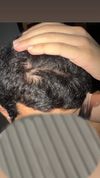
The conversation is about a person starting treatment with RU58841 for hair loss. They are asked to share progress pictures to show if the treatment is effective.
The user experienced hair growth improvement using a 1.25mm microneedle weekly, oral finasteride, oral minoxidil, and rosemary oil. They plan to switch to generic finasteride and minoxidil for safety concerns.
Pelage Pharmaceuticals raised $120M for their hair loss treatment, PP405, showing strong investor confidence despite limited data. There is skepticism about its efficacy and long-term effects compared to treatments like GT20029.
A user is participating in a phase 3 trial for Clascoterone, a topical acne medication that may stimulate hair growth, and will share results after 6 months. They will have a section of their hair shaved and marked with a tattoo for the study.
A user decided to stop using finasteride due to side effects and chose to shave their head instead. They plan to use the money saved for a hair transplant towards a house downpayment, hoping for future advancements in hair cloning.
The conversation discusses using 2% Pyrilutamide from Anagenica for hair loss, as the user did not see results with 1% Pyrilutamide. The user is considering increasing the dosage but is concerned about the cost.
The conversation discusses the potential of Replicel/Shiseido treatment for hair loss, questioning its effectiveness, whether it grows new follicles, and its market release timeline. It also compares Replicel to other competitors like Kyocera/RIKEN/Tsuji.
GT20029 is a topical treatment that degrades androgen receptors to prevent hair thinning and loss, potentially offering fewer side effects than systemic treatments like finasteride. Concerns include its impact on hair texture and potential systemic effects, with market availability speculated in 3 to 5 years.
A 28 year old male experiencing diffuse thinning, chronic dandruff and scalp crust (seborrheic dermatitis), with replies discussing the use of topical fin for hormone imbalances and Nizoral for seb derm.
The conversation discusses a 4-month hair loss treatment progress using RU58841, topical Minoxidil, ketoconazole shampoo, and micro-needling. The user shares progress pictures taken at the start, after 1 month, and the current state, all under the same conditions.
Pyrilutamide, a potential hair loss treatment that is currently in development and may be available soon; an androgen receptor degrader which is also being developed as a potential treatment for hair loss; and the comparison between Pyrilutamide, finasteride, minoxidil, and RU58841.
Exploring treatment options for male pattern baldness, including minoxidil, finasteride, and RU58841, with a focus on Eucapil, a topical agent. The post also discusses research from various sources about the efficacy of these treatments.
The conversation discusses using 1% cetirizine, an antihistamine, as a potential treatment for androgenetic alopecia (hair loss). One user plans to try cetirizine instead of finasteride, while others are curious or skeptical about its effectiveness, discussing the role of inflammation in hair loss.
The conversation is about Kintor's announcement indicating continued hope for their product KX-826 as a treatment for Alopecia Androgenetica. Specific treatments mentioned are Minoxidil, Finasteride, and RU58841.
A user is considering buying RU58841 powder from Aliexpress to mix with Minoxidil for hair loss treatment. Another user warns about the safety concerns of RU58841, especially from unreliable sources, and suggests trying finasteride, oral Minoxidil, and dutasteride first.
Veradermics' new hair loss treatment, VDPHL01, is likely a modified release oral minoxidil, which has received $75 million in funding for clinical trials. Despite skepticism about investing in a known treatment, some believe it could offer improved efficacy and reduced side effects.
A user shared their successful hair loss treatment using RU58841, topical minoxidil, and microneedling, noting significant improvement over three months. They chose RU58841 over finasteride due to personal preference and reported no side effects, while others discussed their experiences with different treatments and supplements.
RU58841 is being discussed as a hair loss treatment without using finasteride or dutasteride. Users are sharing their experiences and success with RU58841 alone.
A user with alopecia totalis, borderline universalis, seeks advice on getting into a Xeljanz trial or appealing insurance for coverage. They experienced significant hair regrowth but are now seeing hair loss again and want to try Xeljanz.
The user is currently using 0.025% Pantostin but plans to switch to 0.1% Alfatradiol. They will also use high-dose Kx826, high-dose Minoxidil, and aggressive microneedling for hair regrowth.
The user experienced increased hair shedding after using RU58841, despite initial improvements in scalp condition and appearance. They are considering stopping RU58841 to see if shedding decreases.
A user diagnosed with AGA is seeking advice on hair loss treatments, comparing topical Minoxidil, Spironolactone, and Finasteride to oral medications and natural methods like dermastamping, PRP, and LED light. They are concerned about side effects and effectiveness, especially given their existing fatigue.
Female with aga tried minoxidil 5% and spironolactone, no success yet. Gladyator96 suggests waiting 6 months, adding tretinoin or dermarolling with minoxidil.
Injectable GHK-CU and BPC157 were discussed for hair loss, but users did not notice significant hair changes. BPC157 was noted to help with shoulder issues.
The user experienced significant hair loss after using RU58841, a hair loss treatment, and had to undergo a hair transplant to rectify the damage. They're asking others who've used RU58841 about their experiences, particularly if they also experienced shedding, if their hair grew back, when they started using RU, and other related questions.
User tried oral finasteride, topical finasteride, topical dutasteride, and RU58841 but experienced side effects. They discuss upcoming treatments like clascoterone, pyrilutamide, gt20029, and KY19382 as potential options.
Accutane use led to hair loss and seborrheic dermatitis for many, with treatments like dutasteride, minoxidil, and Nutrafol being used to manage symptoms. Some users reported improvement, while others experienced persistent issues or side effects from treatments like finasteride.
Rhamnose may promote hair growth and pigmentation, suggesting it as a potential hair loss treatment. The conversation discusses its potential alongside known treatments like Minoxidil, finasteride, and RU58841.
A 29-year-old male shares his hair loss treatment progress using dutasteride, minoxidil, dermastamping, and ketoconazole shampoo, while discontinuing RU58841 due to side effects. He is hopeful for hair recovery to consider a hair transplant and discusses potential side effects and experiences with other users.
Using a daily hair spray with 0.3% finasteride, 7% minoxidil, 2% ketoconazole, and biotin, along with a 1% ketoconazole shampoo once or twice a week, may be excessive according to the product's recommendations. The user is unsure about this regimen for treating androgenetic alopecia (AGA).