Using Dutasteride as a hair loss treatment and its potential benefits, including availability in certain countries without a prescription and lower side effects than Minoxidil or RU58841.
The conversation is about managing allopregnanolone deficiency caused by 5-alpha-reductase inhibitors like finasteride or dutasteride. Specific treatments discussed for hair loss include Minoxidil, finasteride, and RU58841.
The user checked iron, ferritin, B12, zinc, testosterone, DHT, and estrogens to understand hair loss causes and the effects of dutasteride. They also noted increased heart rate and paleness with oral minoxidil.
An arthritis drug, baricitinib, is discussed as a potential treatment for autoimmune alopecia, not androgenetic alopecia. Ritlecitinib is also mentioned as a possible treatment for scarring alopecia.
A 22-year-old male uses dutasteride, a serum with 10% minoxidil and 0.5% finasteride, and microneedling for diffuse androgenetic alopecia. Progress pictures show changes from July 2025 to February 2026.
The user is currently using 0.025% Pantostin but plans to switch to 0.1% Alfatradiol. They will also use high-dose Kx826, high-dose Minoxidil, and aggressive microneedling for hair regrowth.
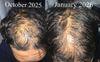
The user is using Dutasteride (90.5mg) and Minoxidil (2.5mg) for hair loss since October 2025 and is seeking feedback on progress by comparing photos from October 2025 and January 2026. They are asking for opinions on whether the treatment shows improvement.
User experienced high E2 levels after taking finasteride and sought advice on lowering E2 with supplements like Tonkat ali, Fadogia, and Boron. They also used DIM, zinc, and magnesium but avoided using an AI.
The user switched from finasteride to dutasteride due to side effects and is experiencing fewer side effects with dutasteride, though some scalp itching has occurred. Blood tests show elevated testosterone and estrogen, low DHT, and normal liver and cholesterol levels, leading the user to feel confident in the long-term benefits of dutasteride for hair regrowth.
Alfatradiol is used as a mild treatment to slow or stabilize hair loss, often alongside finasteride and pumpkin seed oil. Users report reduced shedding and minimal side effects, but minoxidil is noted as more effective for regrowth.
A user was prescribed Alpicort E, which contains Estradiol Benzoate, Prednisone, and Salicylic Acid, for hair loss and is seeking others' experiences due to concerns about potential side effects.
The user experienced side effects from finasteride and is considering adding Alfatradiol or Fluridil to their regimen, which includes Minoxidil, dermarolling, and ketoconazole. Fluridil is noted to be more effective than Alfatradiol but less effective than finasteride, with mild side effects reported.
Dutasteride is more effective than finasteride for hair loss, especially at the crown and midscalp, but both have similar side-effect profiles with low incidence of sexual adverse events. Improvement is measured visually, and significant results may take over 12 months to appear.
A user is considering mixing 5% topical minoxidil with Alpecin Caffeine Liquid to enhance its effect, while also using oral finasteride. They seek feedback on potential efficacy loss and downsides of this mixture.
Increasing the sult1a1 enzyme on the scalp may improve response to topical minoxidil. The user suggests using a baking soda solution, DMSO, and tretinoin to enhance enzyme activity and minoxidil effectiveness.
The user's experience of using Finasteride 5mg and Aldactone 50mg to treat Female Pattern Hair Loss, as well as their use of PRP injections for further hair growth.
The user is using 0.5mg Dutasteride, 5mg oral Minoxidil, and topical Minoxidil daily for hair loss treatment. They report increased body hair and some improvement in hairline density and length.
User discusses Alfatradiol (17a-Estradiol) as a potential hair loss treatment with mixed results. Concerns include low dosage, receptor theory, and possible increased aromatase activity on scalp.
The user is taking 1mg Dutasteride, 2.5mg oral Minoxidil, topical Minoxidil, 28mg iron, vitamin D3 + K2, and Selenium daily. They are concerned about their receding hairline despite good hair density and crown.
Alfatradiol is discussed as a weak 5ARI and estrogen, not as effective as minoxidil, RU58841, or CB-03-01, but a safe alternative for those who can't use finasteride. Users express frustration over the lack of strong FDA-approved topical antiandrogens for hair loss.
A dutasteride simulator predicts that daily 0.5 mg dosing results in higher DHT suppression compared to less frequent dosing. Twice-weekly dutasteride may be as effective as finasteride 5 mg, providing a balance between efficacy and ease of use.
A user shared a 1-year update showing hair regrowth from taking 1mg Dutasteride and 2.5-5mg oral Minoxidil daily for Diffuse Unpatterned Alopecia. Some comments praised the results, while others criticized the user's behavior and questioned potential side effects.
A 45-year-old male experienced significant hair regrowth using 0.5 mg dutasteride and 1.5 mg minoxidil after initially starting with finasteride. He reports no major side effects, except increased hair growth in unwanted areas, and attributes his success to being a good responder to the medication.
PP405 shows initial promise for treating androgenetic alopecia, with safety confirmed in early trials, but skepticism remains due to limited data. Further trials are needed to determine its true efficacy and potential market impact.
User experienced side effects from oral finasteride and tried topical Alfatradiol for hair loss. Alfatradiol provided maintenance without significant regrowth, and user suggests it as an alternative for those struggling with finasteride side effects.
A user increased their dutasteride dosage from 0.5mg to 1mg daily, resulting in a rise in DHT levels from 148 pg/mL to 281 pg/mL, and is considering switching back to finasteride due to continued hair loss. Replies suggest retesting and emphasize the importance of bloodwork before starting treatments.
The user has been using a hair loss treatment regimen including RU58841, minoxidil, and dutasteride, but still experiences hairline recession and fatigue despite high testosterone levels. They are considering adjusting their dutasteride dosage due to concerns about libido and energy levels.
The conversation discusses using 0.1% Alfatradiol compounded by a pharmacy for hair loss treatment. It also mentions Minoxidil, finasteride, and RU58841 as other treatments.
The user is using a mixture of crushed finasteride tablets and alfatradiol as a topical treatment for hair loss, applying 1 ml daily, and is asking if this is an effective method or if alfatradiol is a suitable solvent. They mention that others often mix finasteride with minoxidil, but they want to try without it.