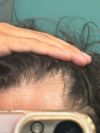
Setipiprant and Fevipiprant are questioned for their effectiveness in hair maintenance, with skepticism due to lack of convincing results beyond vellus hair growth. The user is satisfied with Minoxidil and Finasteride but is curious about the potential of DP2 inhibitors.
The conversation is about using alfatradiol as a hair loss treatment. The user is considering adding it to their regimen because it is safe, mild, and easily available in Europe.
The conversation discusses the theory that finasteride-induced erectile dysfunction (ED) is related to blood flow rather than hormonal changes. The user suggests that lowering LDL cholesterol aggressively might improve ED symptoms for those on finasteride.
A user shared their 9-month progress using RU58841 at 2% daily for hair regrowth, initially starting at 5% but reducing the dose due to early signs of gynecomastia, which has since mostly resolved. They achieved their goal of regrowing hair at the temples and hairline.
A user shared their positive experience with a 2200 graft FUE hair transplant at DiStefano Hair Restoration in Worcester, MA, praising Dr. Heinis and his staff for their care. The user is also using oral Dutasteride, topical Minoxidil, and vitamins D and B.
The individual had a hair transplant in Turkey with 4052 grafts, resulting in significant hair growth and increased confidence. They use finasteride, rosemary oil, and vitamins, and are pleased with the natural-looking results, encouraging others to consider similar treatments.
The conversation discusses skepticism and diminishing excitement around the hair loss treatment PP405 due to unclear trial results. It also mentions other treatments like finasteride, minoxidil, VDPHL01 (extended-release minoxidil), and GT20026 as potential options for hair loss management.
The user has been using finasteride for 30 years and recently added colostrum to their routine, noticing darker hair regrowth. They experienced shedding with minoxidil and advise against its use, while highlighting the benefits and side effects of long-term finasteride use.
A 31-year-old male shared his 3-year progress using finasteride 1 mg daily, with additional treatments including nutrafol, multivitamins, vitamin D, marine collagen, PRP scalp injections, micro-needling, and Nizoral. He experienced temporary libido issues but currently has no side effects.
A 22-year-old with high estradiol levels is considering starting finasteride for hair loss. They have an upcoming endocrinologist appointment to discuss whether they should proceed with the treatment.
The user, EggplantAncient7506, is asking if there is an improvement in their general hair quality after using Finasteride since December 22. Replies suggest that there is an improvement.
P-1075 is a more potent hair growth agent than Minoxidil, but it poses significant heart risks, making it unsafe for use. Despite promising results in macaques, concerns about its cardiotoxicity in rats have halted its development.
A new human trial using an FDA-approved treatment for wound healing called Verteporfin, which may potentially be able to reverse scarring and regrow hair in that area. The trial is only lasting one month so far.
The user is trying RU58841, oral minoxidil, and dermarolling to combat hair loss caused by increased scalp testosterone after using finasteride and dutasteride. They plan to document their results.
A user is experiencing uneven hair thinning and has tried topical minoxidil without success and finasteride with adverse effects. They are considering microneedling and PRP treatments while avoiding finasteride, and another user suggests trying dutasteride as an alternative.
Minoxidil with alcohol and propylene glycol was more effective than non-alcohol versions, and RU58841 worked best in a non-water-based solution. Oral finasteride showed better results than topical, despite side effects; microneedling and tretinoin worsened hair loss, and PRP was only helpful when younger.
The user experienced significant hair regrowth using a combination of minoxidil, alfatradiol, pyrilutamide, and nizoral, despite previous intolerance to finasteride. They emphasize the importance of consistency in treatment and are optimistic about the results, noting no side effects so far.
Concerns about the potential systemic effects and safety of PP405 for hair loss, with discussions on its comparison to existing treatments like finasteride and minoxidil. Users express skepticism about untested research chemicals and emphasize the importance of clinical trials to ensure safety and efficacy.
Norwood 7 hair loss is often excluded from trials to ensure treatments appear more effective and to reduce costs. Some believe treatments effective for Norwood 5 could work on Norwood 7, but companies prioritize market readiness.
Pyrilutamide, a new drug being tested to combat hair loss that has been found to perform comparably or better than finasteride and dutasteride in the initial 6 months of treatment with minimal reported side effects.
A 30-year-old male has been experiencing hair loss despite using Dutasteride 0.5mg and PRP for 15 months, with no success. He is considering a hair transplant but is advised to stabilize hair loss first and explore other treatments like topical Minoxidil or combined therapies.
The user has been on finasteride for 18 months and added dutasteride after the first 6 months, with no hair regrowth observed. Bloodwork shows normal levels of DHT despite the use of both medications.
The conversation is about managing allopregnanolone deficiency caused by 5-alpha-reductase inhibitors like finasteride or dutasteride. Specific treatments discussed for hair loss include Minoxidil, finasteride, and RU58841.
The potential of using a specific antibody, HMI-115, as a treatment for hair loss alongside traditional treatments such as minoxidil and finasteride. The user suggests trying either a 240 mg or 30 mg dose to see if it works.
Pyrilutamide is being discussed as an alternative for those who can't use finasteride, but users report it may be ineffective at low concentrations. Some users are combining it with minoxidil, microneedling, and other treatments, but results vary.
A user has been using 1mg oral finasteride and 5% topical minoxidil for six months, with some derma stamping, but feels hair growth has stagnated and is considering PRP or a hair transplant. Others advise continuing the current regimen, noting that maintaining existing hair is an achievement, and suggest ignoring negative comments from friends.