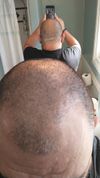
A 48-year-old male from the Philippines shared his two-year progress using finasteride only for hair regrowth, experiencing significant improvement without minoxidil. He started with 0.5mg and increased to 1.25mg, later adjusting to every other day due to elevated liver enzymes, and reported 90% hair restoration.
The conversation is about a person's one-year progress using finasteride and minoxidil for hair loss, with intermittent use of RU58841, showing improved hair quality, density, and thickness without side effects. Users complimented the improved appearance and suggested the longer hair also enhanced their look.
Scalp biopsies are crucial for diagnosing hair loss conditions like Diffuse Unpatterned Alopecia (DUPA) and retrograde hair loss, as treatments like finasteride and dutasteride may not be effective if other conditions are present. Combining PPAR-GAMMA agonists with retinoids could improve treatments for conditions like Lichen Planopilaris.
User uses Indian hair serum with procapil and procyanidin b2, stopped minoxidil due to allergies. Seeks advice on hair wash techniques and products for shoulder-length hair and scalp care while using hair growth serums.
User shared 1.5-year progress using 1mg finasteride, 15% minoxidil daily, and derma rolling weekly. Experienced initial shedding but achieved significant hair regrowth and improvement.
PP405 and GT20029 are new hair loss treatments with different mechanisms from traditional options like Minoxidil and Finasteride. PP405 targets hair follicle stem cells to reactivate growth, while GT20029 works as an androgen receptor deleter, both requiring ongoing use for effectiveness.
The user is considering switching from pyrilutamide to 0.025% topical finasteride due to concerns about effectiveness and past side effects from a scalp elixir. They aim to maintain hair until new treatments like breezula or GT00029 become available.
A user is seeking advice on treating a chin scar with Verteporfin, noting that higher doses were more effective. Another user responds that they do not use it, without providing further explanation.
PP405 may revive dormant hair follicles, and DHT blockers like finasteride or dutasteride could maintain new hair. Combining PP405 with minoxidil might be optimal, but long-term effects and continuous use are uncertain.
A 19-year-old male experienced significant hair loss, initially thought to be male pattern baldness (MPB), and used minoxidil and briefly finasteride. After realizing the issue was telogen effluvium (TE), he improved his diet and supplemented with vitamins, which led to substantial hair regrowth.
Treatments for hair loss with a focus on finasteride, minoxidil, and platelet-rich plasma (PRP). The user discussed their family history of balding, asked questions about the effectiveness of different treatments, and was discouraged from taking finasteride by medical professionals.
The conversation discusses the use of AlphaInfuse, a micro-infusion system with Panax ginseng and Eclipta prostrata extracts, for hair growth and its comparison to Minoxidil. The original poster seeks personal experiences and evidence of its effectiveness.
The user has been using Morr-F Aqua 5% (minoxidil) once daily for over three months to address male pattern baldness and is seeking feedback on their progress. They are unsure if the current dosage is sufficient and whether the aqueous base is effective compared to other versions.
A combination of pyrilutamide, minoxidil, and alfatradiol is proposed as an effective alternative to finasteride for treating mild to moderate hair loss, claiming to stabilize hair loss and improve thickness without finasteride's side effects. Some users are skeptical about the effectiveness and approval of these treatments, while others are interested in trying them due to finasteride's side effects.
The user reported noticeable hair improvement over four months using 1 mg of finasteride and weekly microneedling. Progress photos from October 2024 to January 2025 show positive changes.
Researching the effectiveness of the hair loss treatment Pyril in comparison to other treatments such as Minoxidil, Finasteride, and RU58841. Replies suggest that users often fail to provide updates on their experience with Pyril.
The conversation discusses FUE hair transplant surgery, including questions about donor area recovery, success rates, precautions, hair growth rate, and the safety of PRP injections. It also inquires about using hairpieces post-surgery.
The conversation is about making a 20mg/ml RU58841 solution for hair loss treatment using ethanol and propylene glycol. The user receives advice on calculating the correct amount of RU58841 powder needed.
A user shared their positive experience with a 2987 graft hair transplant focused on the hairline, supplemented by finasteride and minoxidil for the mid scalp and crown. They expressed satisfaction with the results and the supportive care received during and after the procedure.
The user experienced significant hair regrowth after using 1.25mg finasteride for 7 months, with no side effects, and is considering whether to keep or remove a previous SMP (scalp micropigmentation). They avoided minoxidil due to dandruff and sensitive scalp concerns, and they use a specific dandruff shampoo once a week.
User started balding at 16 and began treatment at 18, using RU58841, minoxidil, derma rolling, and peptides. After 6 months, they experienced significant hair regrowth and are happy with the results.
The conversation humorously discusses the use of pp405 for hair loss, with mentions of finasteride and minoxidil. Users joke about unusual side effects like growing extra body parts.
The conversation is about the difficulty of applying both pyril and min/fin to treat hair loss twice daily and whether combining them yields positive results.
A user shared their positive experience with a 3200 graft hair transplant surgery, costing 1.20 lakh INR, performed by a doctor with a background at Eugenix. Post-surgery, they were instructed to use minoxidil 5% topically, take finasteride tablets, and undergo PRP treatments.