A discount code for 20% off at Anageninc is shared, valid for purchasing RU58841 or Pyri from May 10-11, 2025. The conversation focuses on hair loss treatments using RU58841.
RU58841 was the only treatment that slowed hair loss and reduced irritation for a DUPA sufferer after trying finasteride, minoxidil, and dutasteride with no success. The user continues using 6mg oral minoxidil, 0.5mg dutasteride, and an 8% RU58841 solution.
PP405 and hair cloning are discussed as potential treatments for reversing hair loss from Norwood 7 to Norwood 1. Hair cloning is seen as a more permanent solution, while PP405's effectiveness and long-term effects remain uncertain.
The conversation is about using alfatradiol as a hair loss treatment. The user is considering adding it to their regimen because it is safe, mild, and easily available in Europe.
User questions credibility of a hair loss "cure" found by a non-expert and warns against wasting money on unproven supplements. Others discuss trying natural extracts and the importance of researching the enzyme 3ADH for potential hair growth benefits.
The conversation discusses a live stream presentation on Pelage PP405 for hair regrowth, with skepticism about its effectiveness compared to minoxidil. Some users express doubt and suggest sticking to proven treatments like minoxidil, finasteride, and RU58841.
Dutasteride at 0.5 mg/day does not significantly alter allopregnanolone levels, but higher doses (2.5 mg/day) do. Dutasteride may also have anti-neuroinflammatory effects, but the impact on neurosteroids is still debated.
The conversation discusses a new model for understanding androgenetic alopecia (AGA), linking it to dietary and lifestyle factors similar to PCOS, and highlighting the role of DHT, vascular damage, and inflammation. Treatments mentioned include Minoxidil, finasteride, and RU58841.
The user is seeking an alternative solvent for pyrilutamide due to skin irritation from ethanol and propylene glycol. They experienced similar issues with topical minoxidil.
Oleic acid and ethanol are being considered for hair regrowth, with some users planning to self-experiment. There is skepticism about their effectiveness, and ongoing use of treatments like finasteride and minoxidil is mentioned.
Hair loss treatments discussed include alfatradiol, big 3, finasteride, RU58841, and stemoxydine. Alfatradiol is less effective but has fewer side effects, and mixing with stemoxydine may improve results.
Using retinol with minoxidil may not be as effective as tretinoin, but retinaldehyde or adapalene could be alternatives. A micro-roller with minoxidil is suggested for better results.
The conversation discusses the differences between KB solution and PG + Ethanol solution for RU58841 in treating hair loss. It compares the effectiveness and properties of these two solutions.
Dihydrotestosterone (DHT) impacts various skin conditions, including Androgenetic alopecia and seborrheic dermatitis, by causing overactivity in sebaceous glands. Topical medications Tacrolimus and Clobetasol can reduce these inflammatory conditions, and treatments like RU58841, Minoxidil, and Finasteride may also be beneficial.
Hair loss discussion includes treatments Minoxidil, Finasteride, and RU58841. HMI 115 shows anecdotal success in Phase I trial, users seek group buy for research chemical.
The conversation is about a user seeking advice on adding GHK-Cu to RU58841 for hair loss treatment, while already using oral minoxidil, dutasteride, ketoconazole shampoo, and considering LLLT. They are unsure about the concentration and carrier solution for GHK-Cu.
New product Tomorrowlabs HSF targets hair loss through HIF pathway indirectly by removing scalp iron. Minoxidil and Stemoxydine also relate to HIF pathway.
The conversation discusses HMI 115, a new hair loss treatment with promising results, showing a significant increase in hair density after two months. Some users are skeptical, while others are hopeful for its release and potential affordability.
A user created a tracker for hair loss treatments in clinical development, including compounds like Dermaliq, RU58841, and Pyrilutamide. The tracker updates with new information and allows filtering by conditions like androgenetic alopecia (AGA) and alopecia areata (AA).
A user ordered RU58841 from a Chinese supplier, found it to be less than 99% pure, and plans to try a different seller next time. Concerns were raised about impurities, but the user believes they are likely inactive fillers rather than harmful substances.
Adenosine is discussed as a potential treatment for hair loss, with mentions of its presence in certain shampoos and Minoxidilmax products. Users express interest in topical adenosine but are cautious about sourcing it from places like Amazon or Alibaba.
The conversation is about making a 20mg/ml RU58841 solution for hair loss treatment using ethanol and propylene glycol. The user receives advice on calculating the correct amount of RU58841 powder needed.
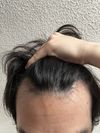
The conversation is about a user assessing their hair loss as Norwood 1.5 and discussing their use of oral minoxidil and finasteride for 2.5 years, which improved their hair density. They are content with their current progress but hope to reach Norwood 1.
IGFBP‐rP1 shows potential for treating androgenic alopecia by influencing hair cycle transitions. Increasing IGF-1 levels may have similar effects to Minoxidil and 5-AR inhibitors in reducing hair loss.