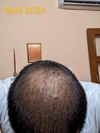
A user shared progress pictures after 15 months on 0.5 mg finasteride, reporting significant hair regrowth starting around 9 months. They no longer see the need for a hair transplant.
The user experienced significant hair regrowth over a year using topical finasteride (0.1%) and minoxidil (7%), along with Ketoconazole shampoo, and recently switched to dutasteride and plans to add oral minoxidil. They managed side effects like oily skin and itchiness with a corticosteroid and chose topical treatments initially to limit systemic exposure.
The user experienced significant hair regrowth and regained confidence after using 1 mg finasteride and minoxidil twice daily. Initial side effects like weak erections and hard nipples resolved over time as the body adjusted.
The user shared their hair loss treatment progress using Finasteride, Dutasteride, and Minoxidil, noting initial irritation with topical Minoxidil and experiencing shedding phases. They reported no side effects and encouraged others to try this regimen for alopecia.
OP plans to switch from topical to oral minoxidil due to limited results and is advised to overlap both for a few weeks before discontinuing the topical. Oral minoxidil may be more effective for non-responders to topical treatment.
The user has been using finasteride 1mg and minoxidil 5% spray for 19 months but continues to experience hair shedding and has not seen improvement with ketoconazole or tretinoin. They are considering a hair transplant in the future while maintaining current treatments.
The user shared their 3-month progress using topical minoxidil 6% twice daily and finasteride 1mg six days a week, along with a hair and scalp treatment. They reported no side effects and plan to add a dermastamp to their routine.
The safety of combining alfatradiol and fluridil with finasteride as a potential treatment for male pattern baldness, which is approved in the European Union. Other treatments such as minoxidil and RU58841 were also discussed.
A 35-year-old reported significant hair regrowth after six months of using daily oral finasteride (1mg), oral minoxidil (1.25mg), and topical minoxidil, with no major side effects except increased hair growth in unwanted areas. Noticeable improvements were seen around four months after starting finasteride.
The user is experiencing increased hair shedding and is concerned about regression despite consistent use of finasteride, minoxidil, and other treatments. The consensus is that this is likely a temporary shedding phase, and adjustments to the dermarolling frequency are suggested.
A user experienced significant hair regrowth after 6 months using 1mg Finasteride and Oral Minoxidil, along with pumpkin seed oil, biotin, and collagen supplements, and is considering starting PRP. Another user has not seen results despite using a combination of treatments including finasteride, minoxidil, RU58841, pyrithione zinc, topical dutasteride, ketoconazole, and microneedling.
The user has been using Finasteride for hair loss and is considering adding alphatradiol, stemoxydine, or 2% minoxidil to their regimen. They are concerned that stemoxydine, which shortens the resting phase of hair, might accelerate hair loss in those not using Finasteride by depleting hair cycles without strengthening miniaturized hairs.
A 20-year-old male experienced significant hair regrowth after 1.5 months using 1.25 mg Finasteride and 2.5 mg Oral Minoxidil, despite ongoing shedding. He reported minor side effects from Minoxidil, such as chest discomfort and knee swelling, but none from Finasteride.
The user shared progress pictures after using 5% topical Minoxidil inconsistently for three months, along with starting Dutasteride two weeks ago and alternating with Finasteride. They reported no shedding and are considering switching to only Dutasteride once Finasteride runs out, while also experiencing some minor side effects that resolved quickly.
The user has been using 1mg Finasteride and 5% topical Minoxidil for 9 months with little improvement and has recently added microneedling, showing slight progress. The new protocol includes switching to 5mg oral Minoxidil, continuing microneedling, and adding Anagenil Complex, while seeking advice on whether to stop topical Minoxidil and the effectiveness of Anagenil Complex.
Oral minoxidil and dutasteride are used for hair loss with mixed results. Some users report new growth, while others suggest scalp inflammation may be an issue.
The group buy for CB-03-01, a topical anti-androgen for hair loss, was postponed and refunded due to issues with the product's form and solubility. The product, also known as Breezula, is an alternative to finasteride with fewer side effects, but its official release is delayed until 2021.
The user experienced significant hair regrowth by returning to a regimen of 1mg oral finasteride daily and daily topical minoxidil after previously reducing their doses. They also emphasize maintaining energy and health through diet, exercise, and supplements.
The user has been using 2.5 mg oral minoxidil daily and initially 0.5 mg finasteride daily, later switching to 0.25 mg dutasteride daily, but has not seen significant progress in hair regrowth after 15 months. The user is concerned about crown balding and thinning despite treatment.
The conversation is about a user's progress in hair regrowth using finasteride and minoxidil for 9 months, followed by dutasteride and minoxidil for 4 months, and recently adding RU58841. The user reports no side effects and anticipates further improvement.
PP405's phase 2a trial results were presented, focusing on safety and pharmacokinetics, with a future meeting planned to share the full dataset. The trial includes a randomized controlled portion and an open-label extension, with no indication of phase 2B completion.
The user has been using dutasteride, RU58841, and minoxidil for hair loss, experiencing some side effects and mixed results, with RU58841 notably reducing scalp itch. Despite extensive treatment, the user has maintained hair but struggles with hairline thickening.
The conversation discusses hair loss treatments, specifically topical finasteride and minoxidil, with users debating the effectiveness and honesty of progress pictures. Some users claim significant regrowth, while others argue about the influence of lighting and angles on perceived results.
A user shared progress pictures after almost 9 months of using oral finasteride (1 mg) and minoxidil (2.5 mg) for hair loss. They are optimistic about future results, and another user commented that it looks better.
The user experienced significant hair improvement after 3 months of oral finasteride and 6 months of topical minoxidil, with additional weekly microneedling. Hair shedding decreased significantly with no side effects reported.
The conversation discusses hair loss treatments, specifically Setipiprant, finasteride, and bimatoprost. Setipiprant is suggested for maintenance, while bimatoprost is for regrowth, and combining them with dermarolling is recommended for better results.
A user shared their progress with hair loss treatment using 0.1% topical finasteride for 5 months and 6% minoxidil for 2 months, reporting reduced hair shedding, less scalp visibility, and healthier hair. They experienced no significant side effects except initial itching and dandruff, and noted an increase in libido.
New hair loss treatments like GT20029 and PP405 could potentially replace minoxidil and finasteride, offering better results with fewer side effects. However, current treatments like finasteride and minoxidil are still effective for many, despite concerns about side effects.