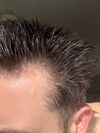
A 23-year-old male is experiencing diffuse hair loss and miniaturization, possibly due to high IGE levels after using tofacitinib. He seeks advice and has not yet consulted a dermatologist.
The user is experiencing hair shedding while using finasteride and topical minoxidil with tretinoin, keto shampoo, and dermarolling. They hope the shedding indicates future hair regrowth.
Osteopontin, a protein involved in hair growth on moles, may help with hair loss. However, it is also linked to Alzheimer's, cancer, and bone development, so caution is advised.
A treatment containing Wnt and Follistatin was found to be safe and effective for hair regrowth in a Phase 1 clinical trial. Specific treatments discussed include Minoxidil, Finasteride, and RU58841.
A South Korean company, Therazyne, has developed a promising hair loss treatment using a WNT chain surrogate that binds to Frizzled 7, with human follicle testing expected soon. Current treatments like minoxidil and finasteride are not seen as cures, and while optimism exists for future solutions like PP405, approval processes are lengthy.
PP405 shows promise for hair regrowth by manipulating stem cell characteristics and lactate dehydrogenase, with Phase 2a trials pending. Google Ventures' $15M investment suggests confidence, but results and market availability remain uncertain.
PP405 is a promising experimental topical treatment for alopecia that reactivates dormant hair follicles by targeting cellular energy, with large-scale trials planned for 2026. While it shows potential, it cannot regenerate permanently destroyed follicles, making hair transplants the only guaranteed solution for advanced baldness currently.
The user is allergic to minoxidil and plans to try Redensyl hair serum and derma rolling for hair regrowth. They cannot start finasteride until age 18.
A user proposed genetically engineering scalp stem cells to stop androgen receptors from causing hair loss. Others discussed the feasibility, existing research, and potential issues with this approach, including targeting the correct cells and unintended effects.
KX-826 Phase II results show that a 0.5% concentration performs better than 1% for treating male pattern baldness. Concerns about receptor upregulation from long-term DHT antagonism were mentioned.
A stem cell and adenosine triphosphate cocktail showed promising results in hair regrowth for male and female mice, with potential for future clinical trials. Users humorously reacted to the success in mice, expressing hope for human application.
Hair loss treatments discussed include microneedling, minoxidil, tretinoin, finasteride, dutasteride, pumpkin seeds, saw palmetto, and scalp massage. The consensus is that finasteride or dutasteride is necessary for significant regrowth, while other methods may only slow hair loss.
Minoxidil, finasteride, and RU58841 promote hair growth by different mechanisms, with minoxidil and prostaglandin E1 being specifically mentioned. Corticosteroids can also cause hair growth.
A gel of keratin microspheres promotes hair follicle growth, showing similar effectiveness to minoxidil in mice. The treatment activates hair growth pathways and reduces inflammation, with potential applications in drug delivery for hair-related disorders.
MCL-1 is important for hair follicle stem cell survival, but its impact on human hair regrowth is unclear. Minoxidil and finasteride are the main treatments, with doubts about new discoveries leading to effective human solutions soon.
A 20-year-old woman with androgenetic alopecia feels depressed about her hair loss, despite using topical minoxidil, spironolactone, and saw palmetto. Suggestions include trying oral minoxidil, higher doses of finasteride or dutasteride, and checking for vitamin deficiencies and heavy metal exposure.
Mallia Aesthetics has developed MAL-838, a hormone-free product derived from sCD83, which stimulates hair growth without disrupting the skin microbiome. sCD83 promotes hair growth by activating hair follicles and preventing cell death, offering a localized treatment without systemic side effects.
A 33-year-old male is experiencing thinning at the temples and hairline, with increased shedding over the past year. The user suspects androgenetic alopecia (AGA) despite AI suggesting a maturing hairline.
A drug that regrows body parts, but not hair, sparking debate on hair loss treatments. Discussions include the use of finasteride, dutasteride, and the potential for new methods to restore hair.
The user regrew their hairline using mechanical stimulation, including a 1.5mm derma roller weekly, daily scalp massages, and other treatments like Nizoral, zinc pyrithione, fish oil, and Lipogaine The Big 5. They did not use Minoxidil or finasteride.
The user has been taking oral minoxidil, dutasteride, and biotin for 3 months and noticed changes in hair texture, suggesting potential regrowth or stabilization. Baby hairs and increased hair density are seen as positive signs.
Applying Epidermal Growth Factor (EGF) topically may improve skin and potentially promote scalp health and hair growth, especially after microneedling. The user shares their positive experience with EGF and provides a product link.
Sulforaphane, found in broccoli sprouts, promotes hair growth by degrading DHT. Users discuss its potential benefits and joke about unconventional application methods.
The post and conversation are about the role of the enzyme 3alpha-hydroxysteroid reductase in hair loss and the potential of compounds like procyanidin B2 and sulforaphane to boost its activity for hair regrowth. Further research is needed to develop effective treatments based on this theory.
AMP-303, a new injectable treatment for androgenetic alopecia, showed promising results in increasing hair count and density with minimal side effects. The treatment demonstrated significant hair regrowth and durability, offering new hope for those with hair loss.
Animajax, who started off completely bald, has seen hair regrowth using finasteride 1.25mg, oral minoxidil 2.5mg, occasional topical minoxidil, dermastamping, benzoyl peroxide, and tretinoin. They recently added nizoral and plan to switch to a topical solution combining minoxidil and dutasteride.
A 25-year-old with AGA experienced hair thinning and dandruff, stabilized with topical finasteride and minoxidil but saw minimal regrowth. They seek advice on styling and consider oral minoxidil and microneedling for denser hair.