Search
for
Sort by
Community Join
90-120 / 1000+ resultscommunity [Discussion] Trichoscopy in sudden-onset AGA: Pathology and reversibility of "Yellow Dots" without 5AR-inhibitors?
Hair loss treatments discussed include microneedling, minoxidil, tretinoin, finasteride, dutasteride, pumpkin seeds, saw palmetto, and scalp massage. The consensus is that finasteride or dutasteride is necessary for significant regrowth, while other methods may only slow hair loss.
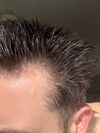
community “Mature Hairline” or Genuine AGA?
A 33-year-old male is experiencing thinning at the temples and hairline, with increased shedding over the past year. The user suspects androgenetic alopecia (AGA) despite AI suggesting a maturing hairline.
community My experience and a discourse on “DUPA”
How diffuse unpatterned alopecia (DUPA) is not an invitation to self-diagnose oneself with aggressive AGA and that seeking a specialized dermatologist may help people experiencing hair loss. Treatment options discussed include topical clobetasol propionate, oral minoxidil, and discontinuing finasteride.
community Debunking Androgenetic Theory (Hair Transplants)
The post discusses a theory that hair regrowth after transplant is due to the angiogenesis process (new blood vessels forming), not because the transplanted hair is unaffected by DHT. The responses highlight the established belief in 'donor dominance' (the importance of the hair's origin in transplantation) and skepticism about the new theory.
community Verteporfin for treatment of donnor areas after hair transplants...
Hair loss discussion includes treatments Minoxidil, Finasteride, and RU58841. Verteporfin considered for treating donor areas after hair transplants.
community The Hormonal Profile of MPB/AGA
Men with early male pattern baldness (MPB) may have hormonal abnormalities similar to those in women with PCOS. Specific treatments mentioned include Minoxidil, Finasteride, and RU58841.
community Pelage Recruiting Now for Phase 2
Pelage is recruiting for phase 2 trials, showing promise for treating bald regions. The discussion highlights its potential effectiveness based on its mechanism of action.
community Dutasteride and anal with partner
Using dutasteride anally as a hair loss treatment, with humorous and satirical comments on its effects and implications.
community Androgenic alopecia exclusively on the vertex of the scalp
A user experienced androgenic alopecia starting at the vertex without frontal hairline recession and is seeking information on this pattern. Another user noted that vertex or diffuse hair loss is common among men.
community Are there any vellus hairs in a longtime NW7 scalp under a microscope or is it completely smooth?
The conversation discusses whether a longtime NW7 scalp has vellus hairs under a microscope or is completely smooth. Treatments mentioned include Minoxidil, finasteride, and RU58841.
community The case for 5ARI-free hair transplants: Dr. Zarev, Pittella, Sethi, Miln, and future treatments in development
Some individuals experience side effects from 5AR inhibitors like finasteride and are considering hair transplants without these medications, with some opting for surgeons like Dr. Zarev. Others are exploring alternative treatments and waiting for new medications in development, while some discuss managing side effects through lifestyle changes or additional medications.
community deeper understanding of microneedling
community 5ar alpha reductase stimulation is different depending on whether it’s type 1 or 2
The conversation discusses how different factors can stimulate type 1 and type 2 isoforms of 5-alpha reductase, which are enzymes linked to hair loss. Specific treatments mentioned include oral Dutasteride and topical Finasteride.
community JPEGMafia Hair Transplant — Incredible Result
A user's successful hair transplant, with some people questioning the donor area regrowth, and others speculating that hair fibre may have been used to help fill in areas.
community Another transplant or SMP? (Not balding)
The user is considering another hair transplant or scalp micropigmentation (SMP) for a congenital bald spot, but previous transplants were less effective due to scar tissue. Suggestions include using hair fibers, changing hairstyles, or doing nothing, as the spot is not very noticeable.
community Topical Dutasteride Experiment
community Protac degradation of the androgen receptor in mice shows good efficacy and no systemic drug could be found
The efficacy of degrading the androgen receptor through dermal application in DP cells, a delivery system for topical drugs that involves dissolving microneedles, and rosemary oil as an alternative anti-androgen.
community This tells you if you're shedding or losing hair (along with other things like fibrosis)
High frequency ultrasonography and HR-MRI can help identify hair shedding causes like inflammation and fibrosis. The conversation discusses the potential of using these technologies to evaluate treatments like Verteporfin for hair regeneration.
community Targeting multiple AGA mechanisms with commonly available substances
The conversation discusses using a multimodal approach to treat androgenic alopecia, including substances like gamma-linolenic acid, DHA, sulforaphane, melatonin, cetirizine, astaxanthin, fisetin, apigenin, curcumin, limonene, genistein, and berberine. Users also mention using ketoconazole, minoxidil, and low-level laser therapy (LLLT) as part of their hair loss treatment regimens.

community Effectiveness of Dutasteride 0.5mg: Scalp vs Follicle DHT Reduction for AGA
Dutasteride 0.5 mg significantly reduces both scalp and hair follicle DHT, with a greater reduction in hair follicle DHT. The discussion questions which reduction is more important for androgenetic alopecia and diffuse thinning.
community Topical Anti Androgens detailed thread
community Could a reversed SARM designed for the scalp serve as a replacement for oral Dut and Fin?
The conversation discusses the potential of developing a selective oral SARM to target androgen activity in the scalp and skin, as an alternative to oral Dutasteride and Finasteride, which have systemic side effects. It also mentions Clascoterone and RU58841 as topical treatments for hair loss.
community Boston Transplant Update. Hairline & Crown procedures!
The user underwent a hair transplant in Boston, initially dissatisfied with the results, but later achieved significant improvement in hair density and natural appearance after consulting a different surgeon. They used finasteride, minoxidil, and low-level laser therapy as part of their treatment.
community HairClone (UK) finally begins offering its Dermal Papilla Cell Hair Multiplication procedure to humans. In Guatemala.
HairClone is offering a Dermal Papilla Cell Hair Multiplication procedure in Guatemala, raising questions about its effectiveness and regulatory reasons for the location. Users express skepticism and curiosity about the treatment's success and potential costs.
community Pilose antler extracts promotes hair growth in androgenetic alopecia mice by activating hair follicle stem cells via the AKT and Wnt pathways
community Dutasteride might be better for your hairline. Some people have more type 1 5AR activity in their scalp than others.
Dutasteride might be better for hairline due to varying levels of 5AR activity in scalps. Genetic tests can determine if finasteride is enough or if dutasteride is needed.
community Help non-recipient cown after hair transplant - besides Fin and Min?
The user had a hair transplant and is using oral minoxidil and finasteride but seeks advice for treating the crown area. They are looking for additional recommendations for non-transplanted areas.
community Why is human evolution like this 😂
Why androgenic alopecia affects the scalp rather than other body parts, potential explanations for this phenomenon, treatments available to combat hair loss, and the implications of male attractiveness in modern society.
community topical DUT with dermapen, which form to order?
The conversation discusses using topical dutasteride with a dermapen for hair loss treatment. The user is deciding between liposomal and mesosomal formulations for this purpose.