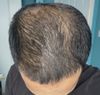
A user experienced high estrogen levels after 10 months of taking 1mg oral finasteride but is happy with hair regrowth. They are considering switching to topical finasteride and are also taking DIM and Zinc supplements.
Dutasteride improved hair density and thickness in men who didn't respond to finasteride, with some experiencing transient sexual dysfunction. Users discussed switching from finasteride to dutasteride, noting initial shedding but eventual hair improvement.
The user has been using oral minoxidil and dutasteride for hair loss without success and is considering adding topical 17α-estradiol, Pyrilutamide, Clascoterone, or cetirizine. They have confirmed low serum DHT levels and are exploring additional treatments due to genetic sensitivity to DHT and prostaglandin D2.
Intradermal botulinum toxin (BTX) injections effectively treat androgenetic alopecia (AGA) by inhibiting TGF-β1 secretion from hair follicles. Further research and long-term follow-up are needed to confirm these findings.
The conversation discusses the effects of using Tongkat ali and dioscorea to raise DHT levels, leading to increased body hair growth and an itchy scalp, without causing hair loss. The discussion also debates the role of DHT in male characteristics and its impact on sexual function, with differing opinions on its importance and effects.
A 16-year-old is experiencing hair loss and is using minoxidil, finasteride, and plans to add RU58841, while considering other treatments like MK-677 and microneedling. Concerns are raised about the potential impact of these treatments on puberty and development.
The conversation is about using finasteride for hair loss and considering supplements like ginseng or ashwagandha to boost testosterone levels. Concerns are raised about potential negative effects on hair due to increased DHT conversion, and it's suggested that natural testosterone boosters may not significantly impact those with already high testosterone levels.
A 20-year-old woman with androgenetic alopecia feels depressed about her hair loss, despite using topical minoxidil, spironolactone, and saw palmetto. Suggestions include trying oral minoxidil, higher doses of finasteride or dutasteride, and checking for vitamin deficiencies and heavy metal exposure.
A 20-year-old male is unsure how to interpret his bloodwork results and whether he should take finasteride for hair loss. His bloodwork shows borderline high levels of albumin and testosterone, and high progesterone, but normal levels of other hormones.
A 26-year-old man who had a hair transplant and used minoxidil with good results is now experiencing shedding and considering finasteride. He's concerned about high progesterone and mild erectile dysfunction before starting the treatment.
PP405 is the most promising future treatment for hair loss, aiming to reactivate dormant hair follicles. Clascoterone 5% is the most promising near-term drug, while current strategies include using finasteride or dutasteride to stabilize hair loss and minoxidil to stimulate growth.
Clascoterone's full trial results are expected by mid-July 2026, but skepticism exists about timely release. Clascoterone is available at 5% from some telehealth companies.
The user had a hair transplant 5 years ago and is currently using 1 mg finasteride and topical minoxidil but is not seeing an increase in hair volume. They are considering another transplant to improve hair volume.
The conversation discusses various treatments for hair loss, including high doses of dutasteride, oral minoxidil, RU58841, microneedling, ketoconazole shampoo, and other supplements like pumpkin seed oil and multivitamins. It also touches on more extreme measures like estrogen therapy and castration, with some users emphasizing the importance of overall health and nutrition.
Breezula's effectiveness is uncertain, with some users skeptical about its potential and others noting its recent availability on the grey market. A user reported success with a stack of Dutasteride (oral), Minoxidil (topical), and RU58841 (topical), achieving significant hair improvement after 18 months.
New hair loss treatments like VDPHL01, PP405, Gt20029, and Breezula are anticipated, with VDPHL01 possibly releasing in 2027/28. Current treatments include finasteride, dutasteride, and minoxidil, but new options are eagerly awaited.
The conversation discusses using oral spironolactone for hair loss in males when 5ari blockers fail. Concerns are raised about spironolactone's side effects, and alternatives like pyrilutamide and breezula are suggested.
A 20-year-old male experiencing hair loss is using topical finasteride and recently added dutasteride but is still losing hair and considering giving up. Suggestions include being patient, giving dutasteride more time, trying oral finasteride, adding minoxidil, and considering other treatments like low-level laser therapy.
A user shared their 1 year and 5 months update on using finasteride and minoxidil for hair loss, noting improved hair density but a still receding hairline. They mentioned being inconsistent with minoxidil initially and experiencing more hair shedding after starting it.
The conversation is about a user's progress with hair regrowth after using minoxidil for three months. Many suggest adding finasteride to maintain results, and the user also uses ketoconazole shampoo for dandruff.
The user has been experiencing continuous hair loss despite using finasteride, minoxidil, and dermastamping. They are seeking advice on what to do next.
The conversation is about finding a source for RU58841 in Canada as an additional treatment for hair loss, alongside oral minoxidil and dutasteride. Alternatives like kx826 are suggested, with some users discussing prices and sources for these products.
RU58841 5% is theoretically equivalent to 2mg of dutasteride for hair loss treatment, with RU58841 offering higher potential but more variability due to absorption issues. Users discuss the effectiveness of RU58841 and dutasteride, with some preferring dutasteride for consistent results and others finding success with RU58841.
The conversation discusses using RU58841 with primobolan or masteron to protect hair while on steroids, alongside dutasteride. Users suggest caution with these compounds due to potential hair loss and discuss alternatives like nandrolone and EQ for better hair safety.
Clascoterone is a topical treatment for androgenetic alopecia, showing modest to moderate hair regrowth, and may be available by 2027-2028. It is considered safer than finasteride, with discussions on its effectiveness compared to RU58841 and pyrilutamide.
The user switched from finasteride to 1mg dutasteride daily due to continued hair loss and is also using minoxidil and rosemary oil. They are seeking advice on whether to increase the dutasteride dosage for better regrowth.
Switching from finasteride to dutasteride can cause initial shedding, but many see long-term hair regrowth and stabilization. Responses vary, with some experiencing fewer side effects and others finding it less effective.