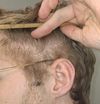
A 12-year-old diagnosed with alopecia shares their experience and current treatments, including Dermovate, an unnamed cream, and liquid iron. The community offers support and encouragement.
The conversation discusses concerns about the potential risk of cancer from creating new hair follicles through microneedling, due to stem cell division. Specific treatments mentioned include microneedling, caffeine-containing anti-hair loss shampoos, and other unspecified topicals.
A 28-year-old male experiencing diffuse thinning and miniaturization around the ears and back has tried finasteride, dutasteride, and both topical and oral minoxidil without success. He is seeking advice on identifying the type of hair loss and next steps since current treatments are ineffective.
A 31-year-old has been using finasteride, dutasteride, and oral minoxidil for hair loss. They noticed a sudden triangular thinning patch on their scalp and are seeking advice, questioning if it could be medication-related.
A user with alopecia totalis, borderline universalis, seeks advice on getting into a Xeljanz trial or appealing insurance for coverage. They experienced significant hair regrowth but are now seeing hair loss again and want to try Xeljanz.
Monthly microneedling combined with low-dose topical dutasteride shows promising results for hair density and thickness with minimal side effects, especially in the frontal area. Despite its effectiveness, it is not widely discussed or used due to availability and cost concerns.
A 19-year-old female with Diffuse Alopecia was advised by a dermatologist to use vitamin supplements, a hair serum, and antifungal drops, leading to some improvement. Other users suggested treatments like minoxidil, microneedling, and consulting a different dermatologist for further advice.
Topical dutasteride with microneedling is effective for androgenetic alopecia, improving hair thickness and density. Further research is needed to confirm long-term efficacy.
Excess Vitamin A and topical retinoids can cause diffuse hair shedding. The user suspects their chronic telogen effluvium may be linked to using adapalene, a topical retinoid.
User found Annurmets, an Italian supplement with apple extract for hair loss treatment. Many reported incredible results using Procyanidin B2 from apple extract.
The conversation discusses potential causes of pigmentation around hair follicles, suggesting sebum buildup, autoimmune conditions, or dermatitis. Treatments mentioned include finasteride, dutasteride, and an anti-inflammatory diet, with a recommendation to consult a doctor for a proper diagnosis.
Low-Level Laser Therapy (LLLT) is seen as a safe and effective method for maintaining hair and promoting regrowth in androgenetic alopecia (AGA) and male pattern baldness (MPB), with devices like the HairMax LaserComb® and iRestore helmet being popular. Some users and professionals are skeptical about its long-term effectiveness and cost.
A 27-year-old male with AGA and diffused thinning has been using oral Minoxidil, Finasteride, Vitamin D, B12, Iron, and Ketoconazole shampoo. Despite a hair transplant and improved blood levels, he continues to experience hair loss and suspects a possible misdiagnosis of Alopecia Areata Incognita.
The user completed a Clascoterone study with no observable changes in hair loss and plans to try microneedling and Minoxidil next. They will microneedle weekly and apply Minoxidil twice daily, except on the night of microneedling, and compare results after six months.
AH-001 is a new topical treatment designed to degrade androgen receptors, targeting the root cause of androgenetic alopecia without the side effects of oral treatments like finasteride. It has shown a strong safety profile and good local tolerability in early trials.
The conversation discusses a new model for understanding androgenetic alopecia (AGA), linking it to dietary and lifestyle factors similar to PCOS, and highlighting the role of DHT, vascular damage, and inflammation. Treatments mentioned include Minoxidil, finasteride, and RU58841.
A user is seeking recommendations for doctors who perform Dutasteride mesotherapy in NJ or PA, as they are having trouble finding one through Google. The conversation focuses on finding a suitable provider for this specific hair loss treatment.
Low Dose Naltrexone (LDN) may reduce inflammation in alopecia conditions. It is discussed as a potential adjunct treatment with finasteride or dutasteride for androgenic alopecia.
The user is using oral Minoxidil, oral Dutasteride, microneedling, and RU58841 for hair loss, noticing slow progress with small hairs appearing. They are inconsistent with microneedling frequency, sometimes doing it weekly or skipping weeks.
The user is experiencing new hair growth after using oral dutasteride, topical minoxidil, and microneedling, but is concerned about black dots on the hairline, which might be clogged pores or dormant follicles. The user previously used a topical minoxidil/finasteride spray and had good results, despite a shedding phase after switching treatments.
A 19-year-old male has been using topical finasteride and minoxidil for 8 months with no progress and is considering seeking a second opinion due to potential misdiagnosis. The discussion revolves around whether the hair loss is due to male pattern baldness, alopecia areata, or a vitamin deficiency.
A user has been experiencing hair loss for 4 years, with treatments like minoxidil, finasteride, and various supplements proving ineffective. They were diagnosed with fibrosing alopecia in a pattern distribution, a condition that may require a combination of anti-inflammatory and hair growth treatments.
The discussion is about using ASCEplus HRLB exosomes for hair loss treatment, which combines 10 billion exosomes with growth factors, nutrients, biotin, and copper tripeptide. The treatment is expensive and typically administered via scalp injections, but in Europe, it's done with microneedling.
How diffuse unpatterned alopecia (DUPA) is not an invitation to self-diagnose oneself with aggressive AGA and that seeking a specialized dermatologist may help people experiencing hair loss. Treatment options discussed include topical clobetasol propionate, oral minoxidil, and discontinuing finasteride.
Lichen Planopilaris (LPP) is an autoimmune condition causing permanent hair loss and fibrosis, often misdiagnosed. Treatments include pioglitazone, topical corticosteroids, anti-inflammatory medication, and Jak inhibitors.
A custom-made serum based on double-blind studies for AGA, which includes natural ingredients such as rosemary oil, procyanidin B-2, saw palmetto extract, curcuma aeruginosa, pumpkin seed oil and castor oil. The user has updated their recipe to include apple poly procyanidin B-2 4% concentration and other ingredients before topping it off with Pura d'or serum.
The conversation is about a female experiencing hair loss and seeking advice on why it's difficult to regrow hair. Specific treatments like Minoxidil, finasteride, or RU58841 are not mentioned.
The user has been using topical minoxidil, finasteride, microneedling, and laser light therapy for 11 weeks to address hair thinning. They report difficulty applying the treatment due to increased hair thickness and are unsure if the results are significant.
A 36-year-old is experiencing underwhelming results from derma stamping for hair thinning, using needle lengths of 0.5mm to 0.75mm. They are considering increasing needle length, taking a break, or pairing the treatment with rosemary oil.