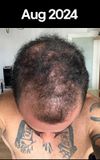
Hair loss treatments like finasteride, dutasteride, minoxidil, and RU58841. Users discuss "DHT itch" at receding hairlines and suggest using dutasteride or ketoconazole shampoo for relief.
ABS-201, a prolactin receptor blocker, shows promise in reversing hair loss and graying, with early success in macaques. Current treatments like finasteride, minoxidil, and RU58841 are still widely used, but new options like PP405 are eagerly anticipated.
A 20-year-old with aggressive hair loss is using oral minoxidil and finasteride, considering a buzz cut to manage appearance. Most suggest a buzz cut or shaving, recommending patience with medication and possibly trying RU58841 or dutasteride.
Tretinoin may enhance minoxidil absorption, potentially improving hair regrowth when combined with microneedling. Users discuss various treatments like minoxidil, finasteride, dutasteride, and microneedling, with mixed results and concerns about side effects and scarring.
The user has been using oral finasteride and topical minoxidil for three years, seeing some regrowth initially but mostly maintenance afterward. Suggestions for further improvement include trying dutasteride, RU58841, or a hair transplant.
Minoxidil alone is not effective for significant hair regrowth; combining it with finasteride or dutasteride is necessary. Additional treatments like hair transplants, microneedling, or oral medications are recommended for better results.
The conversation discusses various hair loss treatments, including Minoxidil, Finasteride, Dutasteride, Ketoconazole shampoo, microneedling, and supplements like collagen, biotin, and vitamins. Users suggest additional treatments like red light therapy, scalp massages, and possibly adding RU58841 or Tretinoin.
The conversation covers aggressive hair regrowth treatments like Dutasteride, Minoxidil (oral and topical), RU58841, microneedling, and ketoconazole shampoo. It also mentions PRP, laser therapy, GHK-Cu injections, and hormone therapy for maximum regrowth.
The user reported significant hair regrowth and stopped hair loss after using Pyrilutamide and Minoxidil for four months. They found Pyrilutamide effective in blocking DHT locally without side effects, preferring a gray market version over Koshine's product.
Increased hair shedding after starting Dutasteride is normal and indicates treatment efficacy, as it triggers a synchronized shedding phase to make way for stronger hair growth. It is advised to continue with the current treatment plan and assess results in 9 to 12 months.
Minoxidil and finasteride are effective for hair loss, but natural oils like pumpkin seed oil and saw palmetto are not proven to be effective. Topical finasteride may be an option for those who cannot tolerate oral finasteride.
Hair loss treatments include finasteride, minoxidil, microneedling, dutasteride, CB-03-01, RU-58841, and experimental options like KY-19382 and stem cell therapy. Some treatments are considered ineffective or risky, such as ketoconazole, PRP, and low-level laser therapy.
A user experienced significant hair regrowth after 3.5 months using topical minoxidil and weekly derma rolling. Others discussed enhancing results with finasteride, ketoconazole shampoo, and microneedling.
A 23-year-old male plans to temporarily stop finasteride to donate plasma for financial reasons and seeks alternative hair loss treatments like minoxidil, ketoconazole, or RU58841 during this period. He is open to suggestions to prevent further hair loss until he can resume finasteride.
The conversation discusses the potential of PP405 as a hair loss treatment, with some users expressing skepticism and others hopeful about its development. There is also mention of other treatments like Minoxidil, Finasteride, and Pyrilutamide, with users debating the effectiveness and safety of self-experimentation versus waiting for clinical trial results.
Transitioning genders humorously suggested for hair regrowth, noting some transgender individuals experience this. Discusses treatments like minoxidil, finasteride, and hormone therapy, but advises against transitioning solely for hair regrowth.
The user reports promising hair regrowth without using finasteride, focusing instead on microneedling, dermarolling, minoxidil, tretinoin, scalp massages, and red light therapy. They emphasize consistency and a healthier, side-effect-free approach.
Finasteride stopped scalp itching and improved hair health, likely due to reduced DHT. Users discussed the relationship between DHT, itching, and hair loss, with some mentioning minoxidil and antifungal treatments like ketoconazole.
The user experienced worsening hair loss despite using oral minoxidil, finasteride, and topical minoxidil for nine months. They are considering switching to dutasteride and reducing ketoconazole shampoo due to its drying effects.
The conversation discusses various hair recovery treatments, including finasteride, dutasteride, minoxidil, RU58841, ketoconazole shampoo, microneedling, and tretinoin. Users debate the effectiveness and safety of these treatments, with some suggesting combinations like dutasteride and minoxidil as potent options.
The user is frustrated with ongoing hair loss despite using oral finasteride and topical minoxidil. They are considering adding magnesium to their diet and exploring other treatments like micro-needling and keto shampoo.
A user shared their 5-month hair regrowth progress using 0.5mg Dutasteride daily and 5% Minoxidil foam twice daily, reporting significant improvement despite initial shedding. Other users discussed their experiences with similar treatments, noting varied results and side effects, with some emphasizing the need for long-term commitment to maintain hair growth.
The user experienced reduced hair shedding with Ketoconazole shampoo, suggesting it may help with scalp inflammation and hair health. They also use Minoxidil and Finasteride, and suspect food intolerance and stress contribute to their hair issues.
The user has been using minoxidil and finasteride for 3.5 months and has seen a 20% improvement in hair density. They are advised to continue treatment and consider switching agents or adjusting dosages if needed.
The conversation discusses hair loss treatments, specifically the use of dutasteride, finasteride, and other methods like PRP, laser, and mesotherapy. Despite these treatments, the user is experiencing hair loss, and others suggest consulting a dermatologist, considering alternative treatments, and addressing potential scalp inflammation.
Ketoconazole is mainly used for improving scalp health and reducing dandruff, but it is not effective for new hair growth. Some users find it complements treatments like minoxidil and finasteride, but results vary.
RU58841 is debated for hair loss treatment, with concerns about safety and effectiveness. Some users prefer premixed solutions despite higher costs, while others report issues with DIY methods and potential health risks.
The user experienced hair shedding after using finasteride and topical minoxidil since August 2024, and briefly adding oral minoxidil in early 2025. They suspect the shedding might be due to the oral minoxidil, a bad batch of finasteride, or a normal shedding cycle, and are also experiencing an itchy scalp and acne.
The user noticed hair density improvement after 1.4 years on finasteride, with additional use of minoxidil on the temples. Other users discussed various treatments like dutasteride, estrogen, and hair transplants, sharing personal experiences and advice.
The user is using oral finasteride, minoxidil, and KX-826 for hair regrowth, noticing small improvements. They plan to add ketoconazole shampoo and consider a hair transplant with verteporfin after a year of treatment.