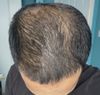
The conversation discusses using Cedarwood, Rosemary, and Lavender essential oils for hair growth and preventing hair loss. The user plans to apply Cedarwood oil daily.
A user is experiencing mild hair loss and is hesitant to try finasteride due to potential side effects. They are considering using Research Verified Hair Growth, which contains various vitamins and minerals, and are seeking opinions and experiences from others.
Nizoral shampoo reduced shedding but caused hair dryness. Alternatives like non-SLS ketoconazole shampoos, such as Regenpure DR, are recommended for use 2-3 times a week to avoid dryness.
The user is managing hair loss with oral finasteride, recently switching to dutasteride, and topical minoxidil, but faces challenges due to seborrheic dermatitis. They seek advice on effective regrowth methods that don't worsen their condition, with suggestions including various shampoos like Vichy Dercos and ketoconazole.
The user is experiencing hair thinning at the crown and midscalp and is seeking advice. They are considering treatments like Minoxidil, finasteride, and RU58841.
Dutasteride and high-dose Minoxidil are the primary treatments maintaining hair, with additional supplements and therapies like red light offering minimal extra benefit. The discussion criticizes promoting expensive hair care products when basic medications are doing most of the work.
A user shared their 1 year and 5 months update on using finasteride and minoxidil for hair loss, noting improved hair density but a still receding hairline. They mentioned being inconsistent with minoxidil initially and experiencing more hair shedding after starting it.
The conversation is about a user's progress with hair regrowth after using minoxidil for three months. Many suggest adding finasteride to maintain results, and the user also uses ketoconazole shampoo for dandruff.
The user is experiencing an itchy scalp and acne while using oral dutasteride and minoxidil for hair loss. They are considering stopping minoxidil to see if symptoms improve and possibly switching to finasteride if needed.
The conversation discusses hair loss treatments, mentioning minoxidil, finasteride, RU58841, VDPHL, GT20029, and follicle cloning as potential solutions. It also reveals that the discussion about PP405 was an April Fool's joke.
The user has been experiencing continuous hair loss despite using finasteride, minoxidil, and dermastamping. They are seeking advice on what to do next.
The conversation is about finding a source for RU58841 in Canada as an additional treatment for hair loss, alongside oral minoxidil and dutasteride. Alternatives like kx826 are suggested, with some users discussing prices and sources for these products.
The user is using 1% ketoconazole shampoo, 5% minoxidil foam, and a multi-peptide hair serum to address hair loss, aiming to improve from Norwood 5 to Norwood 3. They are considering adding topical finasteride if current treatments show progress and plan to use cosmetic products like fibers and DermMatch for appearance enhancement.
Finasteride and its effects on hair loss, with discussions on the role of estradiol and estrogen. Users debate whether increased estrogen from DHT blockers contributes to hair regrowth, with concerns about potential side effects like chemical castration.
An 18-year-old is frustrated with a dermatologist who prescribed shampoos and Betnovate instead of Minoxidil and Finasteride for hair loss and seborrheic dermatitis. The user feels misled and is considering giving up on dermatologists.
Clascoterone is a topical treatment for androgenetic alopecia, showing modest to moderate hair regrowth, and may be available by 2027-2028. It is considered safer than finasteride, with discussions on its effectiveness compared to RU58841 and pyrilutamide.
The conversation is about hair loss treatments and vitamin recommendations. The user is using finasteride, minoxidil, biotin, pumpkin seed oil with saw palmetto, men's multivitamins, and is considering adding D3 + K2, Omega 3, Co-Q10, and magnesium glycinate.
Shampoos are not effective for stopping hair loss; treatments like minoxidil, finasteride, and dutasteride are more effective. Ketoconazole shampoo may help with scalp inflammation but not directly with hair loss.
PP405 may induce new hair growth but cannot revive completely dead follicles, and its effectiveness on hairlines is uncertain. It is expected to be available by mid-2028, but users are advised to manage expectations and consider using other treatments like minoxidil and finasteride.
GT20029 is a potential treatment for androgenetic alopecia, addressing the root cause by targeting androgen receptors, unlike Minoxidil or Finasteride. It is seen as a preventative measure rather than a regrowth agent, with hopes for market release soon.
The conversation discusses hair loss treatments, with the main focus on using Fluridil and considering switching to Pyrilutamide. Other treatments mentioned include minoxidil, topical finasteride, nizoral shampoo, and saw palmetto supplements, with advice to stick with Fluridil for at least six months before considering alternatives.
Minoxidil alone can work for some people, but it may not address DHT-related hair loss. Adding a derma roller and using ketoconazole shampoo might improve results.
The conversation discusses alternative and unorthodox hair loss treatments, including RU58841, nandrolone, and dianabol, as well as theoretical approaches involving high doses of estrogen and selective estrogen receptor modulators. These methods are considered extreme and potentially harmful but are explored for those unable to tolerate traditional 5-alpha reductase inhibitors.
A 41-year-old man shared his two-year progress using finasteride for hair regrowth, noting significant improvement but wishing he had started earlier. He plans to add oral minoxidil to his routine despite concerns about potential side effects, emphasizing the importance of starting treatment early to combat hair loss.
The conversation discusses hair loss treatment with finasteride, where the user is experiencing shedding and concerns about regrowth. Users advise patience, suggesting that visible improvement may take 6-12 months or longer, and recommend continuing the treatment.
Using estrogen for hair regrowth is considered ineffective and risky, with potential side effects like breast growth and hormonal changes. Alternatives like finasteride, dutasteride, and minoxidil are suggested, but estrogen is not recommended unless transitioning.
The conversation discusses various hair loss treatments, including minoxidil, finasteride, dutasteride, pyrilutamide, alfatrodial, and nizoral, with a focus on the potential of new treatments like gt20029 and breezula. There is optimism about novel treatments that don't have systemic effects, although skepticism remains about the effectiveness of some new drugs.
The user shared a 6-month progress update on hair loss treatment using Dutasteride (0.5mg), Minoxidil (5%), and Dermanator 2. They reported improved hair density and coverage, especially in the crown/mid-scalp, and are focusing on enhancing the hairline.
The user stopped using finasteride due to side effects and is considering Fluridil (Eucapil) as an alternative for hair loss treatment. They are exploring other options like RU58841 and are interested in the experiences of others with Fluridil, noting its good safety profile despite the cost.