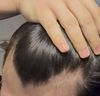
The user experiences irritation from alcohols in minoxidil and is considering alternatives like trichosol mixed with polyethylene glycol or DMSO. They seek advice on the best nonirritating option.
The user is concerned about low DHT levels due to using saw palmetto in Foligain supplements and is considering trying finasteride. They seek advice on whether finasteride will also lower DHT and how to manage DHT levels.
The conversation discusses anticipation for CB-03-01, a potential new hair loss treatment that may be more effective and have a cleaner safety profile than finasteride. Users are hopeful but cautious, discussing current treatments like minoxidil, nizoral, and dermarolling, and the possibility of combining them with CB-03-01 for better results.
Using topical Minoxidil, Finasteride, and Tretinoin, along with low-dose Accutane, may enhance hair growth. Tretinoin is believed to improve Minoxidil absorption.
The user is using finasteride and minoxidil for hair loss but is looking for new treatments. Pyrilutamide and GT20029 are potential future treatments, with Pyrilutamide expected next year and GT20029 possibly by 2027.
Finasteride is not effectively stopping hair loss for the user, who is considering alternatives like Dutasteride, Minoxidil, and microneedling, but is hesitant about surgery or hair systems. The user expresses frustration with the lack of effective treatments for male pattern baldness.
Mixing topical solutions like Morr F 10% (Minoxidil) and L'Oreal Seryoxyl (Stemoxydine) before application may not reduce their effectiveness. The goal is to apply treatments all at once instead of multiple times a day.
RU58841, an anti-androgenic compound, showed early promise for treating alopecia but faced challenges after its patent in 1997. Despite advancing to Phase II trials, safety concerns and financial struggles led Aventis to abandon its development. Proskelia, which later merged into ProStrakan, couldn't prioritize the drug, leading to its eventual stagnation and failure to reach the market.
The conversation is about hair loss treatments, specifically discussing the use of minoxidil, finasteride, and dutasteride. The advice suggests continuing minoxidil and considering dutasteride or finasteride as DHT blockers, with a focus on managing potential shedding and side effects.
Winlevi (clascoterone 1%) is being discussed as a potential hair loss treatment. Users are considering its use despite concerns about its delivery method.
RU-58841 does not dissolve well in common Minoxidil solutions due to water content, requiring a 70/30 ethanol/propylene glycol mix. Users report using separate solutions for RU-58841 and finasteride/Minoxidil for better results.
The user is taking 0.5mg finasteride and 0.5mg Loniten orally daily, using Eucapil twice weekly, and Minoxidil foam once daily for hair loss. They believe Eucapil effectively stops hair loss despite side effects like breast growth.
Mixing 1ml of topical Minoxidil and Pyrilutamide (2ml total) together in a container and applying immediately is being discussed. The concern is whether this method degrades or compromises the efficacy of either compound.
An 18-year-old is maintaining a stable hairline using Minoxidil, topical finasteride (Fynzur), and Dermastamp, and is considering adding oral finasteride for prevention. They seek advice on whether starting oral finasteride early is necessary given their family history and current regimen.
The user has been using topical finasteride, Latanoprost, and other treatments for hair loss but hasn't seen progress and is considering increasing the finasteride dosage or switching to dutasteride. They cannot use minoxidil due to heart issues and are seeking advice on other options.
Hair loss treatments have not advanced since 2018, with finasteride, minoxidil, and RU58841 still being the main options. A permanent cure is unlikely due to the profitability of ongoing treatments.
The user experienced a sudden decrease in hair density after starting alfatradiol while already using finasteride. Another user mentioned that initial shedding can occur with hair loss treatments, but it may not last long.
Using a combination of finasteride, minoxidil, dermarolling, and RU58841 to treat hair loss. Participants discussed the time commitment required for treatment and the effectiveness of different dosages.
A 25-year-old man with mild hair loss is using a topical finasteride treatment, biotin and ajuga reptans supplements, ketoconazole shampoo, and microneedling for hair growth. Due to a heart condition, he can't use minoxidil and is seeking alternative hair growth treatments, considering both medicinal and natural remedies like rosemary oil.
A user's plan to use Zix and topical finasteride (5AR inhibitors) for hair loss, followed by blood testing before/after. The user has suggested creating a fund to cover part of the cost of their blood tests. Replies to their post discuss the effectiveness of the treatments.
Hair loss can be influenced by chronic low-level allergies, and treatments like fexofenadine or topical cetirizine may help with regrowth. The user avoids finasteride, dutasteride, and minoxidil, and has tried Regenera Activa and PRF sessions.
The conversation humorously discusses starting treatments like finasteride, dutasteride, RU58841, and oral minoxidil for hair loss. It highlights the challenges and experiences associated with these treatments.
The conversation is about hair loss treatments, specifically the anticipation for the release of a new treatment, GT20029, by 2028. Users are discussing their experiences with current treatments like finasteride and dutasteride, and the potential of future treatments, including FAK inhibitors and verteporfin trials.
IGFBP‐rP1 shows potential for treating androgenic alopecia by influencing hair cycle transitions. Increasing IGF-1 levels may have similar effects to Minoxidil and 5-AR inhibitors in reducing hair loss.
The conversation is about finding a safe carrier for topical antiandrogens like finasteride, kx-826, RU58841, and dutasteride to minimize systemic absorption and side effects. The user experiences side effects from these treatments and is seeking advice on carriers that reduce these effects.
Pyrilutamide and RU58841 are androgen receptor antagonists that block receptors without significantly reducing testosterone or DHT levels. Any indirect effect on androgen levels is likely negligible.
Woman uses antiandrogens for hair thinning prevention, experiences severe dry eye with finasteride. Asks if dutasteride could be better despite potential for worse dry eye.