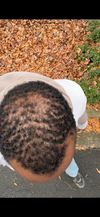
Combining minoxidil 5%, tazarotene 0.1% cream, and lumigan for hair loss treatment is discussed. The conversation focuses on the safety and effectiveness of using these treatments together.
Using RU58841 and topical minoxidil together is fine and does not cancel out the benefits of each. Applying both treatments consecutively is acceptable.
RU58841 is discussed as a treatment that stops scalp itching when used with finasteride or dutasteride. The user is considering trying RU58841 due to persistent itching despite using the "big 3" treatments.
The user has been using topical minoxidil for 4 months and switched to oral minoxidil, considering adding finasteride for better results. They are advised to aggressively treat hair loss with minoxidil for regrowth and finasteride for prevention, while monitoring for side effects.
The conversation discusses the effectiveness of DHT blockers for hair loss, questioning if they are just vitamins or truly effective. Specific treatments mentioned include Minoxidil, finasteride, and RU58841.
The conversation discusses the delay in bringing FAK inhibitors and Stanford's hydrogel to market for hair transplants, with a preference for FAK inhibitors over Verteporfin due to their superior potential in preventing scarring. The user expresses frustration over the slow progress and hopes for faster development by companies like FAKnostics.
Finasteride can reduce DHT in the genitalia, potentially causing side effects like reduced erections and penile fibrosis. Using PDE5 inhibitors like Tadalafil or Sildenafil may help maintain penile health and prevent fibrosis.
New hair loss treatments like GT20029, Clascoterone, and PP405 are being discussed, with concerns about how to apply multiple topicals alongside existing treatments like minoxidil and finasteride. Suggestions include creating a routine, mixing treatments, or minimizing redundancy in treatment stacks.
A user with early-stage diffuse hair thinning asked for long-term success stories using treatments like finasteride, minoxidil, and RU58841. One person regained most of their hair after 22 months on finasteride and minoxidil, while another saw significant improvement with oral minoxidil after trying various treatments over many years.
Combining Finasteride with topical Quercetin, Onion/Garlic juice and Peppermint Oil to reduce Wet Prostate Weight in Rats. Luke10191 asked the user LITUATUI to update them on progress after trying this combination of treatments for hair loss.
A 20-year-old experienced side effects from oral finasteride and is considering switching to topical treatments, including minoxidil and tretinoin. Another user shared their experience of switching to topical finasteride and minoxidil, then to oral dutasteride and minoxidil, noting no side effects with dutasteride.
User tried topical fin, dut, min, tret, hydrocortisone, microneedling, nizoral, collagen, propidren supplements, and laser helmet for hair loss with slow progress. They ask if topical spironolactone is a safer, effective alternative to RU for suppressing testosterone and treating hair loss in men.
Considering treatments for hair loss, including Minoxidil, Finasteride, RU58841, Fluridil and Pyrilutamide. The user is weighing the risks of taking unapproved medication before it has been mass produced.
The user experiences histamine intolerance with alcohol-based hair loss treatments like Rogaine foam and seeks alternatives. Suggestions include alcohol-free and PPG-free topical minoxidil or finasteride, and trying Spectral products with different solvents.
The user is considering adding a topical treatment to their current regimen of finasteride and oral minoxidil to protect their temple area, with options like piro, RU58841, or topical finasteride or dutasteride. They are advised against overcomplicating their treatment, but another user suggests a topical with 8% minoxidil/dutasteride for better results.
The conversation is about considering pyrilutamide 1% as an alternative treatment for hair loss due to intolerance to 5-alpha reductase inhibitors. Some users suggest it might be effective, while others view it as a temporary solution.
People on testosterone replacement therapy (TRT) with aggressive androgenetic alopecia (AGA) discuss using Dutasteride or Finasteride, sometimes combined with topical treatments like RU58841 or CB-03-01 (Breezula), to prevent hair loss. Concerns about side effects and costs of certain treatments are mentioned, with one individual sharing their experience of slowed hair loss using Finasteride alone.
The conversation discusses hair loss treatments beyond the commonly known three, focusing on separating effective treatments from myths. Dutasteride and low-dose oral Minoxidil are mentioned as having clinical evidence for increasing hair counts, but with potential side effects.
RU58841 is used without finasteride by some due to side effects, with mixed results. Users report combining RU58841 with minoxidil and adjusting finasteride doses to manage hair loss.
The user experienced chronic telogen effluvium and mild male pattern baldness, treated with finasteride, oral minoxidil, and later switched to dutasteride, which stopped excessive hair shedding. Other treatments like low-level laser therapy, hair loss shampoos (except ketoconazole), and supplements were ineffective.
The conversation is about adding a topical anti-androgen to a hair loss treatment regimen that includes dutasteride and oral minoxidil. The user is considering topical finasteride or dutasteride, Nizoral shampoo, KX-826, and topical spironolactone, while avoiding RU58841 due to safety concerns.
Pyrilutamide is considered by some as an alternative for those avoiding 5AR inhibitors like finasteride and dutasteride, but opinions on its effectiveness vary. Some users report similar results with fluridil and pyrilutamide, while others find pyrilutamide less effective compared to prescription treatments.
The user is using finasteride 1mg every other day and seeks a topical solution to complement it, excluding minoxidil. They are considering various combinations of ingredients like finasteride, dutasteride, and tofacitinib, with options for nourishing oils and other additives.
Finasteride and dutasteride have potential risks, including post-finasteride syndrome, but are commonly used for hair loss. RU58841, minoxidil, and needling are suggested as alternatives, though all treatments carry risks.
A peptide-based delivery system for finasteride shows promise in reducing systemic side effects while maintaining hair growth effectiveness. Combining this with other treatments like minoxidil and RU58841 could enhance results with lower systemic absorption.
Hair loss treatments discussed include Minoxidil, Finasteride, and RU58841. HMI-115, a monoclonal antibody drug, is in phase 1 and 2 trials for different conditions, but its availability on the gray market is unlikely due to high production costs.
Combining pyrilutamide and alfatradiol might be as effective as finasteride for hair maintenance. The user plans to try this combination alongside minoxidil and keto shampoo, hoping for improved hair thickness.
The conversation is about the potential format of Breezula, a hair loss treatment, and concerns that it might be greasy or sticky. Specific treatments mentioned are Minoxidil, finasteride, and RU58841.