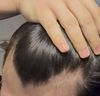
The user is allergic to minoxidil and seeks alternatives for hair regrowth. They have been using finasteride for two years, which stopped hair loss but did not promote regrowth.
Cetirizine 1% cream significantly improves hair growth and thickness in men with androgenic alopecia. It is considered effective, affordable, and has a low side effect profile.
A compound called MTP3 from the Monoterpene family was found to be safe and highly effective at treating hair loss by inhibiting the FGF5 gene, but its identity is undisclosed for commercial reasons. No specific treatments like Minoxidil, finasteride, or RU58841 were discussed.
A 23-year-old is considering using a topical solution of Finjuve (finasteride and minoxidil) at a reduced dosage of 0.2/0.4mg to treat crown thinning while minimizing side effects. Applying 0.1-0.2 mL is suggested to lower systemic absorption and effectively reduce DHT on the scalp.
An 18-year-old is maintaining a stable hairline using Minoxidil, topical finasteride (Fynzur), and Dermastamp, and is considering adding oral finasteride for prevention. They seek advice on whether starting oral finasteride early is necessary given their family history and current regimen.
Minoxidil can cause scalp itchiness, often due to propylene glycol, and users suggest alternatives like foam formulations without PG, using moisturizing oils, or reducing application frequency. Some recommend ketoconazole or zinc pyrithione shampoos to help with inflammation and itchiness.
The conversation is about the ineffectiveness of 1% ketoconazole for hair loss, with the user stating that studies support the 2% version and even that has minimal results. The user also mentions using minoxidil, which dries out their scalp, and ketoconazole worsens it.
The conversation is about choosing a topical antiandrogen for hair loss, with options including RU58841, CB0301, Pyrolutamide, Alfatradiol, and Fluridil. Users discuss their preferences and reasons for selecting specific treatments.
The user experiences histamine intolerance with alcohol-based hair loss treatments like Rogaine foam and seeks alternatives. Suggestions include alcohol-free and PPG-free topical minoxidil or finasteride, and trying Spectral products with different solvents.
Clascoterone 5% solution (Breezula) is a promising alternative for androgenetic alopecia, showing continued hair growth with consistent use and no significant side effects. It may be suitable for those who cannot tolerate finasteride or dutasteride, especially when trying to conceive.
User experienced itching, redness, and hives from Minoxidil foam and is questioning if they are allergic to Minoxidil or another ingredient. They have switched to oral Finasteride.
A user is treating hair loss with oral finasteride, topical minoxidil, and tretinoin mixed with moisturizer for easier scalp application. They also plan to use a derma pen weekly.
The post discusses the user's successful hair regrowth after 15 months of using finasteride and ketoconazole. The user is considering starting oral minoxidil, but others suggest sticking with the current treatment or trying topical minoxidil instead.
The conversation discusses hair loss treatments, specifically the use of topical minoxidil and derma-stamping, with suggestions to add finasteride or dutasteride for better long-term results. Ketoconazole shampoo is also considered for scalp health.
The user is concerned about the effectiveness of a prescribed topical finasteride spray, Alocare, when applied to the scalp. They are unsure if hair might block the solution and reduce its effectiveness.
User seeks non-finasteride hair loss treatments, suggests Eucapil, minoxidil, microneedling, keto shampoo, oral castor oil, and alfatradiol. Reply recommends vitamin D, zinc, pumpkin seed oil, saw palmetto, and high black tea intake, but emphasizes minoxidil and microneedling as most effective.
A 25-year-old is using a nightly routine of topical finasteride 0.3% and minoxidil 6%, along with a derma roller and Nizoral shampoo, to address crown hair loss. The user reports no side effects and noticeable improvement over 2.5 months.
The user is experiencing scalp itching despite using finasteride and Ketoconazole shampoo for hair loss and seborrheic dermatitis. They are unsure if the itch is due to their treatments, diet, or mental factors.
Follicusan DP is discussed as a potential alternative to Minoxidil without side effects, but information is scarce. It is noted to be of German origin and details on its mechanism are limited.
The user experienced reduced hair shedding with Ketoconazole shampoo, suggesting it may help with scalp inflammation and hair health. They also use Minoxidil and Finasteride, and suspect food intolerance and stress contribute to their hair issues.
A user discusses a topical treatment combining Minoxidil, Betamethasone Valerate, Canrenone, Finasteride, and Dutasteride for hair loss. The treatment is RX-only and provided by a dermatologist.
The conversation discusses hair regrowth using finasteride 0.5mg and ketoconazole shampoo over four months, with no negative effects. The user shares a photo asking if the new growth is baby hairs, and another user encourages them to continue the routine.
The user has been using topical 0.3% finasteride, 5% minoxidil, and Nizoral for 5 months and is questioning if they are experiencing hair regrowth. The conversation revolves around identifying potential hair regrowth.
User shared before and after photos of 8 months using Finasteride 1mg and Minoxidil 5% 1ml nightly, with positive results and no side effects. Others praised the progress and suggested alternative treatments like topical fin, CB-03-01, or RU58841.
Taking zinc and copper may offset copper depletion and potentially aid hair health when used with finasteride. The user is considering whether to use these supplements alongside finasteride or wait until switching to dutasteride.
Whether using both Fluridil and Alfatradiol together could be more effective than either one alone as a hair loss treatment, given their different mechanisms of action.
Fluridil, a non-steroidal anti-androgen approved for alopecia in parts of Europe, is noted for its low side effects but is not commonly discussed. The user is inquiring if anyone prefers it over other anti-androgens like Spiro or RU58841.