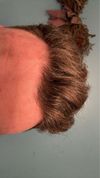
The user, a 27-year-old male, has been treating early hair loss with topical finasteride and minoxidil, then switched to oral finasteride and dutasteride, but has seen no improvement and plans to add oral minoxidil. Despite treatment, hair loss has progressed from Norwood 1-1.5 to Norwood 3, with noticeable thinning, especially on the left side.
The conversation is about a user's comprehensive hair loss treatment plan, including finasteride, minoxidil, dermaroller, Nizoral shampoo, vitamin D, biotin, and zinc. The user describes their approach as a strategic battle against DHT, with finasteride as the main treatment.
The user has been using 0.5 mg oral finasteride and recently switched to 2.5 mg oral minoxidil from topical application. They are observing potential early regrowth with longer baby hairs.
A user reports significantly reduced hair shedding by using a topical mixture containing 10% Minoxidil, 0.1% Melatonin, 5% Azelaic Acid, 5% Rosemary Oil, and 5% Peppermint Oil, and attributes the success mainly to Melatonin. They also use a copper peptide serum (AHK-Cu) for hair growth and Ketoconazole shampoo for scalp cleaning, but have stopped using other treatments like Finasteride and RU58841.
The user is using a regimen of topical finasteride 0.3% and minoxidil 6% daily, along with zinc, saw palmetto, and hair supplements, but is unsure about the results and considering adding oral finasteride. Other users share mixed experiences with similar treatments, suggesting patience or switching to oral forms.
Hair loss treatments, including Alfatradiol, Minoxidil, Finasteride, and RU58841. It discusses the efficacy of these treatments for hair growth and regrowth.
AMP-303 and AMP-601 are new hair loss treatments targeting dermal papilla cells, with AMP-303 showing early efficacy in transitioning vellus hairs to terminal hairs after one injection. Further clinical trials are planned, and these treatments are seen as promising due to their biologic approach and less frequent application compared to daily treatments.
The user has been using topical Minoxidil (5%) and finasteride (0.1%) twice daily for 2 months, with occasional missed applications. They also use a zinc pyrithione shampoo every 2 days and do not dermaroll.
A user's 1 year progress using a combination of treatments, including Minoxidil BID, finasteride, microneedling, tretinoin, and ketoconazole shampoo, for hair loss. Replies included advice such as to consider switching the strength of minoxidil or getting a shorter haircut.
The user is seeking advice on adding CB 03-01 to their hair loss treatment, which includes RU58841, Fluridil, Minoxidil, and Pantostin, but cannot use finasteride.
The conversation is about the potential of the RCH-01/Replicel hair loss treatment and its lack of updates since 2013, with the user expressing hope for its success and considering using Minoxidil, finasteride, and dermarolling in the meantime. Other treatments mentioned as promising are Breezula and Tsuji.
A user was prescribed ketoconazole shampoo by their dermatologist for early-stage hair loss, but is unsure if this is the right treatment. Most commenters suggest seeking a second opinion or starting finasteride treatment immediately, while a few caution about potential side effects.
An individual's journey to treat their severe hair loss condition using the medications Pyrilutamide and RU58841. They will provide regular updates on their progress.
A user had a bad reaction to Finasteride, experiencing anxiety and fatigue, and is seeking alternative hair loss treatments since they can't use Finasteride or Minoxidil. Suggestions include trying low doses of Finasteride, making a topical version, or using other treatments like Alfatradiol, but the user is hesitant to use Finasteride again and is considering a hair transplant.
Finasteride is key for hair regrowth, supported by oral/topical minoxidil, Folexin, Nizoral/Head & Shoulders, and vitamin D. No side effects experienced; early intervention and patience are crucial.
The user has been using RU58841 with minoxidil for hair loss, which helped but caused itchiness, and is considering increasing the dose and adding topical finasteride to the treatment. They are inquiring if they can mix RU58841 and finasteride into one solution with Stemoxydine or if they need separate solutions and which to apply first.
The user stopped using Alfatradiol after 4 months due to no hair improvement and side effects like dry scalp and gallbladder pain. They are considering trying topilutamide, which is suggested as an alternative.
The user has been using topical finasteride and oral minoxidil for hair loss but has seen no results after 5.5 months and 1 year, respectively. Many commenters suggest the user's hair looks good, recommend continuing treatment for maintenance, and discuss potential side effects and alternative treatments.
A user's 8 month progress with treatments including dutasteride, minoxidil, RU58841, derma roller, ketoconazole shampoo and stemoxydine to combat hair loss. Others have shared their own experiences and regrowth results with similar treatments.
Pyrilutamide is considered by some as an alternative for those avoiding 5AR inhibitors like finasteride and dutasteride, but opinions on its effectiveness vary. Some users report similar results with fluridil and pyrilutamide, while others find pyrilutamide less effective compared to prescription treatments.
Hair transplants, oral finasteride, oral minoxidil, and dutasteride mesotherapy are highly effective for treating AGA hair loss. This combination can maintain and improve hair for most people, except those with very aggressive AGA.
The user has been using finasteride for 6 months and recently added topical minoxidil and finasteride. They are seeking advice on whether to expect full recovery and are considering long-term maintenance with these treatments.
Dr. Kyle Gillet mentioned on Dr. Andrew Huberman's podcast that dutasteride mesotherapy blocks DHT conversion only in the scalp and is the most promising topical treatment. Users discussed concerns about systemic absorption and the practicality of dutasteride injections.
The conversation discusses hair loss treatments, specifically using 5% minoxidil foam, Vitamin B12, and Vitamin D, with suggestions to add oral finasteride and minoxidil for better results. Concerns about side effects, particularly from finasteride, and the need for a DHT blocker are also highlighted.
A 23-year-old male experienced no shedding with RU58841 but switched to oral finasteride due to heart concerns, resulting in increased hair shedding. He is considering adding minoxidil to his regimen, which currently includes finasteride, Nizoral shampoo, and microneedling.
The conversation is about whether topical Minoxidil could be effective for hair loss if oral Minoxidil did not work, considering the addition of microneedling and tretinoin. The user has tried oral Minoxidil for over a year without results and is seeking advice on alternative treatments.
The user has been using liposomal topical finasteride since late 2022, progressively increasing the dose, but DHT serum levels remain largely unchanged. Despite using finasteride, minoxidil, microneedling, and ketoconazole, hair condition has neither improved nor worsened.
The conversation is about a user experiencing increased hair loss after altering their treatment routine of oral dutasteride and topical minoxidil. The dermatologist emphasized the importance of diet and vitamins, but the user is skeptical given their healthy lifestyle.
A 31-year-old uses Minoxidil, RU58841, Reviv Hair Serum, and Ketoconazole shampoo for hair loss but avoids finasteride. They plan to reintroduce red light therapy (LLLT) and Eucapil despite previous shedding concerns.