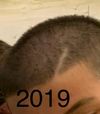
Anti-androgens like Finasteride, Dutasteride, Metformin, and Topical Spironolactone cause hairline recession and increased cholesterol levels. The hairline recovers after stopping the drugs.
27F with androgenic alopecia since 17 seeks treatment. Tried spironolactone, caused low blood pressure; believes finasteride is safer and wants to try it.
A peptide from Japanese water chestnut fruit may help with hair loss by suppressing DHT's effect on hair follicle cell death, potentially serving as a finasteride alternative. The treatment's effectiveness and safety in humans remain uncertain.
The post discusses microdosing finasteride to minimize side effects while treating hair loss. The user also mentions using minoxidil, biotin, and ketoconazole.
Hair loss treatments discussed include Minoxidil, Finasteride, and RU58841. Anageninc stopped selling KX-826 (Pyrilutamide) due to a cease and desist letter from Kintor, but this may indicate promising study results and a potential 2024 release.
Minoxidil users can safely use salicylic acid shampoo to manage scalp pimples and dandruff. Nizoral is also recommended for hair gain and treating scalp pimples.
People with diffuse thinning and retrograde hair loss are discussing treatments like finasteride, minoxidil, and dutasteride, with some reporting improvements and others experiencing issues like scalp inflammation and increased sebum. Suggestions include addressing scalp inflammation, considering gut health, and possibly using topical antiandrogens or micro-needling.
OP experienced diffuse thinning for 11 years and used Minoxidil and Finasteride previously. They now use Pyrilutamide 0.5% and Alfatradiol 0.1%, resulting in significantly reduced hair loss.
The user is starting a new hair loss treatment routine with Minoxidil, Redensyl, Ketoconazole shampoo, and microneedling. They are avoiding finasteride due to potential side effects and are considering future treatments like pyrilutamide.
The post discusses the user's experience with hair loss treatment using finasteride, clobetasol propionate, and ketoconazole shampoo. The conversation warns about the potential side effects of clobetasol, a powerful topical steroid, and emphasizes its short-term usage.
Pyrilutamide is seen as effective for maintaining hair without regrowth, while Minoxidil is known for growing new hair but causes shedding of old hairs. There is a question if using Pyrilutamide would inhibit the hair regrowth effects of Minoxidil.
The conversation is about a user inquiring about a hair loss treatment product that contains minoxidil, azelaic acid, retinol, and caffeine, and whether it is more effective than Regaine foam. No specific treatments or outcomes are discussed.
The conversation discusses hair loss treatments, including the use of 2.5mg Dutasteride, 1mg Finasteride, and Minoxidil 5%, with concerns about side effects like water retention and facial changes. The user is considering alternative Minoxidil applications, such as microneedling and sublingual Minoxidil, to minimize side effects.
Hair loss treatment with Fin 1mg, Min foam twice a day for 4 months. Minoxidil can make hair darker by stimulating melanocytes; keto shampoo also used.
A potential new treatment for hair loss, Pyrilutamide, and the discussion of whether or not people should still be taking traditional treatments like Minoxidil and Finasteride with it.
A new company is introducing a topical treatment combining Minoxidil, Finasteride, and Bimatoprost for hair loss. Users are also inquiring about updates on a minoxidil-enhancing shampoo from Applied Biology.
The conversation discusses various hair loss treatments, including minoxidil, finasteride, latanoprost, tretinoin, dutasteride, and cetirizine, with concerns about effectiveness, cost, and potential side effects. Users express skepticism about the product's price and the combination of multiple compounds.
A 27-year-old male is experiencing a recurring pattern of hair loss after 5 months of using oral minoxidil and finasteride, despite initial success. He is considering using topical androgen receptor blockers like RU58841, pyrilutamide, or clascoterone to address potential androgen receptor hypersensitivity.
The conversation discusses the approval of Kintor Pharmaceutical's AR-PROTAC (GT20029) for clinical trials in China for acne and androgenic alopecia. One user expresses optimism about new treatments being developed and seeks clarification on how the new drug works, specifically if it temporarily degrades the AR protein to reduce DHT sensitivity in hair follicles.
The conversation is about hair loss treatment progress using 2.5mg oral Minoxidil daily, derma rolling weekly, and Ketoconazole shampoo thrice weekly, with plans to add oral Dutasteride. Users discuss the potential benefits and timing of using Dutasteride for hair recovery.
A user is considering tapering off finasteride due to concerns about long-term side effects and cost, and is exploring alternatives like zinc and saw palmetto. Their current regimen includes finasteride, Adderall, zinc, bupropion, fish oil, baby aspirin, Rogaine foam, and ketoconazole shampoo.
The conversation discusses hair loss treatments, specifically Setipiprant, finasteride, and bimatoprost. Setipiprant is suggested for maintenance, while bimatoprost is for regrowth, and combining them with dermarolling is recommended for better results.
The conversation discusses aggressive hair loss treatments, including finasteride, dutasteride, minoxidil, topical cetirizine, and experimental options like Estrogel, oh-flutamide, and RU58841. Users share experiences and suggest trying oral minoxidil and el cranell, noting the complexity and challenges of treating hair loss.
The conversation discusses a topical hair loss treatment containing 0.1% dutasteride, 6% minoxidil, tretinoin, and ketoconazole. The user is asking for opinions on the effectiveness of this solution.
The post and conversation are about the use of oral Minoxidil (Min), Finasteride (Fin), and RU58841 for hair loss treatment, with mixed opinions on their safety and effectiveness.
A pharmacy student proposed a hair loss treatment using minoxidil, finasteride, clascoterone, and tretinoin, aiming for high effectiveness with minimal side effects. Reactions were mixed, with some questioning its feasibility and others showing interest.
Minoxidil is highly toxic to cats, and users are advised to avoid using it if they have cats, or to take extreme precautions if they do. Some users suggest using oral minoxidil instead, but it may not be available in all countries.
A 33-year-old woman shared her successful hair regrowth journey using topical Minoxidil 5% once daily, resulting in thicker hair and increased confidence. She avoided oral treatments like finasteride due to potential side effects and focused on consistent application of Minoxidil.