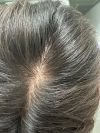
User started using stemoxydine with minoxidil for mild hair recession and maintenance. Stemoxydine improves hair appearance and behavior, making it fuller and shinier.
The user shared an 11-month hair loss treatment update, maintaining the same regimen but adding vitamins and increasing minoxidil application to 1ml during the day. It's unclear if the vitamins contributed to any changes.
The conversation is about the order of applying minoxidil in a skincare routine, specifically whether to apply it before or after witch hazel and moisturizer. The user is concerned about the lotion interfering with minoxidil absorption.
Morr F Aqua, an alcohol-free Minoxidil, is discussed for its absorption effectiveness. Users also mention using finasteride and RU58841 for hair loss treatment.
The conversation is about a user's one-year hair loss treatment using dutasteride, oral and topical minoxidil, ketoconazole, tretinoin, and PRP. Users discuss treatment effectiveness, potential issues with diffuse thinning, and sourcing affordable treatments.
The conversation discusses various hair loss treatments, including minoxidil, finasteride, latanoprost, tretinoin, dutasteride, and cetirizine, with concerns about effectiveness, cost, and potential side effects. Users express skepticism about the product's price and the combination of multiple compounds.
A user is discussing making a DIY topical finasteride solution using ingredients like water, alcohol, propylene glycol, ethanol, and glycerin, and is concerned about the stability of the mixture. Other users suggest that the solution will work and discuss the importance of propylene glycol for drug dissolution and factors like temperature and light affecting finasteride stability.
A 20-year-old is experiencing severe diffuse thinning and shedding despite using oral minoxidil for 12 months and dutasteride for 8 months, after previously trying finasteride. They are frustrated with the lack of improvement and considering trying RU58841.
LemonyBonobo started oral minoxidil a week ago, experiencing significant shedding, and is concerned about potentially worsening their hair condition. They also use dutasteride, topical minoxidil, and dermarolling. Elyktronix, who has been on oral minoxidil for 15 months, recommends it, noting that shedding can be a positive response and that results take time.
The conversation is about finding a reliable source for oral minoxidil in Turkey, preferably in original packaging, and concerns about the safety and effectiveness of local products. The user is seeking recommendations for trustworthy suppliers and is wary of counterfeit products and scams.
The conversation discusses the effectiveness of topical tretinoin as a monotherapy for hair loss, with users suggesting it may not be as effective as minoxidil or finasteride. The original poster is considering other options like a phenol peel and is concerned about the risks of derma rolling.
A 29-year-old male experienced hair thinning and used topical minoxidil, finasteride, and RU58841, but stopped RU58841 due to health concerns. He is considering adding topical dutasteride and switching to oral minoxidil to enhance regrowth, while others suggest using ketoconazole shampoo, microneedling, and lifestyle changes like diet and exercise.
The conversation humorously discusses hair loss treatments, mentioning "oral miraclegro," "topical roundup," "spectracide," "Cow Dung mesotherapy," and "weekly Foot stepping sessions." The user jokingly considers switching to "weed and feed" as a treatment.
Switching from oral to topical minoxidil due to health issues, with advice on using tretinoin to enhance effectiveness. Tretinoin can improve minoxidil absorption and effectiveness, potentially reducing application frequency.
The conversation discusses preventative hair care measures for hair loss, focusing on non-prescription treatments like rosemary, peppermint, castor oils, microneedling, and ketoconazole shampoo. It also touches on the use of finasteride, minoxidil, and RU58841 for those experiencing hair loss.
The conversation discusses the potential effects of spearmint on acne and male pattern baldness (MPB). Concerns are raised about spearmint's androgen-suppressing effects and its suitability for men.
A 27-year-old male is experiencing a recurring pattern of hair loss after 5 months of using oral minoxidil and finasteride, despite initial success. He is considering using topical androgen receptor blockers like RU58841, pyrilutamide, or clascoterone to address potential androgen receptor hypersensitivity.
Cyclosporine A is discussed as a powerful hair growth stimulant, potentially more effective than minoxidil, but concerns about safety and side effects, including cancer risk, limit its use. The conversation highlights the need for further research and experimentation with topical application, despite its risks.
The user is using dutasteride, oral minoxidil, and a topical compound with minoxidil, latanoprost, finasteride, and biotin. They are considering stopping the topical minoxidil due to lack of noticeable results on the head but are concerned about potential hair loss or shedding.
The user is experiencing early hair thinning and is currently using finasteride and ketoconazole shampoo. They are considering adding minoxidil or switching to dutasteride for stronger DHT suppression, while also checking for iron deficiency.
The user is experiencing hair regrowth with oral minoxidil and dutasteride but still has fragile hairs that easily pluck out from the front center. Despite improvements, the user is concerned about the persistent fragility and shedding of these hairs.
The user improved diffuse thinning without finasteride by using minoxidil foam, cold showers, gentle hair drying, 2% ketoconazole, sulfate-free tea tree oil shampoo, dermastamping, and supplements like Omega-3, Vitamin-D, Biotin, Keratin, Collagen, B3, Zinc, and Magnesium. The regimen was followed for about six months under dermatologist guidance.
RU58841 may pose cancer risks due to its antiandrogen properties and lack of long-term safety data. Using it is considered a high-risk experiment with unknown potential for harm.
The conversation is about enhancing the effectiveness of minoxidil for hair loss. Suggestions include using tretinoin alongside minoxidil, though its effectiveness is uncertain.
A user found a successful hair loss treatment using a combination of finasteride, dutasteride, minoxidil, and RU58841. They plan to switch to a purely topical regimen with finasteride, RU58841, and minoxidil.
Rosemary oil is compared to minoxidil 2%, but its effectiveness and safety are questioned. Minoxidil 5% is considered safer and more reliable for hair loss prevention.
The user is considering using P5P to reduce high prolactin levels and is questioning if oral minoxidil could be contributing to the issue. They are also debating whether to switch from oral to topical minoxidil.
The conversation discusses the idea of naturally lowering testosterone levels to potentially reduce DHT and help with hair loss, though it is speculative and not tested by the original poster. Participants suggest using treatments like finasteride, dutasteride, or RU58841 instead, as they directly target DHT without reducing testosterone.