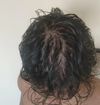
The user is using minoxidil, finasteride, dutasteride, and clobetasol, along with needling, to combat hair loss. They are considering stopping treatment if no improvement is seen.
A 43-year-old from Thailand shares progress after 1 month using topical finasteride, minoxidil, tretinoin cream, and weekly microneedling for diffused thinning. Users compliment his appearance and suggest he doesn't need treatment.
The user stopped finasteride while trying to conceive and switched to oral minoxidil, ketoconazole shampoo, minoxidil foam, tretinoin, and microneedling. They are considering dutasteride mesotherapy but are unsure of its safety during conception.
It's safe to take oral dutasteride with pyrilutamide, as many use 5-alpha-reductase inhibitors with topical antiandrogens for better results. Avoid ingesting pyrilutamide.
User experienced hair loss after surgery and was diagnosed with TE. The doctor recommended PRP therapy, Finasteride, Anatrix pro Hair Serum, a multivitamin, and a lotion and shampoo containing Zinc Pyrithione.
Pyrilutamide, a possible hair loss treatment, ceasing to be traded due to patent laws; and the hope that this indicates it may be a legitimate treatment.
The user is considering switching from finasteride and minoxidil to dutasteride for better hair regrowth results, as they are experiencing thinning and shedding despite current treatments. They have also tried microneedling, Clobetasol, and salicylic acid to manage scalp issues and inflammation.
OP used minoxidil for 15 months and pyrilutamide for 46 days, achieving desired results without side effects. Users discussed alternatives like dutasteride and finasteride, with concerns about side effects like erectile dysfunction.
The GT20029 tincture, a topical androgen receptor degrader, showed significant hair growth and good safety in a China Phase II trial for male androgenetic alopecia (AGA), with the 1% dose twice weekly identified as optimal. The company plans to initiate Phase III trials in China and Phase II in the U.S., and the treatment also shows promise for acne.
A user in their early 20s is concerned about minor hair thinning and is considering a hair loss regimen involving PRP sessions, mesotherapy with dutasteride injections, and low-dose finasteride. They dislike minoxidil due to its greasiness and prefer a routine that is easy to maintain.
The user is considering stopping topical minoxidil due to lack of improvement in hair growth and is exploring alternatives like oral minoxidil, topical finasteride, and tretinoin. They are hesitant about oral finasteride and dutasteride, and are open to trying oral minoxidil if available, despite concerns about potential heart-related side effects.
Topical finasteride may have higher systemic absorption and lower efficacy when using a Propylene Glycol/Ethanol formulation compared to the hydroxypropyl chitosan (HPCH) formulation. The safety profile of topical finasteride relies heavily on the HPCH formulation, and using standard solutions might lead to different pharmacokinetics.
A user reported that after using a topical mix of finasteride and minoxidil, their DHT levels decreased, testosterone and estradiol levels lowered unexpectedly, and they are considering vitamin D3 supplements due to deficiency. They apply the mix 3-4 times a week and use minoxidil on other days. Another user commented that finasteride typically increases testosterone, not decreases it.
The conversation is about whether the phase 2 results for pyrilutamide, a potential hair loss treatment, were presented at a dermatology convention and inquiries about the completion of phase 3 trials. Specific treatments mentioned include pyrilutamide.
The user has been on finasteride for 4.5 years and minoxidil for 10 years, maintaining hair but not regrowing much on the crown and temples. They are considering using a dermastamp more frequently and possibly trying RU58841, but are hesitant about dutasteride due to concerns about side effects and DHT suppression.
The user has been using oral finasteride and topical minoxidil for years and recently started 2.5 mg oral minoxidil, with no significant regrowth observed yet. They are considering adding tretinoin cream to their regimen but are concerned about potential shedding.
The user has been using oral finasteride and minoxidil nightly, dutasteride twice a week, microneedling weekly, and pyripure nightly since April. They are seeking opinions on their hair regrowth progress, noting no slick bald areas but some miniaturized blonde hairs.
The user has been using 1mg finasteride and 2.5mg oral minoxidil daily for 18 months without success in treating hair loss. They are frustrated with their diffuse androgenetic alopecia and unsure of what to do next.
The user applies a topical solution containing minoxidil, finasteride, dutasteride, retinoic acid, and hydrocortisone to address scalp inflammation and is considering adding cetirizine to the mix. They are calculating the correct amount of cetirizine to add to their formula and have paused this approach to retry oral minoxidil.
Minoxidil caused water retention and gastrointestinal issues for the user, which improved after stopping the medication. The user is now using finasteride and topical minoxidil, experiencing excessive urination and concerns about systemic absorption.
People are waiting for KX-826 (Pyrilutamide) Phase 2 data to decide on hair loss treatments, with some considering finasteride or minoxidil in the meantime. Pyrilutamide is seen as a potentially stronger and safer alternative to finasteride, but concerns about side effects and availability remain.
The user experiences severe side effects from finasteride and dutasteride, including low libido and anxiety, and is currently using oral minoxidil despite shortness of breath. They are seeking alternative treatments for hair loss, having tried pyrilutamide, fluridil, and RU58841 with no success, and are considering future treatments or a hair transplant.
User is on vacation in Greece and wants to buy tretinoin or isotretinoin to improve Minoxidil absorption. They are considering isotretinoin since it is available over-the-counter in Greece but requires a prescription back home.
The user had a failed hair transplant in 2018, didn't use medication, and experienced severe depression from further hair loss. They started treatment in 2022 with 0.5mg daily finasteride, 2.5mg oral minoxidil, 1ml daily topical minoxidil, and are considering low dose RU58841 and dermarolling.
The user has been treating hair loss for a year using Hims topical finasteride/minoxidil, derma stamping, and RU58841, with plans to continue and hopes for more significant results. They have noticed some small hair growth at the temples and will provide updates on their progress.
The conversation is about a user's one-year hair loss treatment using dutasteride, oral and topical minoxidil, ketoconazole, tretinoin, and PRP. Users discuss treatment effectiveness, potential issues with diffuse thinning, and sourcing affordable treatments.
The conversation discusses managing estradiol problems during finasteride treatment. Suggestions include stopping finasteride every 3 months for 2-3 weeks or reducing the dosage.
A 26-year-old male has been using 1 mg finasteride daily for two years, which has stabilized his hair loss but not fully stopped thinning. He is considering adding oral minoxidil but is concerned about potential cardiovascular side effects.