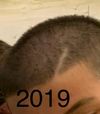
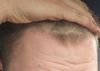
The user is using minoxidil, finasteride, dutasteride, and clobetasol, along with needling, to combat hair loss. They are considering stopping treatment if no improvement is seen.
Taking finasteride alone did not stop hair loss, but adding vitamin D3 and iron supplements improved hair coverage and quality. It's important to check and address deficiencies, but caution is advised with iron supplementation without medical guidance.
People are discussing the use of finasteride for hair loss and the importance of hormonal blood testing to monitor effects like changes in DHT and estradiol levels. Some users also mention using minoxidil and the potential side effects of estradiol, such as gynecomastia, especially at higher doses.
The conversation discusses the idea of naturally lowering testosterone levels to potentially reduce DHT and help with hair loss, though it is speculative and not tested by the original poster. Participants suggest using treatments like finasteride, dutasteride, or RU58841 instead, as they directly target DHT without reducing testosterone.
The conversation is about considering pyrilutamide 1% as an alternative treatment for hair loss due to intolerance to 5-alpha reductase inhibitors. Some users suggest it might be effective, while others view it as a temporary solution.
The conversation is about a user planning a blood test to monitor health while on hair loss treatments: Finasteride, Minoxidil, and Dutasteride. Recommendations include testing for androgens, thyroid function, micronutrients, and basic health markers, with additional suggestions for PSA, prolactin, and estradiol.
The user is considering whether to continue their current hair loss treatment, which includes Minoxidil and possibly Finasteride, or switch to Dutasteride or increase Minoxidil. They have seen slight improvement on the left side but not on the right.
The user experienced no improvement in hair loss after using a dermatologist's minoxidil 10% and finasteride 0.1% solution, clotrimazole, daily dermarolling, and multivitamins. They plan to switch to oral finasteride and reduce dermarolling to once a week.
The user has tried various hair loss treatments including topical minoxidil, oral finasteride, oral dutasteride, oral minoxidil, and exosome therapy, but none have been effective. They suspect trichodynia might be preventing these treatments from working.
A user discusses using dermastamping for hair loss and questions the timing of applying a mixture of peppermint oil, spearmint oil, rosemary oil, and castor oil due to their anti-inflammatory effects. They wonder if waiting 10 hours after stamping would be more effective.
Finasteride, minoxidil, and derma rolling are currently the best treatments for hair loss. New treatments like TDM-105795, GT20029, PP405, HMI 115, Tsuji, Scube 3, RU, JW0061, Topilutamide, and verteporfin show promise but have uncertain timelines.
Monthly microneedling combined with low-dose topical dutasteride shows promising results for hair density and thickness with minimal side effects, especially in the frontal area. Despite its effectiveness, it is not widely discussed or used due to availability and cost concerns.
The conversation discusses the potential of new hair loss treatments, with a focus on pyrilutamide, gt20029, and topical alfatradiol, and the possibility of improving their effectiveness through methods like increased concentration and microneedling. Dutasteride is also mentioned as a stronger option.
Apply minoxidil at least 1-2 hours before bed to ensure it dries and doesn't transfer to the pillow. Foam dries faster than liquid, and using a satin beanie after drying can help prevent transfer.
Oral minoxidil may be more effective than topical due to uniform distribution and systemic activation, but can cause side effects like puffiness. Adding tretinoin to topical minoxidil can enhance its effectiveness by aiding conversion to its active form.
Topical Dutasteride is more effective than topical Finasteride for treating AGA in men, with fewer side effects. Mesotherapy with Dutasteride, administered every 3 months, shows promising results for hair regrowth and maintenance without daily routines or significant side effects.
The user has been using finasteride and minoxidil for hair loss but experienced worsening temple recession. They suspect they might be more sensitive to testosterone and are considering trying RU58841 or CB 03 01 as additional treatments.
The conversation discusses the effectiveness and skepticism around topical dutasteride for hair loss, with mentions of combining it with other treatments like minoxidil and oral medications. Some users doubt its efficacy due to lack of independent studies and potential conflicts of interest.
The conversation discusses the use of Finastopic, a carrier for finasteride solutions by Isdin, and compares it to a standard propylene glycol (PG) solution. The user was prescribed a 1% finasteride solution using Finastopic and has been using a self-compounded 0.025% topical finasteride with minoxidil.
The conversation suggests starting finasteride or dutasteride alongside minoxidil for better hair loss treatment, as minoxidil alone is seen as ineffective without a DHT blocker. Some users also mention considering RU58841 as an alternative to finasteride.
A user who has been taking finasteride, minoxidil, and microneedling for one year with no results, and the replies discuss other treatments, including dutasteride, which is feared due to potential side effects.
The user has been using a topical treatment combining finasteride, minoxidil, and caffeine for 9 months without noticing any changes and is inquiring about blood tests to check for finasteride resistance. They had their DHT levels checked, which were 54 ng/dl, and are planning to share progress pictures soon.
Triple Hair's TH-16, a product claimed to be more effective than Minoxidil 5%, has been released; it contains melatonin and resveratrol. One user reported success with topical melatonin and dermarolling.
The conversation is about using finasteride and testosterone replacement therapy (TRT) for hair loss and their role in gender-affirming care. It debates whether these treatments are considered hormone replacement therapy (HRT) and their implications for both cisgender and transgender individuals.
Discussing and researching different treatments for hair loss, including RU58841, Dutasteride, Spironolactone, Retin-A, Stemoxydine (Neogenic), Copper peptides, Superoxide Dismutase, NANO, and Eucapil.
RU58841 slowed hair loss for a DUPA sufferer after other treatments like finasteride, dutasteride, and minoxidil failed. Some users reported side effects with RU58841, while others did not experience any.
A user questions if a topical compound with finasteride, dutasteride, minoxidil, retinoic acid, caffeine, and triamcinolone is excessive for hair loss treatment. Another user shares their experience using topical finasteride without issues and notes that alternating finasteride and dutasteride is common.
The conversation discusses a last-resort hair loss treatment combining topical finasteride, minoxidil, melatonin, and progesterone, with claims that topical finasteride can inhibit up to 52% of scalp DHT. One reply clarifies that progesterone is not an anti-androgen but has anti-androgenic properties because it competes with androgens for receptors.
The conversation is about concerns regarding starting finasteride for AGA, with a preference for topical finasteride due to worries about oral side effects. The user is considering adding oral minoxidil later due to an allergy to topical minoxidil.
User used topical minoxidil 5% with 0.1% finasteride twice daily, oral minoxidil 2.5mg, and finasteride 1mg daily, along with a hair multivitamin and weekly derma rolling. They missed the medication 3-4 times but still saw significant progress.