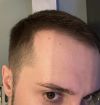
Isotretinoin and tretinoin are different; isotretinoin can cause hair loss and has more side effects. Tretinoin may affect minoxidil absorption, and users suggest waiting before applying minoxidil.
Sons are offering free Biotin capsules, Thickening Clay, or Conditioner for hair care testing to UK men. Interested individuals can apply to receive these products without purchase.
The user follows an intensive hair loss protocol including dutasteride, biotin, black tea, pumpkin seed oil, peppermint shampoo, rosemary conditioner, mukemame, soy milk, lycopene, garlic, magnesium, chamomile, spicy food, citrus bergamot, zinc, multivitamins, kefir, and Greek yogurt. They plan to alternate between pumpkin seed oil and safflower oil and will share before and after pictures.
A 31-year-old started taking finasteride 1mg daily to address hair loss, hoping for stronger and thicker hair. They have not experienced any side effects so far and shared before pictures for comparison.
A 24-year-old male with aggressive androgenetic alopecia is using 1mg finasteride daily and considering a treatment stack including 0.5mg dutasteride, 2.5mg oral minoxidil, ketoconazole shampoo, Alpecin caffeine shampoo, and RU58841. He seeks advice on the safety and effectiveness of these treatments and whether any adjustments are needed.
A 20-year-old male experienced early hair thinning due to male pattern baldness and successfully thickened his hair using oral finasteride and topical minoxidil. The conversation highlights the importance of early action and overcoming fear of medication side effects.
A 30-year-old male with androgenic alopecia shows progress after using dutasteride (0.5 mg daily) and topical minoxidil (5% twice daily) for 3.5 months. Users suggest adding dermastamping for better results.
The conversation is about hair regrowth progress using oral dutasteride (DUT) and minoxidil (MIN) over three months, with significant improvement noted. Users discuss potential future results and share personal experiences with similar treatments.
PCOS female visited doctor for hair loss concerns, prescribed spironolactone and minox 5%. Doctor advised against finasteride or dutasteride, user considering self-medication with dutasteride.
The conversation discusses the differences between PG/Ethanol and KB solutions for RU58841 application, focusing on potential scalp irritation. KB solution is suggested for those allergic to PG, though both contain ethanol which can dry the scalp.
The conversation is about two new videos on exosomes, focusing on how they work and a Q&A session about their use. Specific treatments for hair loss are not discussed.
Procapil is marketed as a natural hair loss treatment but lacks strong evidence and is industry-biased. Minoxidil and Finasteride are the only FDA-approved treatments for androgenetic alopecia.
A product called HairMDL includes Minoxidil, Dutasteride, Latanoprost, caffeine, Tretinoin, and Triamcinolone. Users are curious about its effectiveness and safety, particularly regarding the topical steroid Triamcinolone.
Switching from topical to oral minoxidil caused acne breakouts, leading the user to revert to topical use. Finasteride was also used, but acne was suspected to be linked to oral minoxidil.
A 26-year-old male shared progress photos showing hair improvement after nearly 5 months on oral Minoxidil (4mg), Dutasteride (0.5mg), and biotin (4mg). The photos show noticeable hair growth over time.
Onion juice, when applied topically, is an effective treatment for Alopecia Areata, showing significant hair regrowth in both males and females. The study suggests it could be interesting to test its effectiveness on Androgenic Alopecia.
PP405 is a new hair loss treatment facing mixed reactions due to initial hype and insufficient data. Some are hopeful, but many doubt its effectiveness compared to minoxidil and finasteride.
User shared 15-month progress using Oral Dutasteride and Sublingual Minoxidil for hair loss. Treatment improved hair density, now considering hair transplant with fewer grafts.
The user reported good progress in hair regrowth, especially on the crown, after using oral minoxidil and finasteride for four months and recently switched to dutasteride. The community responded positively, noting realistic progress and offering tips for consistent photo documentation.
Finasteride can cause gynecomastia due to hormonal imbalances, and using an aromatase inhibitor like anastrozole can help manage these side effects. It's important to work with an endocrinologist to address these issues safely.
A user shared their 75-day progress using oral minoxidil, finasteride, ketoconazole shampoo, and dermastamping for retrograde alopecia, reporting significant improvement and increased body hair without side effects. They also discussed quitting smoking and the potential correlation between early beard growth and male pattern baldness.
A participant using Veradermics VDPHL01, an extended-release oral minoxidil, experienced significant hair regrowth from Norwood 6 to Norwood 3V without side effects. They plan to use dutasteride after the treatment to maintain results.
The user shared progress in hair regrowth using oral finasteride, topical minoxidil, and ketoconazole shampoo every other day, noting no side effects from finasteride. They expressed satisfaction with the results and optimism for further improvement.
The user is using testosterone and finasteride to prevent hair loss and is considering adding Primobolan or Masteron, which are DHT-derivatives. They are seeking advice on their genetic risk for male pattern baldness and whether they can safely use these compounds without significant hair loss.
A 25-year-old male experienced significant hair loss due to telogen effluvium and androgenetic alopecia. He began using finasteride, minoxidil, and vitamins, seeing some regrowth but remains worried about hair density.
A user is interested in creating a hair growth serum using oleic acid, palmitoleic acid, and anhydrous ethanol, and seeks advice on sourcing these ingredients. Another user plans to mix these with minoxidil, which already contains ethanol, and mentions using RU58841.
A male in his early 20s with CCCA (scarring alopecia) started treatment with Finasteride, Fluocinolone, and Doxycycline. Steroid injections were suggested but not yet done.
A 19-year-old male has been using topical finasteride and minoxidil for 8 months with no progress and is considering seeking a second opinion due to potential misdiagnosis. The discussion revolves around whether the hair loss is due to male pattern baldness, alopecia areata, or a vitamin deficiency.
A 22-year-old is using minoxidil and finasteride for hair loss and is concerned about side effects and interactions with Accutane. Continuing these treatments may help prevent Accutane-related hair loss, but stopping them could reverse progress.
The conversation discusses using finasteride, dutasteride, minoxidil, cialis, and metformin to protect hair and health. Some users caution against self-prescribing these drugs due to potential risks and complications.