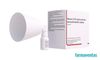
Fluridil, also known as Topilutamide or Eucapil, is discussed as a treatment for hair loss. It is noted as an androgen receptor antagonist, not a vasodilator.
The conversation is about the order of applying hair loss treatments, specifically The Ordinary serum and Zix. The user is unsure which to apply first due to the alcohol content in Zix.
User asks for advice on using hair thickening products and their order of application. Experienced styler suggests using thickening tonic with a blow dryer, followed by styling powder and clay, then hair fibers, and finishing with hairspray.
The user is using a 5% minoxidil solution with low propylene glycol and 1 mg of oral finasteride daily but is still experiencing hair shedding, especially at the temples and front. They are concerned about absorption issues and considering adding tretinoin to improve results.
Mixing RU58841 powder with topical minoxidil is being considered to simplify application and manage dandruff. The user switched from finasteride to dutasteride due to continued hair shedding.
The user is experiencing significant hair regrowth with 5 mg oral minoxidil and 1 mg finasteride but also side effects like eye puffiness and hypertrichosis. They are considering reducing the minoxidil dose to 2.5 mg to lessen side effects and are curious about caffeine serums for eye puffiness.
The conversation discusses hair loss treatments, focusing on the use of Minoxidil, finasteride, and triamcinolone. Concerns are raised about high concentrations of Minoxidil and the long-term use of corticosteroids.
The user uses rosemary oil, finasteride, ketoconazole, Minoxidil, and Anagenics RU58841 for hair loss treatment. They hope rosemary oil will improve scalp health.
Using topical finasteride alongside oral finasteride likely won't provide significant benefits and may increase the risk of side effects. The "4-in-1" spray offers a higher minoxidil concentration but may not be worth switching if oral finasteride is well-tolerated.
The conversation is about using Sandalore for hair loss and whether to mix it with Morr-F, alcohol, or a scalp oil. Users discuss the effectiveness of different carriers like propylene glycol and hemp oil for better absorption.
The conversation discusses switching from topical to oral Minoxidil for hair loss treatment, with the expectation of better results due to systemic delivery. The user has been using Finasteride, topical Minoxidil, and dermastamping, maintaining hair but seeking more regrowth.
Switching from topical to oral minoxidil may lead to better results for some users, with oral minoxidil generally being more effective due to higher absorption. However, it can also cause side effects like hypertrichosis and blood pressure issues, and individual responses may vary.
RU58841 powder is discussed for hair loss treatment, with suggestions to use a 5% solution in isopropyl alcohol. One user mentions using RU injections directly to the scalp.
Minoxidil 5% can cause eye bags, but using Cerave Eye Repair Cream helped reduce them. The user also decreased their minoxidil dosage to manage side effects.
A user is seeking recommendations for purchasing Minichek 5% solution, a PG-free minoxidil, due to a contact allergy to propylene glycol. They are looking for an affordable option comparable in price to Kirkland or Amazon brand minoxidil.
Eucapil, containing fluridil, is used for hair loss but has impractical packaging. Some users find it effective for maintenance, while others suggest alternatives like anageninc with pyrilutamide.
Users discuss whether Koshine reduces sebum and scalp itchiness. Some report reduced sebum and seborrheic dermatitis, while others debate the effectiveness of anti-androgens like RU58841 for hair loss.
The user reported slight improvement in hairline using 1% Clascoterone cream over three months but found it too costly to continue. They expressed interest in trying a 5% concentration if it becomes available at a reasonable price.
Teak leaf extract shows potential as a mild hair growth promoter for androgenic alopecia, with similar positive trends to minoxidil but without significant side effects. It can be made at home using dried teak leaves and ethanol, though its effectiveness compared to other treatments like finasteride is debated.
The conversation discusses using very low dose topical finasteride to achieve specific serum DHT reduction percentages. It concludes that finasteride dosage increases linearly between 5-30% DHT reduction but requires exponential increases for reductions up to 70%.
Using a mix of castor, rosemary, and peppermint oils may cause increased hair shedding during washing, possibly due to the need for more rigorous cleaning. The user experiences no irritation but notices more hair fall when using these oils.
The conversation discusses a natural alternative to Minoxidil for hair loss, with users suggesting peppermint oil and rosemary oil as potential weaker substitutes.
The conversation discusses the need for a localized 5-alpha reductase inhibitor that only affects the scalp without systemic side effects, similar to pyrilutamide's approach. Current treatments like topical liposomal finasteride and dutasteride are mentioned, but concerns about their systemic effects and lack of research are highlighted.
A new topical treatment, PP405, shows promising results for hair regrowth, potentially outperforming existing treatments like finasteride and minoxidil. However, it may still need to be combined with DHT blockers for optimal results, and its long-term effectiveness remains uncertain.
A 23-year-old is considering using a topical solution of Finjuve (finasteride and minoxidil) at a reduced dosage of 0.2/0.4mg to treat crown thinning while minimizing side effects. Applying 0.1-0.2 mL is suggested to lower systemic absorption and effectively reduce DHT on the scalp.
Mixing peppermint and rosemary oil with minoxidil improves hair growth. Users report positive results with this combination, using both liquid and foam forms of minoxidil.
The conversation is about sourcing raw ingredients like finasteride, dutasteride, minoxidil, and tretinoin for making hair loss topicals. A suggestion is made to check Anagen Inc. for these ingredients or contact local suppliers for bulk purchases.
The discussion focuses on hair loss treatments, with suggestions to increase oral Dutasteride to 1 mg or more, as topical Dutasteride is less effective. Other treatments mentioned include RU58841, Minoxidil, and dermastamping, with some users recommending injectable mesotherapy and topical Finasteride.