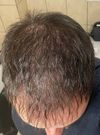
Treatment options for female alopecia androgenetica, discussing the availability of spironolactone online in The Netherlands and other potential treatments like finasteride, minoxidil and RU58841.
Woman uses antiandrogens for hair thinning prevention, experiences severe dry eye with finasteride. Asks if dutasteride could be better despite potential for worse dry eye.
Bimatoprost, latanoprost, and travoprost can aid hair regrowth but are costly and less effective than minoxidil. They work best when combined with minoxidil and finasteride.
User considers adding Alfatradiol to their topical finasteride treatment for hair loss. Others discuss Alfatradiol as a weak estrogen and 5α-reductase inhibitor used for pattern hair loss in men and women.
The user is experiencing hair loss despite using estradiol, bicalutamide, dutasteride, and topical minoxidil. They stopped minoxidil temporarily, which worsened their condition, and are considering oral minoxidil but are concerned about side effects and cost.
RU58841 was the only treatment that slowed hair loss and reduced irritation for a DUPA sufferer after trying finasteride, minoxidil, and dutasteride with no success. The user continues using 6mg oral minoxidil, 0.5mg dutasteride, and an 8% RU58841 solution.
The conversation discusses interest in peptides for hair loss, specifically mentioning ahkCU and ghkCU. A user is considering adding ghkCU to their treatment regimen.
Switching from finasteride to dutasteride led to hair loss despite continued use of minoxidil. Many recommend reintroducing finasteride, as responses to treatments can vary.
RU58841 is preferred over finasteride for blocking DHT on the scalp, especially for those with aggressive MPB. Creatine is associated with increased hair shedding, even when using RU58841.
RU58841's side effects may be exaggerated due to anxiety, with some users experiencing no issues and others reporting symptoms like chest pain. RU58841, minoxidil, and finasteride are used for hair loss treatment, with varying individual reactions.
Spironolactone, finasteride, and dutasteride are discussed for hair maintenance, with concerns about testosterone and side effects like gynecomastia. Spironolactone is noted for use in both bodybuilding and hormone therapy, with low doses considered for minimizing side effects.
A user was prescribed Alpicort E, which contains Estradiol Benzoate, Prednisone, and Salicylic Acid, for hair loss and is seeking others' experiences due to concerns about potential side effects.
The conversation is about a person experiencing treatment-resistant androgenic alopecia despite using high doses of dutasteride and minoxidil, along with other treatments like microneedling and purilutamide. Suggestions include considering a hair transplant, checking medication authenticity, and exploring other treatments like RU58841 or topical estradiol.
The conversation discusses the need for a localized 5-alpha reductase inhibitor that only affects the scalp without systemic side effects, similar to pyrilutamide's approach. Current treatments like topical liposomal finasteride and dutasteride are mentioned, but concerns about their systemic effects and lack of research are highlighted.
Theaflavin, a black tea extract, may inhibit DHT and androgen receptor activity, but its effectiveness for hair loss is debated. Users report no significant improvement with theaflavin, while some find beta sitosterol helpful.
Anti-androgens like Finasteride, Dutasteride, Metformin, and Topical Spironolactone cause hairline recession and increased cholesterol levels. The hairline recovers after stopping the drugs.
Minoxidil, finasteride, and RU58841 are discussed as treatments for androgenetic alopecia (AGA). The conversation questions their effectiveness and whether they are scams.
The user experienced gynecomastia from finasteride, used raloxifene to treat it, and is now taking both without new gyno symptoms but also without hair regrowth. They are seeking others' experiences with this combination and its effects on hair.
The conversation discusses concerns about using Ashwagandha with Dutasteride for hair loss, as Ashwagandha may increase testosterone and potentially affect DHT levels. Users generally agree that the increase in DHT is minimal and unlikely to impact the effectiveness of Dutasteride significantly.
Pyrilutamide/KX-826 is being considered as a potential treatment for female androgenetic alopecia (AGA), but its high cost and limited data on effectiveness are concerns. Kintor markets it for both men and women.
The user is exploring alternatives to finasteride and dutasteride due to concerns about side effects, and is using rosemary and jojoba oil, ketoconazole, minoxidil, microneedling, multi-peptide serum, saw palmetto, and stinging nettle for hair loss. They are also considering CB 03 01 and spironolactone.
The conversation discusses using oral spironolactone for hair loss in males when 5ari blockers fail. Concerns are raised about spironolactone's side effects, and alternatives like pyrilutamide and breezula are suggested.
User asks if stacking Alfatradiol and Fluridil is effective for hair loss. Alfatradiol is a weaker, topical 5ar inhibitor, while Fluridil is an anti-androgen preventing DHT binding to hair follicles.
Experimenting with trestolone as a treatment for hair loss in an attempt to avoid DHT-related treatments such as finasteride and dutasteride, and discussing the potential effects of its receptor selectivity on the androgen receptors in the scalp.
The conversation humorously discusses hair loss treatments, specifically mentioning the use of finasteride, minoxidil, and RU58841. The tone is satirical, with the user playfully referring to themselves as a "finasteride D-rider."