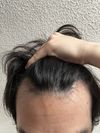
Injectable GHK-CU and BPC157 were discussed for hair loss, but users did not notice significant hair changes. BPC157 was noted to help with shoulder issues.
Aminexil/Kopexil may help reduce hair loss by addressing perifollicular fibrosis in androgenetic alopecia, but it lacks the extensive clinical backing of finasteride and minoxidil. Some users find it effective, but availability and cost are issues, especially in the US where it's not FDA-approved.
The conversation discusses a user's plan to inject NAD+ and GHK-Cu into their scalp to improve hair health, with concerns raised about the risks of infection and necrosis. Alternatives like finasteride, dutasteride, microneedling, oral minoxidil, and scalp massages are suggested.
Hopeful treatments for hair loss, including Verteporfin, Androgen Receptor Degradation, and SCUBE3. These treatments offer potential solutions to slow or stop the effects of androgens on the scalp.
AHK-cu peptides are discussed for hair growth, with users comparing them to GHK-cu peptides and sharing sources to buy. AHK-cu is noted as more expensive, and users express interest in finding cheaper, reliable vendors.
An update on the use of Pyrilutamide, a new drug for hair loss, which has resulted in no shedding or testicle ache; other users have questioned the science behind this and shared their own experiences with Finasteride, Minoxidil, and microneedling.
Carnosic acid in rosemary extract may enhance skin repair and promote hair follicle regeneration. It could be used alone or with verteporfin for scarless healing after dermal wounding.
Pyrilutamide/KX-826 is being considered as a potential treatment for female androgenetic alopecia (AGA), but its high cost and limited data on effectiveness are concerns. Kintor markets it for both men and women.
After a year on dutasteride and oral minoxidil, the user experienced significant hair regrowth, improving from Norwood 2 to almost Norwood 1. They added RU58841, microneedling, rosemary oil, GHK-Cu, and annurca apple supplement to their regimen and are now noticing hair loss in the temple area.
The user has DUPA and suspects autoimmune activity as a cause. They have tried various treatments including finasteride, minoxidil, dutasteride, pyrilutamide, estrogel, hydrocortisone, and clobetasol, and are now seeking a long-term immunosuppressant.
A woman who has been experiencing hair loss for several years, and her question of whether there is any benefit to getting a biopsy to check if it's AGA or diffuse alopecia areata when no cure or very effective treatment exists. Treatments such as spironolactone and Minoxidil/finasteride/RU58841 have previously been discussed.
The conversation is about a user assessing their hair loss as Norwood 1.5 and discussing their use of oral minoxidil and finasteride for 2.5 years, which improved their hair density. They are content with their current progress but hope to reach Norwood 1.
The user experienced hairline improvement using microneedling once a month with a 12-pin set at 1.5-2.0mm and taking Tru Niagen, alongside a heavily modified diet. They attribute the slow hairline improvement to environmental factors, particularly diet, rather than solely genetic factors.
Kintor announced Phase 3 results for pyrilutamide, a hair loss treatment, in China. The conversation is focused on this announcement and its implications for hair loss treatment.
PP405 shows promise in hair loss treatment, but stem cell therapy using adipose-derived stem cells and ATP also successfully reversed androgenetic alopecia in mice. Stem cell therapy is costly, and some doubt the effectiveness of PP405 based on press releases.
Microneedling may help regrow hair in dormant bald regions by stimulating stem cell transfer. Users discuss its effectiveness and how collagen might aid in the process.
The conversation discusses Pyrilutamide for hair loss, with skepticism about its legitimacy and mentions of an upcoming press release from Kintor. It also references ongoing trials and includes links for further information.
SCUBE3 and Amplifica's progress in hair loss treatment is being discussed, with inquiries about their current status and clinical trials. No specific updates or new information are provided in the conversation.
The user is using a combination of hair loss treatments including dutasteride, minoxidil, RU58841, low-level laser therapy, ketokonozole, supplements, Viviscal, Nutrafol, microneedling, PRP, and scalp Botox injections, but is still experiencing hair shedding and thinning. Despite being on this regimen for two years, the user's hair condition is worsening, and they are seeking advice on what else they can do.
User found Annurmets, an Italian supplement with apple extract for hair loss treatment. Many reported incredible results using Procyanidin B2 from apple extract.
A user applied the 8T3 product for hair loss, targeting LPP and AGA, and plans to update on its effectiveness. The product uses a saline buffered phosphate vehicle, suitable for those intolerant to ethanolic vehicles.
Fluridil may decrease the number of androgen receptors in hair follicles by up to 95%. This suggests a different action mechanism from other non-steroidal antiandrogens like RU58841, indicating they might be used together.
The user plans to use RU58841 in the morning and Pyrilutamide in the evening for hair loss treatment, considering replacing Fluridil with Pyrilutamide. They believe Pyrilutamide is effective.
Procyanidin B2, a compound derived from Annurca apples, as a potential treatment for pattern hair loss. Several clinical studies were mentioned, which found that procyanidin B2 could increase hair growth, density, and keratin content. Other treatments such as Minoxidil, Finasteride, and RU58841 were not discussed.
User takes topical finasteride/minoxidil with little results, asks if microneedling helps for temple regions and if 0.5mm is enough. Replies suggest microneedling is effective and 0.5mm works, sharing personal regimens.
The Phase 2 trial for Pyrilutamide in the US, which started a year after the China trials, and inquiring about any available information on when it will finish. Treatments discussed include Minoxidil, Finasteride, and RU58841.
A 19-year-old is using oral dutasteride, topical minoxidil, and dermastamping to address hair loss and enhance facial hair growth, experiencing minimal side effects and increased body hair. They report positive results in hairline thickness and temple closure.
Inflammation plays a significant role in hair follicle miniaturization and androgenetic alopecia, with treatments like ketoconazole shampoo, minoxidil, and finasteride being used to address it. Users discuss the benefits of anti-inflammatory treatments and peptides like KPV, alongside traditional hair loss treatments, to improve scalp health and hair quality.
The user is seeking advice on a hair loss treatment called Ell Cranell, which contains Alfatradiol. Another user shared information from a study stating that Alfatradiol only slows down or stabilizes hair loss, but does not increase hair density or thickness.