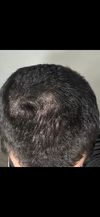
The conversation is about a hair loss serum mix containing 5% capixyl, 3% redensyl, and procapil. The user is asking for recommendations or opinions on the effectiveness of this product.
A 15% discount is offered on hair research products like RU58841 and TEMPOL at Chemyo.com. The legality of selling these compounds is confirmed by the seller.
Breezula's phase 3 enrollment for hair loss treatment is complete, but results have not been published, causing skepticism about its progress. Some users express doubt about its future, suggesting it may be reserved for exclusive use.
A 29-year-old male shares his hair loss treatment progress using dutasteride, minoxidil, dermastamping, and ketoconazole shampoo, while discontinuing RU58841 due to side effects. He is hopeful for hair recovery to consider a hair transplant and discusses potential side effects and experiences with other users.
Pelage is recruiting for phase 2 trials, showing promise for treating bald regions. The discussion highlights its potential effectiveness based on its mechanism of action.
The user is seeking a topical minoxidil and finasteride combination without propylene glycol due to scalp irritation. They are looking for a supplier in the US.
A user shared their experience with telogen effluvium triggered by a keratin treatment, leading to significant hair loss. They found improvement using aloe vera with rosemary, a protein and iron-rich diet, and patience.
The conversation discusses using RU58841, topical finasteride/minoxidil, MK677, and microneedling as treatments for hair loss. MK677 is mentioned as a growth hormone that improves hair health and recovery from microneedling.
A satirical discussion about a hair transplant, with humorous comments on graft placement and clinic choice. The conversation includes references to a "Rebuild a Scalp Clinic" and jokes about using pubic hair and overharvesting.
PP405, a topical treatment, shows promise for hair growth by activating inactive follicles, with 66% of participants experiencing positive results. The treatment is well-tolerated and may proceed directly to Phase 3 trials, offering a potential alternative to minoxidil and finasteride.
A user discusses a topical prescription for hair regrowth containing Minoxidil, Finasteride, and Latanoprost, noting Latanoprost's side effect of promoting eyelash and eyebrow growth. Others share experiences and information about Latanoprost, highlighting its origins as a glaucoma drug and potential side effects.
The conversation discusses hair regrowth using finasteride, minoxidil, and a dermaroller. Users also talk about the benefits of using a stamp over a derma roller for scalp treatment.
The user experienced noticeable hair regrowth after using finasteride for 2 years, oral minoxidil for 1 year, and recently starting dermarolling. The right temple shows significant improvement, while the left remains similar.
A 17-year-old is frustrated with hair thinning and receding temples, seeking advice after a dermatologist dismissed concerns. Suggestions include starting Minoxidil for regrowth and considering Finasteride if androgenetic alopecia is suspected.
The post discusses the user's experience with hair loss treatment RU58841, which was tested for quality and found to be 96+% pure. The conversation includes various responses, with some users questioning the safety of the product and others expressing satisfaction with the test results.
The conversation discusses a product called Rexagain Mixprocapil, which includes topical finasteride. Users express skepticism about the product's legitimacy and caution about its use.
A compounding pharmacist offers affordable topical finasteride foam with Anagain and micro-dose finasteride capsules for hair loss. They provide telehealth services across Canada and private appointments for international patients.
The conversation is about choosing a topical antiandrogen for hair loss, with options including RU58841, CB0301, Pyrolutamide, Alfatradiol, and Fluridil. Users discuss their preferences and reasons for selecting specific treatments.
The user is experiencing diffuse thinning and inflammation despite using 2.5mg dutasteride daily, ciclopirox, and ketoconazole shampoos. They are considering treatments like hydroxychloroquine and JAK inhibitors due to suspected scarring alopecia and have faced challenges in obtaining a scalp biopsy.
Amplifica's new injectable treatment for androgenetic alopecia shows a 15% increase in hair thickness and coarseness in 60 days. The treatment is in early human trials and offers a promising alternative to hormone-related hair loss treatments.
Eucapil, containing fluridil, is used for hair loss but has impractical packaging. Some users find it effective for maintenance, while others suggest alternatives like anageninc with pyrilutamide.
Onion juice, when applied topically, is an effective treatment for Alopecia Areata, showing significant hair regrowth in both males and females. The study suggests it could be interesting to test its effectiveness on Androgenic Alopecia.
The post and conversation are about a user experiencing hair regrowth after using Minoxidil 5% twice daily, topical finasteride 0.05% once daily, weekly microneedling, and ketoconazole shampoo. Other users noted visible progress and shared their own treatment experiences.
The conversation discusses GT20029, a compound by Kintor Pharma that degrades androgen receptors and is in trials, with potential as a hair loss cure. Another promising treatment mentioned is an antibody that blocks prolactin and has shown positive results in macaques.
A user's successful hair transplant, with some people questioning the donor area regrowth, and others speculating that hair fibre may have been used to help fill in areas.
The conversation is about a person's hair improvement after 14.5 months using RU58841 and Minoxidil topically at 50 mg each day, with noticeable hairline improvement but incomplete crown area recovery. The person struggles to take good pictures of their crown area.
The user is questioning if their hair is regrowing and considering adding tretinoin to their regimen, which includes minoxidil. They are concerned about male pattern baldness and comparing their current hairline to past photos.
The conversation discusses hair loss treatments, specifically comparing rosemary and Redensyl, with the original poster already using finasteride and minoxidil. Users also mention using topical melatonin, caffeine, geranium, rosemary oil, jojoba, coconut, and argan oil for hair and scalp care.
The user experienced significant hair regrowth using a regimen of 1 mg finasteride daily, minoxidil twice daily, ketoconazole shampoo weekly, dermastamping weekly, and tretinoin. They reported no side effects and emphasized the importance of committing to the treatment.
The conversation is about the potential risk of permanent hair loss from PRP (platelet rich plasma) treatments and whether PRF (platelet rich fibrin) carries the same risk. The user is seeking information on this topic.