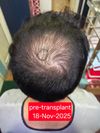
A 24-year-old male experiencing diffused thinning discusses his DHT levels and hair density issues. He has not used finasteride or dutasteride and is considering AR inhibitors.
The conversation discusses a patent for using topical resveratrol and melatonin to treat androgenetic alopecia (AGA) and also mentions interest in topical sulforaphane as a treatment.
Clascoterone (Breezula) showed positive results for treating hair loss without affecting cortisol levels. Opinions vary, with some users optimistic about its potential and others critical of its effectiveness compared to existing treatments like finasteride.
User shared progress pictures after 3 months of using 1mg finasteride, 5% minoxidil, a dermaroller, and castor oil. They humorously commented on their results.
The conversation discusses hair regrowth results using dutasteride, minoxidil, and dermarolling over six months. OP reports significant improvement, especially in the temples, by derma-rolling frequently and applying minoxidil afterward.
A 29-year-old male experienced significant hair regrowth after 9 months using oral dutasteride and topical minoxidil twice daily. The results show almost full crown regrowth and some hairline improvement.
The user has been on a comprehensive hair loss treatment regimen for four years, including Dutasteride, topical and oral Minoxidil, and various other treatments, but has seen little progress and is considering a hair transplant. Despite trying multiple therapies, including PRP and exosome injections, the user is still experiencing hair thinning and is hesitant about trying peptides due to potential cancer risks.
Hair loss treatments that avoid significantly lowering systemic DHT levels, focusing on topical options like dutasteride mesotherapy, minoxidil, and ketoconazole. The user is exploring alternatives like KX-826 and RU58841 due to concerns about hormone levels.
Pyrilutamide and RU58841 are androgen receptor antagonists that block receptors without significantly reducing testosterone or DHT levels. Any indirect effect on androgen levels is likely negligible.
Liquid minoxidil makes hair sticky and stiff; users suggest oral minoxidil or minoxidil foam as alternatives. Applying minoxidil four hours before showering can help with absorption.
RU58841 caused severe side effects like heart palpitations and shortness of breath, leading the user to stop using it. Minoxidil and finasteride were effective without side effects, while RU58841's safety and effectiveness remain uncertain.
Microneedling before applying topical finasteride or dutasteride may enhance their effectiveness by increasing local absorption in the scalp, despite concerns about systemic absorption. Users discuss combining this method with oral treatments and minoxidil, noting potential benefits and side effects.
Despite using treatments like Dutasteride, Minoxidil, RU58841, and GHK-Cu injections, the individual continues to experience aggressive hair thinning and is seeking a specialist for further help. Suggestions include trying finasteride, dermarolling, or another hair transplant.
Microneedling with topical minoxidil is effective for hair regrowth, especially with finasteride. Users report fewer side effects compared to oral minoxidil.
A user on finasteride for 8 months shared bloodwork results showing increased testosterone and estradiol levels, with concerns about high LH. Responses advised monitoring for symptoms but noted levels are within reference ranges.
A 28-year-old male shares his 7-month progress after a crown hair transplant, using topical minoxidil foam, finasteride, and microneedling. He seeks feedback on whether his crown's progress is typical and if further thickening is expected between months 7 and 12.
The user is treating diffuse thinning with finasteride, dutasteride, and oral minoxidil but hasn't seen significant improvement. Others suggest that results vary, with some maintaining hair and others considering transplants or future treatments.
The conversation is about a user's one-year hair loss treatment using dutasteride, oral and topical minoxidil, ketoconazole, tretinoin, and PRP. Users discuss treatment effectiveness, potential issues with diffuse thinning, and sourcing affordable treatments.
A 30-year-old man shares his positive experience with a topical solution containing 0.1% finasteride, 7.5% minoxidil, tretinoin, caffeine, and fluocinolone acetonide after experiencing side effects from oral finasteride and no results from 5% minoxidil. He reports noticeable hair growth in two months with minimal side effects, attributing success to the new topical combination.
Hair loss, DHT and bloodflow with Andrew Huberman; the discussion includes opinions about supplements, finasteride, minoxidil, turmeric, coffee and botox injections for hair loss.
A user had a failed hair transplant with 2800 FUE grafts at a clinic in Turkey, where finasteride was used, and the procedure was poorly executed by technicians rather than the main surgeon. The user later sought repair from a more experienced doctor, highlighting issues with large clinics that handle multiple patients daily.
The user experienced unwanted hair growth on their body from using a caffeine lotion, similar to their experience with minoxidil. They are seeking others' experiences with caffeine products causing hair growth in unintended areas.
A user's concern with their hair thinning while using dutasteride and oral minoxidil, which was switched from finasteride and topical minoxidil after 13 months. The conversation includes advice surrounding potential results, specific treatments used, and side effects.
Amplifica has not provided updates on SCUBE3 and AMP-303, raising concerns about their trial outcomes. Users also mention other treatments like Minoxidil, finasteride, RU58841, PP405, and ET-03.
The conversation discusses preventing infection from derma stamping for hair loss treatment, with suggestions to reduce needle depth and consider alternatives like tretinoin. The user experienced irritation possibly from zinc chloride and stopped using the shampoo and derma stamping.
A child accidentally took Avodart, leading to concerns about DHT suppression and its effects. Users humorously discuss potential consequences and treatments like DHT injections and topical solutions.
A new product, a retinoic acid solution (0.3%), is available to enhance minoxidil products like Rogaine and Kirkland by converting them into a tretinoin-containing solution for improved hair loss treatment. One unit of the product is enough for a year's supply.
The user switched from topical minoxidil/dutasteride to oral dutasteride, resulting in hair loss. They resumed topical treatment without regrowth and are considering switching to finasteride due to poor results with oral dutasteride.